

How to Style Outdoor Seating Areas: A 2026 Guide
Table of Contents
- Start With a Clear Vision for Your Outdoor Seating Space
- Choose Anchor Pieces That Define Your Seating Area
- Outdoor Furniture Arrangement Tips for Flow and Comfort
- How to Choose Outdoor Lighting for Ambiance and Function
- Modern Backyard Design Ideas for 2026
- Select Weather-Resistant Fabrics and Durable Materials
- Add Dimension With Planters, Rugs, and Textural Contrast
- Frequently Asked Questions
Last Updated: September 3, 2026
Start With a Clear Vision for Your Outdoor Seating Space
Creating a stylish outdoor seating area begins with intention. Before selecting furniture or accessories, ask yourself what experience you want to create. Are you designing a space for intimate conversations, entertaining larger groups, or quiet personal retreat? Your vision shapes every decision that follows.
The difference between a cluttered outdoor space and a cohesive one comes down to planning. Many homeowners buy pieces they love individually, then wonder why the result feels disjointed. A clear vision acts as your filter, every piece you add either supports that vision or doesn't belong.
Start by considering how you'll actually use the space. Will you host dinner parties, lounge with coffee on weekend mornings, or create a wellness retreat for meditation and reflection? Your lifestyle determines whether you need modular seating for flexibility, fixed conversation sets for intimacy, or a mix of both. Homeowners who define their purpose first end up with outdoor living spaces they actually use, not just spaces that look good in photos.

Next, assess your physical space honestly. Measure your patio, deck, or garden area. Note sun exposure throughout the day, prevailing wind patterns, and any architectural features like pergolas or fire pits that might anchor your design. A small 8x10 patio requires different planning than a sprawling backyard. Space constraints aren't limitations, they're parameters that guide you toward solutions that actually work for your home.
Finally, establish a color palette and material direction. Will you work with warm earth tones, cool grays and blues, or vibrant accent colors? Do natural materials like wood and rattan appeal to you, or do you prefer clean lines and modern metals? These decisions create coherence across your seating area and make shopping for individual pieces much simpler.
Choose Anchor Pieces That Define Your Seating Area
Your anchor pieces are the foundation of how to style outdoor seating areas. These are typically larger furniture items, a sectional sofa, dining set, or conversation grouping, that establish the visual weight and spatial organization of your seating arrangement.
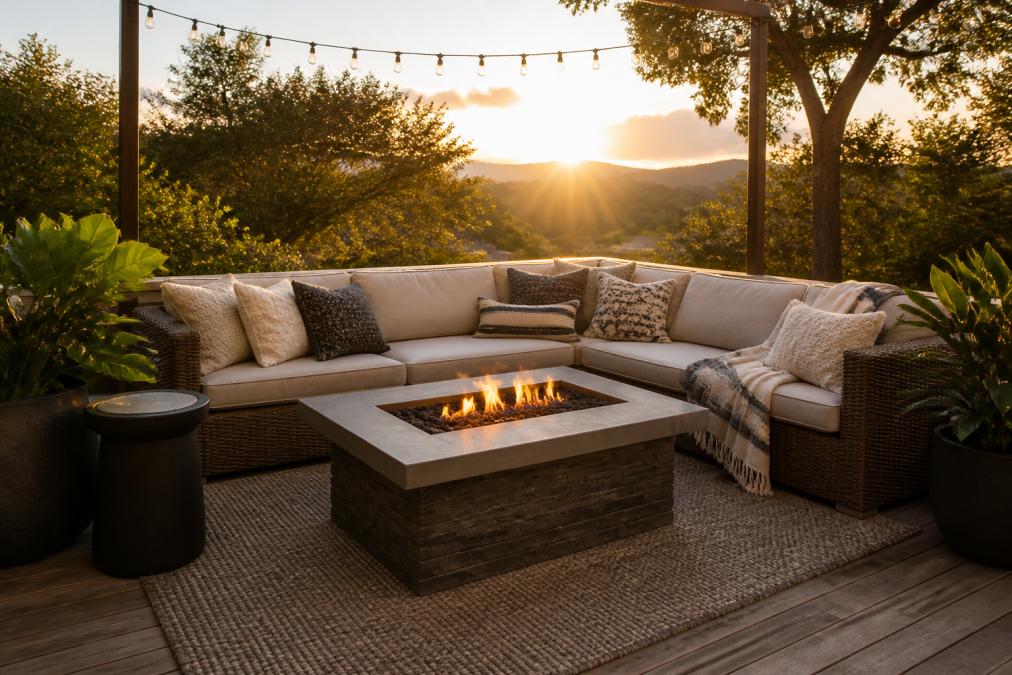
Anchor pieces serve a practical purpose: they define zones and create gathering points. A substantial conversation set or sectional tells your eye where the seating area begins and ends. It prevents the space from feeling scattered or purposeless. The 7-Piece Outdoor Patio Furniture Set with fire pit table from Spirit of Willow exemplifies this, the integrated fire pit becomes both a functional heat source and a visual anchor that draws people into the space.

When selecting anchor pieces, prioritize comfort and durability. Outdoor furniture endures weather, sun exposure, and regular use. Look for pieces built with weather-resistant materials, powder-coated steel frames and hand-woven PE wicker that can withstand rain, wind, and UV rays without deteriorating. Cushions should be made from performance fabrics designed to resist fading and moisture.
Scale matters significantly. An oversized sectional can overwhelm a small patio, while a delicate bistro set might feel lost in a sprawling garden. Your anchor piece should occupy roughly one-third to one-half of your usable seating space, leaving room for movement and additional layers of design (asid.org).
Consider also how your anchor piece connects to the rest of your outdoor living space. Does it face a view you want to emphasize? Does it create natural sightlines to other areas of your garden? The best anchor pieces feel intentionally positioned, not randomly placed.
Outdoor Furniture Arrangement Tips for Flow and Comfort
How you arrange your furniture dramatically affects both functionality and aesthetic appeal. Poor arrangement creates awkward traffic patterns, unused corners, and spaces that feel cramped or disconnected.
Start by establishing clear zones. In a larger space, you might have a dining area, a lounge seating zone, and a reading nook. Each zone needs its own anchor piece and should feel distinct but connected. In smaller spaces, you can overlap zones, a sectional that serves both entertaining and lounging, for example.
Face your seating toward a focal point. This might be a view, a fire pit, a fountain, or even a particularly beautiful section of your garden. Seating arranged in a circle or U-shape around a focal point creates intimacy and conversation flow. Avoid placing all seating parallel to the house or in rigid rows, that arrangement feels formal and disconnected.
Leave adequate space between pieces for movement. A minimum of 18 inches between a sofa and coffee table allows comfortable passage (the FDA). Pathways through your seating area should feel natural, not forced. Cramped spacing creates a cluttered feeling, even in a well-designed space.
Create conversation groupings by angling pieces slightly toward each other. Two chaise loungers facing the same direction work for relaxation, but a conversation set with seating on multiple sides encourages interaction. The Outdoor Lazy Rocking Chair from Spirit of Willow pairs beautifully with other seating to create intimate groupings without taking up excessive space.
Consider traffic flow from your house or entry point into the garden. The most natural path becomes your primary circulation route. Arrange furniture to define this path rather than fight it. Secondary seating can create alternate routes for guests or family members moving through the space.
Think vertically as well as horizontally. Tall planters, trees, or vertical elements behind seating create privacy and definition. They prevent your arrangement from feeling exposed or flat. This layering of heights adds sophistication and makes even modest seating areas feel more intentional.
How to Choose Outdoor Lighting for Ambiance and Function
Lighting transforms an outdoor seating area from daytime-only to an evening destination. The right lighting approach combines functional illumination with atmospheric ambiance.
Layered lighting works best. Start with ambient lighting, overhead fixtures, string lights, or lanterns that provide general illumination. This is your baseline, allowing people to navigate safely and see one another. String lights create a festive, welcoming feel while soft overhead fixtures provide practical visibility without harsh shadows.
Add task lighting where needed. If you're reading or working at a table, you need focused light. Small uplights near seating areas or subtle path lighting guide movement without creating glare. Solar-powered options work well for low-voltage pathway lighting.
Accent lighting adds drama and depth. Uplighting behind planters or trees creates silhouettes and dimension. Lanterns placed on side tables or hanging from pergolas add visual interest. This layered approach, ambient plus task plus accent, creates a sophisticated outdoor environment rather than a one-note lighting scheme.
Consider color temperature. Warm white light (2700K-3000K) feels welcoming and intimate, ideal for evening entertaining (ies.org). Cool white light (4000K-5000K) is more practical for task lighting but can feel harsh in a relaxation space. Mix color temperatures intentionally, warm ambient lighting with cooler task lights, for example.
Dimmer controls amplify your lighting's versatility. The same fixtures serve different purposes at different times. Bright for entertaining, dimmed for intimate evenings. This flexibility extends your seating area's usability and allows you to adjust mood throughout the evening.
Think about how lighting affects your plants and garden. Strategically placed uplighting highlights foliage and creates shadow play against walls or structures. This extends your design beyond furniture into the entire landscape, making your outdoor seating area feel like part of a larger, cohesive environment.
Modern Backyard Design Ideas for 2026
Contemporary outdoor design increasingly emphasizes wellness, sustainability, and seamless indoor-outdoor living. These modern backyard design ideas for 2026 reflect how homeowners are reimagining their outdoor spaces.
Wellness-focused design is reshaping outdoor living. Beyond traditional seating, homeowners now integrate spaces for meditation, yoga, or quiet reflection. This might mean a dedicated lounge area with recliners, a secluded reading nook, or even dedicated space for sauna and cold plunge installations. The trend recognizes that outdoor living is about more than entertaining, it's about personal restoration.
Modular and flexible seating has become essential. Fixed furniture limits adaptability, but modular pieces allow you to reconfigure based on occasion or season. A sectional that separates into individual components, for example, serves entertaining when fully assembled but provides intimate seating when partially configured. This flexibility appeals to busy professionals who want spaces that work for multiple purposes.
Sustainable materials are gaining prominence. Reclaimed wood, recycled plastic composites, and responsibly sourced rattan reflect growing environmental consciousness. These materials often perform better than their conventional counterparts, recycled plastic doesn't splinter or rot, for instance. Modern design increasingly rejects the disposable mindset in favor of timeless pieces built to last.
Integrated technology is becoming more subtle. Outdoor speakers, smart lighting systems, and climate control (like misters or heaters) enhance comfort without dominating the visual landscape. The best modern designs incorporate technology seamlessly, so it enhances the experience without becoming the focus.
Color palettes have shifted toward sophisticated neutrals accented with natural textures. While bold colors appear occasionally, the dominant trend favors warm grays, soft beiges, and natural wood tones paired with greenery. This approach creates calming spaces that feel both contemporary and timeless.
Select Weather-Resistant Fabrics and Durable Materials
Durability determines whether your outdoor seating area maintains its beauty or deteriorates within a season. Material selection is perhaps the most important decision you'll make.
Weather-resistant fabrics are engineered to withstand sun, moisture, and temperature fluctuations. Look for performance fabrics, often labeled as solution-dyed or UV-resistant. These materials resist fading better than conventional textiles. Olefin and polyester blends, common in outdoor cushions, dry quickly and resist mildew. Spirit of Willow's 9-Piece Aluminum Outdoor Dining Set features UV-resistant olefin cushions designed specifically for outdoor durability.

Frame materials matter equally. Powder-coated steel resists rust while maintaining a clean appearance. Aluminum is lightweight and corrosion-resistant, ideal for climates with salt exposure. Hand-woven PE wicker mimics natural rattan's aesthetic while offering superior weather resistance, it won't rot, splinter, or unravel like natural materials. Teak and cedar are naturally weather-resistant woods, though they require occasional maintenance to preserve their appearance.
Avoid materials that require constant upkeep. Natural wicker, untreated wood, and non-performance fabrics deteriorate quickly in outdoor conditions. Your furniture should enhance your life, not create maintenance burdens. Choose materials that age gracefully or maintain their appearance with minimal effort.
Consider your climate when selecting materials. Humid, rainy regions benefit from quick-drying fabrics and corrosion-resistant frames. Arid climates with intense sun exposure demand superior UV protection. Coastal areas with salt spray require specialized rust prevention. Understanding your local conditions helps you choose materials that will actually perform in your environment.
Cushion covers should be removable and washable. Outdoor cushions accumulate dust, pollen, and debris. Removable covers allow easy cleaning and replacement if damage occurs. Look for covers with zippers or ties that allow access to the inner cushion.
Quality construction extends durability significantly. Double-stitched seams, reinforced corners, and quality zippers outlast cheaper alternatives. When evaluating outdoor furniture, examine stitching, hardware, and frame joinery. These details separate furniture that lasts five years from furniture that lasts fifteen.
Add Dimension With Planters, Rugs, and Textural Contrast
Dimension transforms a functional seating area into a sophisticated outdoor living space. Strategic layering of textures, colors, and heights creates visual interest and depth.
Planters serve multiple purposes. They introduce greenery and life into your seating area. They define spatial boundaries without hard walls. They add vertical dimension, drawing the eye upward and making spaces feel larger. Vary planter sizes, heights, and materials, tall ceramic urns beside low concrete planters, for example. Group odd numbers of planters (three or five) rather than even numbers for more natural visual balance.
Choose plants that complement your design vision. Shade-loving plants work for areas beneath pergolas or trees. Sun-drenched spots need heat-tolerant varieties. Consider foliage color and texture, silvery sage contrasts beautifully with deep green ferns. Ornamental grasses add movement and softness. Flowering plants provide seasonal color but require more maintenance.
Outdoor rugs anchor seating areas and define zones. An area rug beneath a conversation set visually ties the grouping together. Rugs add warmth, both literally and aesthetically, making outdoor spaces feel more like rooms. Choose weather-resistant rugs designed for outdoor use. Natural fiber rugs like jute work in covered areas but deteriorate in direct weather exposure. Synthetic rugs resist fading and moisture while offering similar aesthetic appeal.
Layer textiles for comfort and visual richness. Throw pillows in varying patterns and textures add personality. Mix solid colors with geometric or botanical prints. Include different fabric weights, lightweight linen beside heavier performance fabrics. This textural contrast creates visual depth and makes spaces feel more intentional.
Incorporate materials beyond furniture and plants. Decorative screens or trellises add vertical interest. Outdoor artwork or mirrors reflect light and expand perceived space. Woven baskets store blankets and pillows while adding organic texture. These accessories transform a seating area from purely functional to genuinely inviting.
Consider seasonal layering. Lightweight linens and bright colors suit summer entertaining. Heavier textures and warmer tones transition the space into fall and winter. This seasonal approach keeps your outdoor living space feeling fresh throughout the year rather than static.
Creating a beautiful outdoor seating area requires thoughtful planning, quality materials, and intentional design choices. The spaces you design today become the gathering places where memories form, where family connects, friends celebrate, and you find personal restoration. Spirit of Willow's curated collection of outdoor furniture and accessories makes this transformation accessible. Our pieces are selected specifically for their durability, timeless design, and ability to withstand outdoor conditions while maintaining their beauty. Continue shopping to discover the pieces that will transform your outdoor space into the sanctuary you deserve.
Frequently Asked Questions
What are the best ways to style an outdoor seating area on a budget?
Start with one quality anchor piece like a sectional sofa or conversation set, then add affordable elements like outdoor rugs, throw pillows, and planters to create dimension. Mix textures with wicker, metal, and wood to add visual interest without high costs. Rearrange existing furniture to create focal points, and use layered lighting with string lights or solar options for ambiance. Focus on durable, weather-resistant pieces that won't require constant replacement.
How do I make a small outdoor seating area feel spacious and not cramped?
Choose modular or compact furniture pieces that fit your space without overwhelming it. Arrange seating in a conversational layout rather than against walls. Use vertical elements like tall planters or shade solutions to draw the eye upward. Keep the color palette cohesive to create visual flow. An area rug helps define the seating zone without adding bulk. Leave clear pathways around furniture so the space feels open and accessible.
What makes outdoor furniture actually last, and how do I choose pieces that won't fade or rust?
Look for furniture with powder-coated steel frames and hand-woven PE wicker or aluminum construction, which resist rust and UV damage. Check that cushions use UV-resistant, water-resistant fabrics that won't fade in sun or absorb moisture. Adjustable feet prevent water pooling and damage. Quality pieces from brands focused on durability hold their appearance far longer than budget options. Proper placement in shade when possible and occasional cleaning extend the life significantly.
How do I choose the right outdoor lighting to create ambiance in my seating area?
Layer your lighting with multiple sources: overhead string lights for general illumination, accent lights to highlight focal points, and softer task lighting near seating areas. Solar options are low-maintenance and energy-efficient. Warm-toned bulbs create a cozy atmosphere better than bright white light. Position lighting to avoid glare on seating surfaces. Consider dimmable options so you can adjust ambiance for entertaining or quiet relaxation.
This article was written using GrandRanker