

Best Materials for Outdoor Patio Decor: A 2026 Guide
Table of Contents
- Understanding Materials for Outdoor Patio Decor
- Hardwood Options: Teak, Eucalyptus, and Shorea
- Metal Materials: Aluminum, Stainless Steel, and Wrought Iron
- Synthetic and Composite Materials: HDPE and Resin Wicker
- Natural Stone Patio Surfaces: Flagstone, Slate, and Limestone
- How to Clean Outdoor Furniture Cushions and Fabrics
- Low-Maintenance Patio Furniture Materials for Busy Homeowners
- Protecting Teak and Metal Patio Furniture Year-Round
Last Updated: August 28, 2026
Understanding Materials for Outdoor Patio Decor
Choosing the right materials for outdoor patio decor determines whether your space becomes a lasting retreat or requires constant repairs. The best materials balance durability, aesthetics, and maintenance demands. The right material selection shapes everything that follows.
Most people approach this backwards, they fall in love with a design, buy it, then discover the material can't handle their climate. The smarter approach is to start with materials that match your environment, then build your design around what actually lasts.
This guide covers materials that genuinely perform outdoors: hardwoods like teak and eucalyptus, metals including aluminum and stainless steel, synthetics such as high-density polyethylene and resin wicker, and natural stone surfaces.
Hardwood Options: Teak, Eucalyptus, and Shorea
Hardwoods deliver warmth and natural beauty that synthetics can't replicate. Teak stands as the gold standard because it contains natural oils that resist rot, insects, and weathering. Eucalyptus offers similar durability at a lower price point, though it requires more maintenance. Shorea provides excellent strength and weather resistance comparable to teak.
Teak develops a silvery patina over time if left untreated. If you want to maintain the original honey color, apply teak oil annually. Eucalyptus and Shorea gray similarly but benefit from regular sealing to prevent moisture damage and mildew growth.
Hardwoods excel in humid climates and regions with significant rainfall because their natural density resists water absorption better than softer woods. However, freeze-thaw cycles in northern climates can cause splitting. Direct sunlight causes all hardwoods to fade and lose protective oils faster.
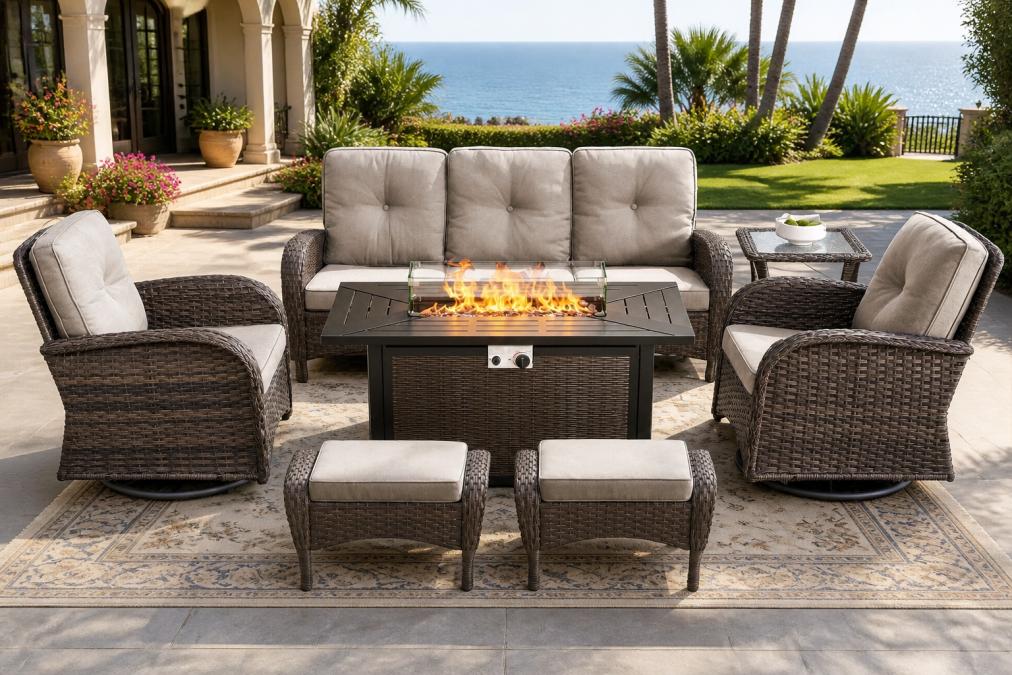
A quality teak patio set costs more upfront but can last 20+ years with proper treatment (fpl.fs.usda.gov). Budget for annual oil applications and occasional repairs. For homeowners who enjoy this ritual and want authentic wood aesthetics, hardwood delivers. For those seeking low-maintenance options, synthetic materials are the better choice.
Metal Materials: Aluminum, Stainless Steel, and Wrought Iron
Metal frames form the backbone of most durable outdoor furniture. Aluminum is lightweight, corrosion-resistant, and requires minimal maintenance. Stainless steel offers superior strength and corrosion resistance, particularly in coastal environments. Wrought iron provides classic aesthetics and structural strength but demands regular maintenance to prevent oxidation.
Aluminum doesn't rust because it naturally forms a protective oxide layer, making it perfect for humid climates and poolside installations. Most aluminum outdoor furniture features a powder-coated finish that adds color and extra protection. The coating can chip with rough handling, but it's easy and inexpensive to touch up.
Stainless steel resists corrosion through chromium content, which creates a self-healing oxide layer stronger than aluminum (astm.org). It's heavier, which adds stability to larger pieces. For coastal properties or high-moisture environments, stainless steel justifies its premium price.
Wrought iron delivers ornamental appeal that aluminum and stainless steel can't match. The tradeoff is maintenance. Wrought iron oxidizes when exposed to moisture, requiring regular paint or powder-coat touch-ups to prevent rust. In humid climates, inspect and maintain wrought iron annually.
The best metal choice depends on your climate and maintenance tolerance. Aluminum suits most homeowners. Stainless steel makes sense for coastal properties. Wrought iron works only if you're committed to seasonal maintenance.
Synthetic and Composite Materials: HDPE and Resin Wicker
Synthetic materials have evolved dramatically. High-density polyethylene (HDPE) wicker and synthetic resin wicker mimic natural materials while delivering genuine durability. These materials don't rot, splinter, or require the maintenance that wood and wrought iron demand. Modern synthetic wicker is UV-stabilized to resist fading and often features mildew-resistant treatments.
The appeal of synthetics is straightforward: they handle weather without complaint. Rain doesn't damage them. Sun fades them slowly. Mold and mildew struggle to take hold. You can leave synthetic furniture outside year-round in most climates without structural degradation. Cleaning is simple, spray with a hose and let air dry.
HDPE wicker performs exceptionally well in wet climates and coastal regions. The material's closed-cell structure prevents water absorption, eliminating rot and mold issues. Resin wicker offers similar benefits with slightly different aesthetics and more color options.
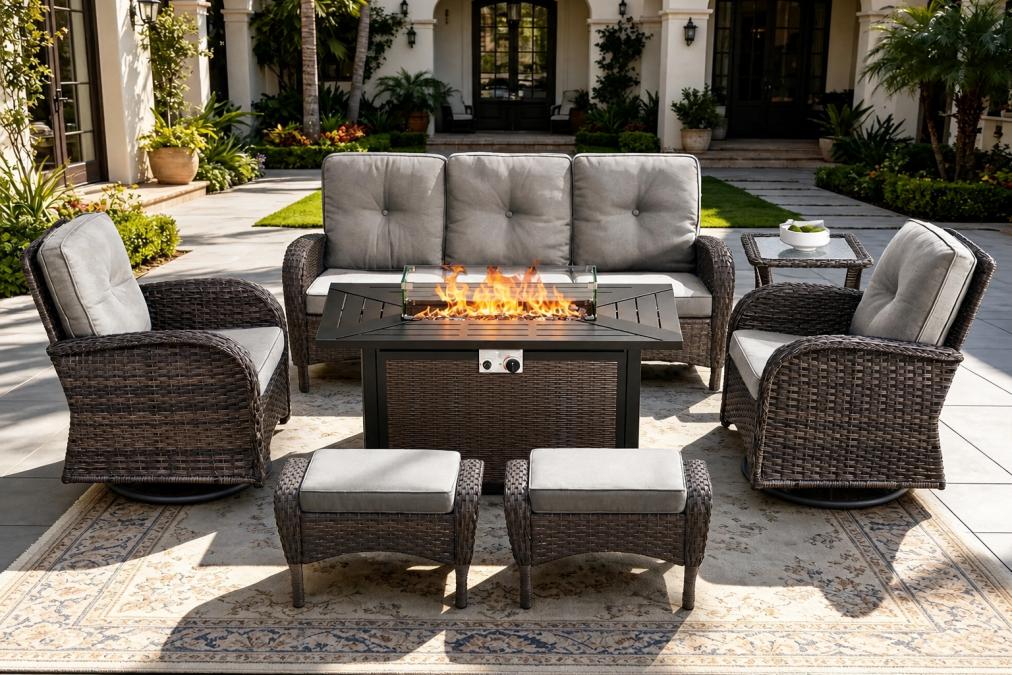
The downside is that synthetics don't develop the character of natural materials. Some homeowners find this predictability appealing. Others miss the organic evolution that real wood provides. Synthetics also rely on the frame material, most wicker furniture uses aluminum or powder-coated steel frames that require the same care as metal-only pieces.
Spirit of Willow's 7-Piece Outdoor Patio Furniture Set with fire pit table exemplifies this approach. It combines hand-woven PE wicker with a powder-coated steel frame and high-density foam cushions wrapped in UV-resistant olefin fabric. This combination delivers weather resistance without demanding constant maintenance.

Natural Stone Patio Surfaces: Flagstone, Slate, and Limestone
Stone creates permanent, elegant patio surfaces that complement any furniture style. Flagstone offers irregular, rustic aesthetics with excellent durability. Slate provides smooth, refined surfaces and superior slip resistance. Limestone delivers classic elegance but requires more maintenance than harder stone options.
Flagstone tolerates freeze-thaw cycles better than most stone because its irregular thickness allows ice expansion without cracking (usgs.gov). The porous surface can absorb water, making it prone to staining and algae growth in shaded areas. Regular sealing (every 2-3 years) prevents deep staining and extends the stone's life.
Slate's dense, fine grain makes it more resistant to water absorption than flagstone. It's harder and more durable, handling foot traffic and weather extremes without degradation. The smooth surface is easier to clean but can become slippery when wet.
Limestone offers timeless beauty with softer, warmer tones than slate. It's more porous and softer, making it susceptible to etching from acidic substances. In regions with acidic rain, limestone deteriorates faster. It requires annual sealing to maintain protection.
The real advantage of stone is permanence. A well-installed stone patio outlasts any furniture placed on it. Stone doesn't fade, rot, or corrode. The initial installation cost is significant, but the long-term value justifies the investment for homeowners planning to stay in their homes for 10+ years.
How to Clean Outdoor Furniture Cushions and Fabrics
Cushion maintenance determines whether your outdoor furniture looks fresh or faded within a season. Most outdoor cushion fabrics are made from solution-dyed acrylic or polyester blends designed to resist fading and moisture.
Start with regular vacuuming using a soft brush attachment to remove dust, pollen, and debris. Do this monthly during warm months. For deeper cleaning, mix mild dish soap with cool water and apply with a soft brush. Rinse thoroughly with clean water from a garden hose. Allow cushions to air dry completely before returning them to furniture.
For stubborn stains, identify the stain type first. Organic stains respond to soap and water. Oil-based stains require a degreaser. Rust stains need an iron-removal product. Always test any cleaning solution on a hidden area before applying it to visible surfaces.
The Outdoor Bench Cushion from Spirit of Willow features a removable cover with a hidden zipper, making cleaning significantly easier. Machine wash it in cool water with mild detergent. The high-density foam core can be wiped clean with a damp cloth and left to air dry.
Protect cushions during off-season storage. Store them in a breathable storage bag (not plastic) in a cool, dry location. Avoid basements or areas prone to humidity, where mold can develop.
Low-Maintenance Patio Furniture Materials for Busy Homeowners
The reality for most homeowners is clear: outdoor spaces need to fit into busy lives. Materials that demand constant attention rarely stay maintained. The best materials for low-maintenance patio decor tolerate neglect without degrading.
Aluminum furniture with powder-coated finishes requires virtually no maintenance. Rinse with a garden hose occasionally to remove dust and pollen. The powder coating protects the underlying aluminum for 5-10 years before showing wear. Even when the coating chips, the aluminum underneath resists corrosion.
Synthetic wicker and HDPE materials are equally low-maintenance. They handle months of neglect without damage. Mold and mildew struggle to establish. Fading occurs slowly. When you finally clean it, a garden hose and soft brush restore most of the original appearance.
Stone patios require periodic sealing but no regular maintenance between applications. Cleaning is simple: sweep, rinse, and done. Unlike wood or wrought iron, stone doesn't deteriorate from neglect.
The Patio Furniture Set from Spirit of Willow (Khaki color option) combines hand-woven PE rattan wicker with a high-strength metal frame and water-resistant polyester cushion fabric. This combination is designed specifically for homeowners who want style without constant upkeep.

Budget 2-3 hours per season for basic cleaning and inspection. This prevents small problems from becoming expensive repairs.
Protecting Teak and Metal Patio Furniture Year-Round
Seasonal protection extends the lifespan of outdoor furniture significantly. For teak furniture, the annual maintenance cycle starts in fall. Clean the entire set thoroughly, removing dirt, algae, and debris. Once dry, apply teak oil using a soft cloth, working with the grain. This replenishes the natural oils that weather removes. Allow the oil to cure for 24 hours before using the furniture. Repeat this process annually to maintain the honey color.
In winter, cover teak furniture with breathable fabric covers (not plastic). Plastic traps moisture and promotes mold growth. In regions with harsh winters, consider storing teak furniture indoors if space permits.
Metal furniture protection depends on the metal type. Aluminum requires minimal protection, just ensure the powder coating is intact. Touch up any chips with matching paint to prevent corrosion. Stainless steel benefits from occasional wiping with a soft cloth to prevent salt and mineral buildup, particularly in coastal areas. Wrought iron demands more attention. Inspect it monthly for rust spots, sand away any rust immediately, and apply touch-up paint.
For all metal furniture, avoid storing it in damp basements or garages where humidity accelerates corrosion. If storage space is limited, leave metal furniture outside with protective covers.
The 9-Piece Aluminum Outdoor Dining Set from Spirit of Willow exemplifies low-maintenance metal furniture. The aluminum frame resists corrosion without special treatment. The UV-resistant olefin cushion fabric maintains color despite sun exposure. During winter, simply cover the set with a breathable furniture cover and leave it outside.

Selecting the best materials for outdoor patio decor means matching durability to your climate, maintenance capacity, and aesthetic preferences. Hardwoods deliver natural beauty with higher maintenance demands. Metals offer strength and longevity with varying care requirements. Synthetics provide durability and low maintenance at the cost of character. Stone creates permanent surfaces that outlast any furniture.
The most common mistake is choosing based on appearance alone, then discovering the material can't handle your environment. Start with climate, humid regions need corrosion-resistant metals and synthetics. Cold climates benefit from freeze-thaw tolerant materials like hardwoods and dense stone. Then consider your maintenance tolerance. If you're willing to invest 2-3 hours annually, hardwood and stone are excellent choices. If you prefer minimal upkeep, aluminum, synthetic wicker, and stainless steel deliver better value.
Spirit of Willow's curated collection combines durable materials with elegant design. Whether you choose the weather-resistant PE wicker of the 7-Piece Fire Pit Set, the low-maintenance aluminum of the 9-Piece Dining Set, or the timeless appeal of the Wooden Gazebo with galvanized steel roof, you're selecting furniture designed to maintain its beauty for years. Explore our collection and discover how the right materials transform your outdoor space into a lasting retreat for relaxation and entertaining.
Frequently Asked Questions
What is the best material for an outdoor patio set?
The best material depends on your climate, maintenance tolerance, and budget. Teak and aluminum offer excellent durability with minimal upkeep. Synthetic wicker provides a natural look with low maintenance. Stainless steel resists corrosion in coastal areas. For busy homeowners, HDPE wicker and powder-coated aluminum require the least care while maintaining their appearance for 5-10 years or longer.
How can I clean outdoor furniture cushions to keep them looking new?
Remove cushion covers and machine wash them in cold water if they're removable. For attached cushions, vacuum debris, then spot-clean with a soft brush and mild soap solution. Rinse thoroughly and air dry completely to prevent mildew. For water-resistant fabrics, spray with a hose and let air dry. Avoid pressure washers, which can damage the fabric. Clean every 2-3 months for best results.
What materials hold up best in extreme weather and high humidity?
Aluminum and stainless steel are corrosion-resistant and ideal for coastal or humid climates. Galvanized steel and powder-coated frames prevent rust. Synthetic resin wicker and HDPE composites resist moisture and won't rot or mildew like natural wood. Slate and limestone are durable stone options, though they may become slippery when wet. Avoid untreated wood in high-moisture areas unless you're willing to apply protective oils annually.
Are low-maintenance patio materials more expensive upfront?
Yes, typically. Aluminum and synthetic wicker cost more initially than untreated wood, but they save money over time by eliminating refinishing, sealing, and replacement costs. A synthetic wicker set at $422-$1,485 may outlast a cheaper wood set by 5+ years without maintenance. Consider total cost of ownership, not just purchase price, when comparing materials for your outdoor living space.
How often should I treat or seal teak and metal patio furniture?
Teak develops a natural silver patina and doesn't require sealing, but annual teak oil application preserves its warm honey color. Metal furniture with powder-coated finishes needs no sealing but should be wiped clean monthly to prevent salt or mineral buildup. Galvanized steel frames rarely need treatment unless the coating is scratched. Inspect for rust spots annually and touch up with rust-resistant paint if needed.
What outdoor materials are most resistant to fading and UV damage?
UV-stabilized synthetic wicker and HDPE composites resist fading for 5-10 years. Olefin and polyester outdoor fabrics are tested to AATCC Class 4 standards and maintain color through 800+ hours of UV exposure. Powder-coated aluminum and stainless steel don't fade. Natural stone like slate and limestone fade minimally. Untreated wood darkens over time; teak develops patina but doesn't fade. Choose UV-resistant fabrics for cushions in direct sun.
This article was written using GrandRanker