

How to Arrange Furniture on a Small Patio
Table of Contents
- Measure Your Patio and Plan the Layout
- Small Patio Layout Ideas That Maximize Your Space
- How to Zone a Small Patio for Different Activities
- Best Outdoor Furniture for Small Spaces
- Vertical Storage and Space-Saving Techniques
- Create Visual Flow and Avoid Clutter
- Accessibility Considerations for Small Patios
- Conclusion
Last Updated: August 18, 2026
Measure Your Patio and Plan the Layout
Before buying furniture, take precise measurements of your outdoor space. Most people skip this step and end up with pieces that don't fit or cramped layouts.
Take accurate dimensions
Measure your patio length and width in feet, accounting for irregular shapes, railings, and permanent fixtures like steps or pillars. Note where doors and windows open onto the space, as these affect traffic flow and furniture placement. Identify sun exposure patterns and wind-prone areas. If your patio has slopes or uneven ground, note that too, as it affects furniture stability.
Mark dimensions on graph paper or use a digital floor plan tool like Floorplanner or SketchUp to visualize arrangements before purchasing. This prevents costly mistakes and builds confidence in your layout decisions.
Map out traffic flow and clearance zones
Identify main pathways people naturally use: from the door to seating, from seating to dining, and routes to garden beds. These pathways need at least 18-24 inches of clearance so people don't bump into furniture or feel trapped.
A common mistake is pushing all furniture to the perimeter, leaving the center feeling empty. Instead, position at least one anchor piece, like a sectional or dining table, toward the center or slightly offset, then arrange secondary pieces around it. This creates visual balance and improves how the space functions.
Small Patio Layout Ideas That Maximize Your Space
The right layout multiplies the perceived size of your patio. Three proven arrangements work especially well for compact outdoor living spaces.
The L-shaped conversation arrangement
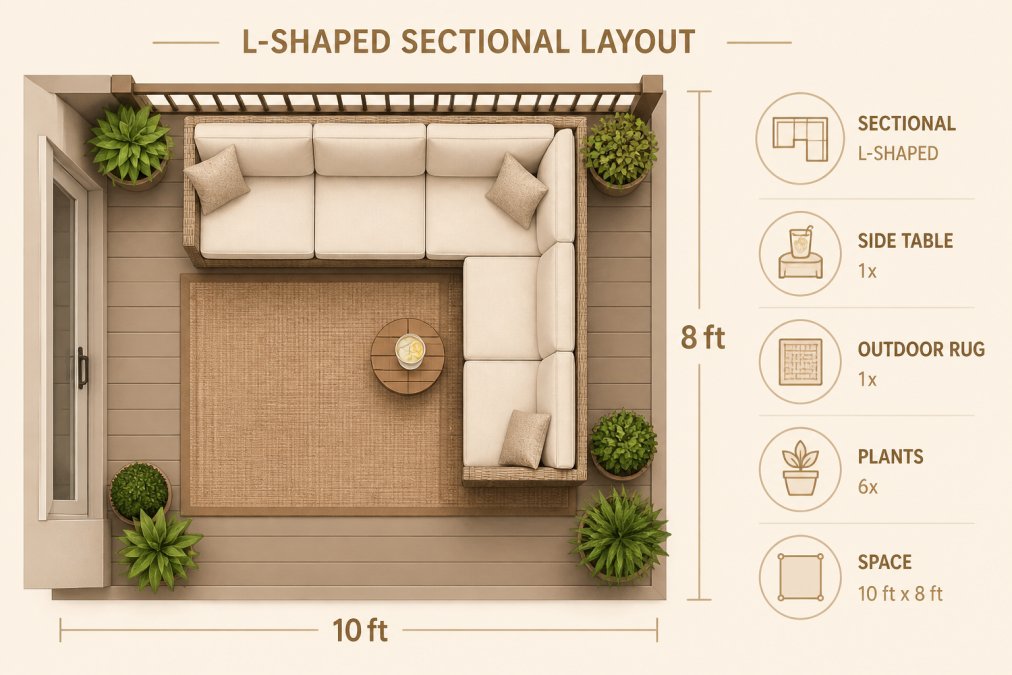
An L-shaped conversation arrangement is ideal for small patios because it defines a distinct seating zone without consuming the entire space. Position a sectional sofa or two perpendicular seating pieces to form the L, then anchor with an outdoor rug placed under the front legs. A small accent table in the corner provides a surface for drinks and candles without taking up much footprint.
This layout creates sightlines across the rest of your patio, making the space feel larger. The furniture arrangement itself becomes the focal point. For a 10' × 12' patio, a compact sectional like the Patio Furniture Set, Outdoor Patio Furniture Wicker Furniture Couch Set works perfectly, offering multiple seating positions without overwhelming the space.

The bistro set corner solution
A bistro set tucked into a corner is the most space-efficient dining solution for small patios. A bistro set typically includes a small round or square table with two chairs, occupying roughly 5' × 5' of space. Position it in a corner where it's out of main traffic flow but still accessible. This arrangement keeps dining separate from lounging without requiring a large dedicated zone.
Add a potted plant or small outdoor heater nearby to make the corner feel intentional and inviting. If you entertain frequently but have limited space, a bistro set lets you seat guests for meals without sacrificing your relaxation area.
The perimeter-focused layout
When your patio is very tight on space, line furniture around the edges rather than floating pieces in the middle. Position two chairs and a small table along one wall, a bench along another, and leave the center open. This maximizes seating capacity while keeping the center visually open, making the entire space feel larger.
The trade-off is that sightlines become less intimate. This works better for solo relaxation than entertaining groups, but for a small patio serving multiple purposes, it's often the most practical compromise.
How to Zone a Small Patio for Different Activities
Zoning divides your small patio into functional areas without requiring walls or permanent structures. Done well, zoning makes a small space feel intentional and organized.
Define zones with rugs and furniture anchors
An outdoor rug is your most powerful zoning tool. A rug placed under a seating arrangement signals "this is the conversation area." A different rug in a dining zone signals "this is where meals happen." Even a 5' × 7' rug anchors a seating area and defines boundaries without consuming your entire patio.
Furniture anchors reinforce zoning. Position a larger piece like a sectional or storage bench to mark the edge of one zone and create a visual boundary. In a small patio, you might have just two zones: a seating/relaxation zone and a dining zone, or a seating zone and a garden/plant zone.
The Outdoor Storage Bench, 70 Gallon Patio Storage Box serves double duty as both an anchor piece and functional storage, making it ideal for small patios where every piece needs to earn its place.
Separate dining from lounging areas
If you want both a dining area and a seating area, position the dining set in one corner and the seating arrangement in another, with a slight offset. Use different outdoor rugs for each zone; this visual separation is more effective than you'd expect.
A low-profile accent table or planter can serve as a subtle boundary between zones without blocking traffic. When zones are clearly defined, a small patio feels organized rather than cramped.
Best Outdoor Furniture for Small Spaces
Not all outdoor furniture works equally well in compact patios. Scale, proportion, and multi-functionality separate pieces that enhance small spaces from pieces that overwhelm them.
Multi-functional pieces that serve double duty
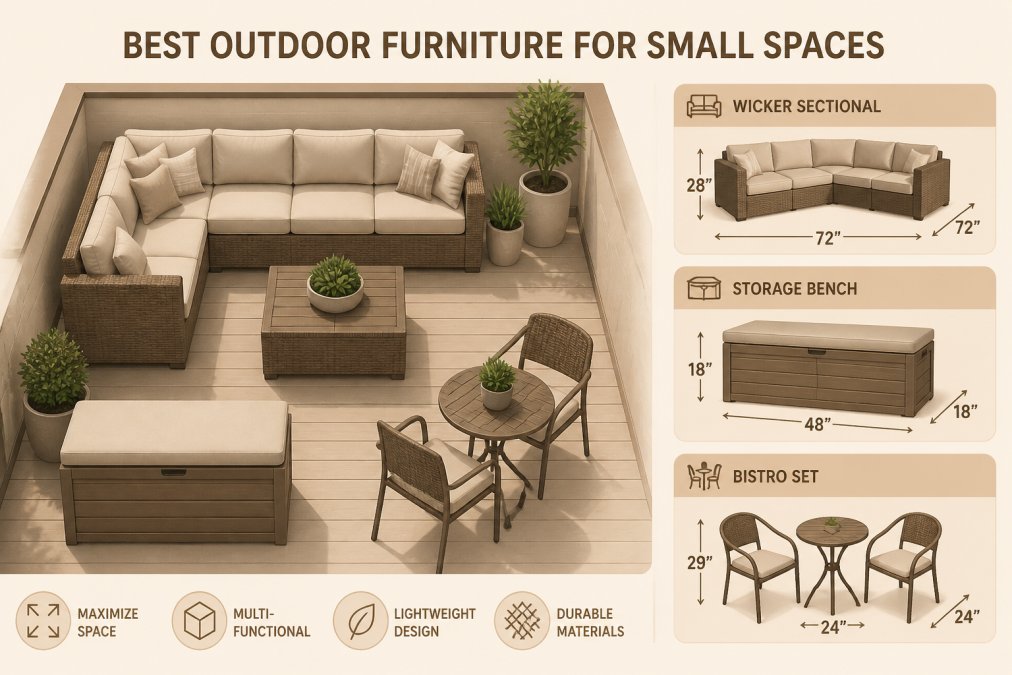
In a small patio, every piece should serve at least two purposes. A storage bench provides seating and keeps cushions or tools out of sight. A sectional with a chaise offers lounging and sleeping space. An ottoman can be a footrest, extra seating, or a small table surface.
The 7 Piece Outdoor Patio Furniture Set with Fire Pit Table exemplifies multi-functional design. The fire pit table serves as both a gathering point and a heat source on cool evenings, eliminating the need for a separate accent table and fire feature. This consolidation is essential in small spaces.

Scale and proportion matter
Oversized furniture in a small patio dominates the space and makes it feel smaller. Choose pieces proportional to your patio dimensions. A 10' × 12' patio can handle a compact sectional or small sofa plus two chairs, but not a full-size sectional.
Look for furniture with exposed legs rather than skirted bases; visible legs create visual lightness. Metal or rattan frames are lighter visually than solid wood. Cushions in neutral tones recede visually, while bold patterns advance and can make a space feel smaller.
Low-profile arms (8-10 inches) feel less imposing than high arms in compact spaces. Always measure furniture pieces and compare them to your patio dimensions before purchasing.
Vertical Storage and Space-Saving Techniques
When your patio footprint is limited, think upward. Vertical storage and wall-mounted solutions free up ground-level space and add functionality without consuming precious square footage.
Wall-mounted shelving holds potted plants, outdoor décor, or entertaining supplies. Tall, narrow planters create visual interest without the footprint of wide plant beds. Hanging planters from pergolas add layers of greenery without taking up table or floor space.
A tall outdoor cabinet or armoire provides substantial storage in a compact footprint. Trellises and climbing vines add privacy and visual interest while occupying minimal ground space. Use vertical space to compensate for limited horizontal space. Spirit of Willow's collection includes pieces designed with small spaces in mind; look for tall, narrow forms and wall-mounted options that maximize functionality.
Create Visual Flow and Avoid Clutter
A small patio can feel spacious and intentional, or cramped and chaotic. The difference often comes down to visual flow and managing what's visible.
Keep sightlines open and unobstructed
Open sightlines make spaces feel larger. If you can see from one corner of the patio to the opposite corner without furniture blocking the view, the space feels more open.
Arrange seating pieces at angles rather than perfectly parallel to walls. Position a small accent table off to the side rather than dead center. Avoid filling every inch; empty space is valuable in small patios and makes the space feel intentional rather than cluttered. One well-chosen focal point is more effective than multiple smaller pieces competing for attention.
Use outdoor rugs to define spaces without walls
An outdoor rug anchors furniture, defines zones, and adds color and texture without requiring permanent installation. Choose a rug size that fits your seating arrangement; ideally, the front legs of at least some furniture should sit on the rug. A 5' × 7' rug works well for compact seating areas. The Outdoor Rug Waterproof Washable Extra Large Reversible Sandproof in a neutral tone creates visual definition without overwhelming a small space.

A rug signals where the "room" begins and ends, which is psychologically important in small spaces. Neutral tones typically work best because they recede visually and make the space feel larger.
Accessibility Considerations for Small Patios
Small patios need to work for everyone who uses them, including people with mobility challenges. Thoughtful design accommodates all users without sacrificing style or function.
Ensure clear pathways at least 24-30 inches wide so wheelchairs, walkers, or strollers can navigate comfortably. Avoid raised edges on rugs that could catch wheels or feet. Choose furniture at appropriate heights: seating 16-18 inches high is comfortable for most people and easier to stand up from.
Don't create dead ends or tight corners where someone could feel trapped. Leave space beside seating pieces so people can transfer in and out comfortably. Avoid small accent tables with sharp corners in high-traffic areas. Ensure adequate lighting so the entire patio is safe and usable in evening hours. These considerations benefit everyone and make your patio more functional overall.
Creating an inviting small patio requires thoughtful planning, but the effort pays dividends. When you arrange furniture strategically, you unlock potential that casual placement misses. Spirit of Willow's carefully curated collection of weather-resistant outdoor furniture is designed specifically to enhance smaller spaces without compromising on quality or style. Start with accurate measurements, choose multi-functional pieces proportional to your space, and use rugs and strategic zoning to create distinct areas. The result is a small outdoor living space that feels intentional, spacious, and ready to become your favorite retreat.
Frequently Asked Questions
How do you make a small patio look bigger when arranging furniture?
Keep sightlines open by positioning furniture along the perimeter rather than the center, choose pieces with exposed legs so you can see through them, and use a light-colored outdoor rug to visually expand the floor space. Multi-functional furniture like storage benches reduces the number of pieces needed. Vertical storage and wall-mounted elements draw the eye upward, making the space feel taller and more spacious.
What is the best outdoor furniture for small spaces?
Look for pieces that serve multiple purposes, such as storage benches with seating or nesting tables that stack away. Choose appropriately scaled furniture, oversized sectionals overwhelm small patios, while a compact bistro set or modular seating works better. Weather-resistant materials like rattan wicker and powder-coated steel frames ensure durability. Spirit of Willow's 7-piece sectional sofa ($422.05) and storage bench ($173.49) both fit small spaces without sacrificing comfort or style.
How can I create a cozy atmosphere on a small patio without making it feel cramped?
Use an outdoor rug to anchor your seating area and define the space, this creates visual warmth without taking up square footage. Add accent lighting like string lights or lanterns overhead to create ambiance. Layer textures with cushions and weather-resistant throw pillows. Position furniture to create a conversation area rather than spreading pieces randomly. A bistro set arrangement in a corner with plants around the perimeter creates coziness while maintaining clear traffic flow through the space.
Should I use round or square tables for small outdoor spaces?
Round tables work better for small patios because they eliminate sharp corners that waste space and create visual obstacles. They also promote better traffic flow and sightlines. However, square or rectangular bistro tables fit efficiently against railings or walls and work well in corner arrangements. Consider your layout: if you're centering a table in the middle of the patio, round is ideal; if you're placing it against an edge, square maximizes usable space around it.
This article was written using GrandRanker