

How to Choose Durable Outdoor Furniture
Table of Contents
- Assess Your Climate and Environment
- Best Outdoor Furniture Materials for Weather Resistance
- Signs of High Quality Outdoor Furniture
- Measure Your Space and Plan Your Layout
- Evaluate Comfort, Cushions, and Ergonomics
- Patio Furniture Care Tips for Longevity
- Budget Considerations and Lifecycle Cost
- Conclusion
Last Updated: August 19, 2026
Assess Your Climate and Environment
The foundation of choosing durable outdoor furniture starts with understanding what your space actually endures. Rain, sun, salt air, temperature swings, humidity, and wind all demand different material responses. A sectional that thrives on a sheltered covered patio will fail within two seasons if exposed to direct coastal spray. This is where most people make their first mistake: they choose based on aesthetics alone, then watch their investment deteriorate.
Your climate zone determines which materials will hold up. Coastal environments with salt spray accelerate corrosion on unprotected metals. High-humidity regions breed mildew and mold on fabrics and wood. Desert climates with intense UV exposure fade cushions and degrade adhesives. Temperate zones with freeze-thaw cycles crack materials and loosen joints. Before you select a single piece, map your patio's specific conditions: sun exposure (full day, morning only, mostly shade), moisture sources (sprinklers, rain direction, proximity to water features), wind exposure, and seasonal temperature extremes.
Consider whether your space has overhead protection. A covered patio or pergola dramatically extends furniture lifespan because it shields pieces from direct rain and reduces UV exposure. Open patios demand weather-resistant everything. The difference in material choices between these two scenarios is substantial.
Best Outdoor Furniture Materials for Weather Resistance
The material your outdoor furniture is built from determines how well it survives your climate. Different materials excel under different conditions, and understanding their strengths and limitations prevents costly replacements.
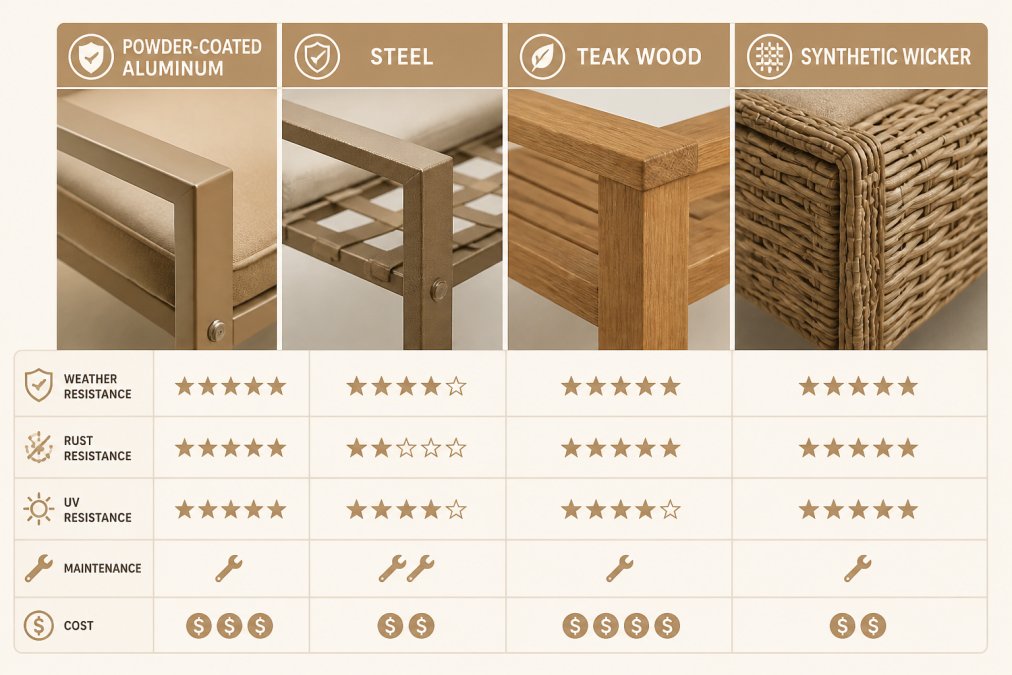
Powder-Coated Aluminum and Steel
Powder-coated aluminum frames are among the most durable outdoor furniture options available. The coating, a polyester or acrylic finish applied electrostatically, creates a protective barrier against moisture, UV rays, and salt spray. Aluminum itself won't rust, making it ideal for coastal environments where salt air corrodes unprotected metals. The frames are lightweight, easy to move, and maintain structural integrity for years with minimal care.
Steel frames offer similar benefits but are heavier and stronger, making them better for larger sectionals or dining sets that need maximum stability. However, steel requires powder coating without exception, bare steel rusts quickly. The quality of the powder coat matters significantly. High-quality finishes resist chipping and fading far better than thin, budget-grade coatings. Spirit of Willow's aluminum and steel pieces, like the 9-Piece Aluminum Outdoor Dining Set, use durable powder-coated frames designed to withstand seasonal weather changes while maintaining their appearance.

Teak and Hardwoods
Teak is a tropical hardwood prized for outdoor use because it contains natural oils that resist rot, insects, and moisture. When left untreated, teak weathers to a beautiful silver-gray patina. It's exceptionally durable, teak furniture can last 25+ years with minimal intervention. The downside is cost; teak is significantly more expensive than other options.
Other hardwoods like ipe and cumaru offer similar durability but require regular sealing to prevent weathering. Without maintenance, non-teak hardwoods deteriorate faster. Teak's natural oil content gives it an advantage that other woods simply don't have. If budget allows and you want the aesthetic of natural wood, teak is the long-term investment choice. Be aware that teak sourcing matters, sustainably harvested teak is preferable to pieces from questionable sources.
Synthetic Wicker and HDPE Lumber
Synthetic wicker (usually polyethylene or polypropylene) mimics the look of natural rattan without the rot vulnerability. It resists moisture, UV fading, and mildew when made from quality materials. Hand-woven PE rattan, like what's used in Spirit of Willow's 7-Piece Outdoor Patio Furniture Set, combines aesthetic appeal with genuine durability. The frames underneath are typically aluminum or steel, providing structural support while the wicker offers visual warmth.
HDPE (high-density polyethylene) lumber is engineered plastic lumber that looks like wood but won't rot, splinter, or attract insects. It's maintenance-free, won't need sealing or staining, and holds up exceptionally well in wet environments. The trade-off is that it can feel less premium than natural materials, though quality pieces bridge that gap visually.
Marine-Grade Stainless Steel
Marine-grade stainless steel (typically 316-grade) is corrosion-resistant even in harsh coastal environments. It's more expensive than powder-coated aluminum but requires virtually no maintenance and lasts indefinitely. If you're in a high-salt environment and budget isn't a constraint, marine-grade stainless steel is the most durable frame material available. It won't rust, won't need recoating, and develops a natural patina that many find attractive.
Signs of High Quality Outdoor Furniture
High-quality durable outdoor furniture shares specific characteristics that separate pieces built to last from those destined for the landfill within a few seasons. Learning to spot these signs prevents expensive mistakes.
Structural Integrity and Joint Construction
Examine how the frame is joined. Welded joints are stronger than bolted connections for most outdoor applications. Look for welds that are smooth and consistent, rough or uneven welds suggest rushed manufacturing. Bolted joints should use stainless steel or coated hardware; bare bolts will rust and corrode. The frame should feel solid with minimal flex when you apply pressure. A wobbly chair or table will only get worse as joints loosen from wind and seasonal movement.
The thickness of the frame material matters. Thin-wall tubing saves manufacturing costs but fails faster under stress. Quality pieces use appropriately thick materials for their size and intended use. A dining chair frame needs different gauge steel than a lounge chair; manufacturers who understand this build accordingly.
Cushion and Fabric Quality
Cushion density determines comfort and longevity. High-density foam (typically 1.5+ pounds per cubic foot) resists compression and maintains shape through seasons of use. Low-density foam flattens quickly, leaving you sitting on a pancake within a year. Check the fabric as well, olefin and acrylic fabrics are UV-resistant and moisture-wicking, preventing mildew and fading. The weave should be tight and even; loose weaves allow water penetration and deteriorate faster.
Stitching should be straight and secure with no loose threads. Quality manufacturers use UV-resistant thread that won't degrade in sunlight. Seams should be reinforced, especially on high-stress areas like seat corners and armrest attachments. Piping (the cord trim along seams) should be securely attached; loose piping indicates poor construction throughout.
Hardware and Fasteners
Every bolt, screw, and metal fitting should be stainless steel or coated to prevent rust. Bare steel hardware is a red flag, it will rust, stain the furniture, and eventually fail. Hinges on storage benches or lids should move smoothly without grinding or resistance. Casters (wheels) on mobile pieces should roll smoothly and lock securely. Quality manufacturers specify hardware grade and material; budget manufacturers use whatever is cheapest.
Measure Your Space and Plan Your Layout
Before purchasing any piece, measure your patio precisely. Undersized furniture makes spaces feel cramped; oversized pieces overwhelm small areas and block sightlines. A common mistake is buying pieces individually without considering how they'll relate to each other spatially.
Create a scaled floor plan on paper or use a digital tool. Mark fixed elements: stairs, doors, built-in features, and overhead obstacles. Note sun patterns throughout the day and prevailing wind direction. A shaded corner might be perfect for a lounge area, while an exposed spot suits a dining table where you won't sit for extended periods.
Consider traffic flow. Pathways should remain clear; don't create obstacles that force guests to navigate awkwardly around furniture. For entertaining, ensure seating faces inward toward a focal point, a fire pit, water feature, or view. Isolated chairs scattered around the patio create disconnected conversations rather than gathering spaces.
Measure doorways and pathways that delivery trucks will use. A beautiful sectional is worthless if it can't physically reach your patio. Ask the retailer about delivery logistics before ordering. Spirit of Willow ships across much of the United States, but confirming access routes prevents frustrating delivery complications.
Evaluate Comfort, Cushions, and Ergonomics
Comfort determines whether your outdoor space becomes a retreat you actually use or a showcase that sits empty. Test pieces in person when possible, though ordering online requires trusting descriptions and reviews.
Seat height should allow your feet to rest flat on the ground with knees at roughly 90 degrees. Armrest height should accommodate your arm naturally while seated. Backrest angle matters significantly, fully vertical backs suit dining chairs, while reclined angles (around 110-120 degrees) work better for lounging. Lumbar support prevents back strain during extended sitting; look for cushions with built-in lumbar shaping or pieces designed with ergonomic curves.
Cushion thickness affects both comfort and durability. Thicker cushions (4-6 inches) are more comfortable for extended lounging but require more storage space during off-season. Thinner cushions (2-3 inches) work for dining chairs where you'll sit briefly. The density matters more than thickness; a 3-inch high-density cushion outperforms a 5-inch low-density one.
Test cushion firmness by sitting and applying pressure. Quality cushions compress slightly but spring back immediately when you stand. Cushions that don't rebound are already deteriorating. For pieces you'll use frequently, prioritize cushion quality because replacements can be expensive.
Patio Furniture Care Tips for Longevity
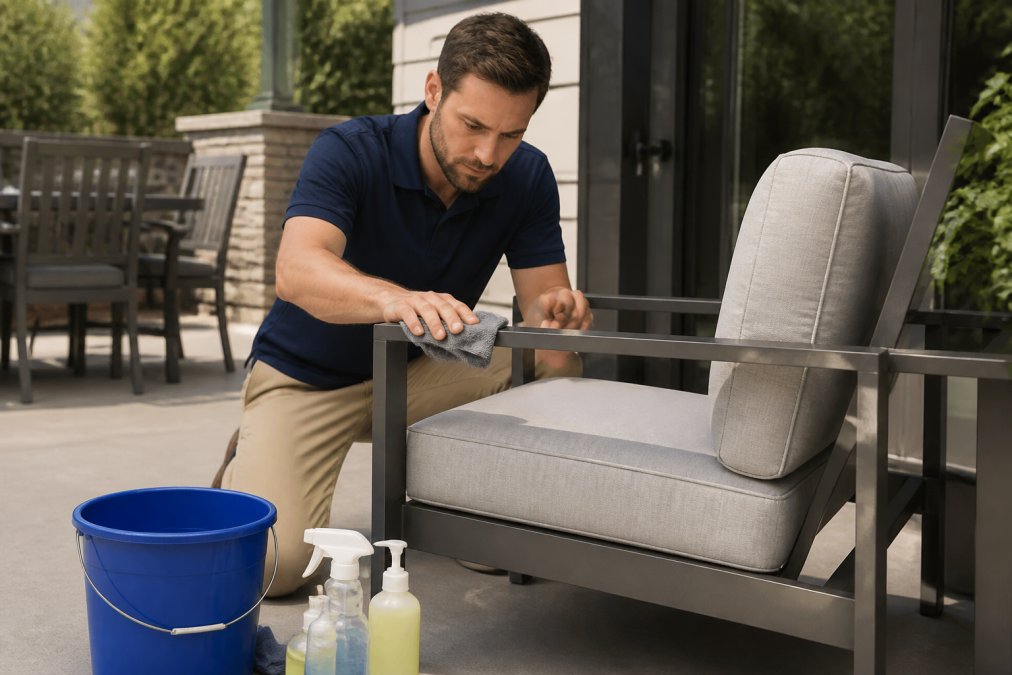
Regular maintenance extends furniture lifespan dramatically. The specific care routine depends on your materials, but consistency matters more than intensity.
Seasonal Cleaning Schedule
Start each season with a thorough cleaning. Use mild soap and water for most materials, avoid harsh chemicals that can damage finishes and fabrics. For powder-coated frames, a soft brush removes dust and debris. For synthetic wicker, gentle scrubbing with a soft cloth prevents dirt accumulation in crevices. For teak, a soft-bristled brush and water are sufficient unless you want to maintain the golden color (which requires specialized teak oil).
Cushions need regular attention. Brush off surface debris weekly during use. Monthly, wash covers with mild soap and water if removable. If covers aren't removable, spot-clean stains promptly. Allow cushions to dry completely before storing; trapped moisture breeds mildew. In humid climates, consider storing cushions indoors during off-season.
Climate-Specific Maintenance
Coastal environments require more frequent rinsing because salt spray accelerates corrosion. Rinse frames and cushions monthly during summer months, more often after storms. Wipe down hardware to prevent salt accumulation. High-humidity regions benefit from air circulation around furniture, don't crowd pieces together, which traps moisture.
Desert climates demand UV protection. Apply UV-protective spray to cushion fabrics annually to prevent fading. Check for sun damage regularly; some fabrics deteriorate faster than others. Freeze-thaw cycles in temperate zones can crack materials and loosen joints, so inspect furniture after winter for damage and tighten bolts as needed.
Storage and Off-Season Care
If you store furniture seasonally, prepare pieces properly. Clean thoroughly before storing, dirt left on surfaces can stain or damage finishes during storage. Remove cushions and store separately in a dry location. Cover frames with breathable furniture covers (not plastic, which traps moisture). Store in a dry space when possible; outdoor storage under a tarp works if you ensure air circulation underneath.
Before bringing furniture back out, inspect for damage, tighten all bolts, and check that cushions haven't developed mildew. A quick refresh, cleaning and minor repairs, prevents problems from compounding through the season.
Budget Considerations and Lifecycle Cost
The upfront price of outdoor furniture is only part of the financial picture. Lifecycle cost, the total expense over the furniture's useful life, reveals the true value proposition.
A $400 sectional that needs replacement after three seasons costs roughly $133 per year. A $1,500 sectional that lasts 10-12 years costs roughly $125-150 per year, plus you avoid the hassle of repeated replacements. Spirit of Willow's pieces, like the Patio Furniture Set, priced at $422.05, represent mid-range pricing that balances durability with accessibility. Higher-end options like the 9-Piece Aluminum Outdoor Dining Set at $3,587.93 serve larger entertaining spaces and offer premium materials that justify the investment for frequent use.
Consider maintenance costs as well. Teak requires occasional oiling. Hardwoods need sealing. Cushions may need replacement after 5-7 years even on durable frames. Synthetic materials and powder-coated aluminum require minimal maintenance, lowering long-term costs. Factor in storage space if you'll remove cushions seasonally, that influences whether you can actually maintain pieces properly.
Quality indicators correlate with price for good reason. Heavier frames, thicker cushions, better hardware, and superior construction all cost more upfront but extend lifespan and reduce replacement frequency. The cheapest option rarely delivers the best value over time.
Choosing durable outdoor furniture means matching materials and construction quality to your climate, measuring your space thoughtfully, and committing to basic maintenance. The difference between furniture that disappoints after one season and pieces that enhance your outdoor living for a decade comes down to informed decisions made before purchase.
At Spirit of Willow, we understand that outdoor furniture represents an investment in how you'll spend time at home. Our carefully curated collection combines weather-resistant materials, powder-coated aluminum, synthetic wicker, and quality cushioning, with designs built for both beauty and longevity. Whether you're furnishing a small patio with the 7-Piece Outdoor Patio Furniture Set or creating an entertaining space with the 9-Piece Aluminum Outdoor Dining Set, our pieces are selected to withstand seasonal changes while maintaining their elegance. Start exploring options that match your climate and space, and build an outdoor retreat you'll actually use and enjoy for years to come.

Frequently Asked Questions
Which outdoor furniture material lasts the longest?
Marine-grade stainless steel and teak are among the most durable outdoor furniture materials, often lasting 15+ years with proper care. Powder-coated aluminum and synthetic wicker also offer excellent longevity, typically 10-15 years. The best choice depends on your climate, coastal environments benefit from stainless steel's corrosion resistance, while teak naturally resists rot and weathering. Your maintenance routine also affects lifespan significantly; materials like teak require periodic oiling, while powder-coated aluminum needs only occasional cleaning.
How can I tell if outdoor furniture is high quality?
High-quality durable outdoor furniture shows several key signs: sturdy frame construction (look for powder-coated aluminum or stainless steel rather than hollow tubing), tight joinery with no gaps, UV-resistant and fade-resistant fabric on cushions, and substantial cushion density (at least 3-4 inches). Check weight, heavier pieces generally indicate better materials and structural integrity. Quality manufacturers provide detailed specifications about materials and often offer extended warranties. Examine welds and connections closely; they should be smooth and reinforced. Reputable brands clearly list material composition and durability ratings.
What's the difference between teak and aluminum outdoor furniture?
Teak is a hardwood that naturally resists rot, insects, and weathering, developing a silvery patina over time. It requires periodic oiling to maintain its original color but lasts 20+ years. Aluminum is lightweight, rust-proof, and requires minimal maintenance, just occasional cleaning. Aluminum is more affordable and easier to move, while teak offers a warmer aesthetic and doesn't require refinishing. Choose teak if you want natural beauty and low maintenance, or aluminum if you prioritize lightweight construction and budget. Both are excellent for durable outdoor furniture in various climates.
How often should I maintain outdoor furniture to keep it durable?
Maintenance frequency depends on your material and climate. For powder-coated aluminum and synthetic wicker, clean quarterly with mild soap and water. Teak benefits from annual oiling to preserve color and prevent cracking. Cushions with olefin or acrylic fabric should be cleaned seasonally and stored indoors during harsh weather. In coastal environments with salt spray, rinse stainless steel monthly. Most durable outdoor furniture needs only basic seasonal care, removing debris, wiping surfaces, and storing cushions during winter. Regular maintenance extends lifespan by 5-10 years and prevents rust, mildew, and fading.
This article was written using GrandRanker