

Modern Backyard Design Ideas for 2026
Table of Contents
- The Modern Backyard Design Trends Defining 2026
- Sustainable and Eco-Friendly Landscaping
- Outdoor Kitchens, Fire Features, and Entertaining Zones
- Wellness-Focused Outdoor Spaces
- Layered Outdoor Lighting and Smart Home Integration
- Low-Maintenance Backyard Design That Stays Beautiful
- Backyard Renovation Budget Planning: Small Space to Full Transformation
- Conclusion
Last Updated: August 10, 2026
The Modern Backyard Design Trends Defining 2026
Modern backyard design has shifted from simple grass-and-patio setups to fully realized outdoor living environments. At Spirit of Willow, we've watched this transformation accelerate, with homeowners treating backyards as true extensions of their homes. The outdoor living category now prioritizes sustainability, wellness, multi-functional entertaining zones, and smart technology integration.
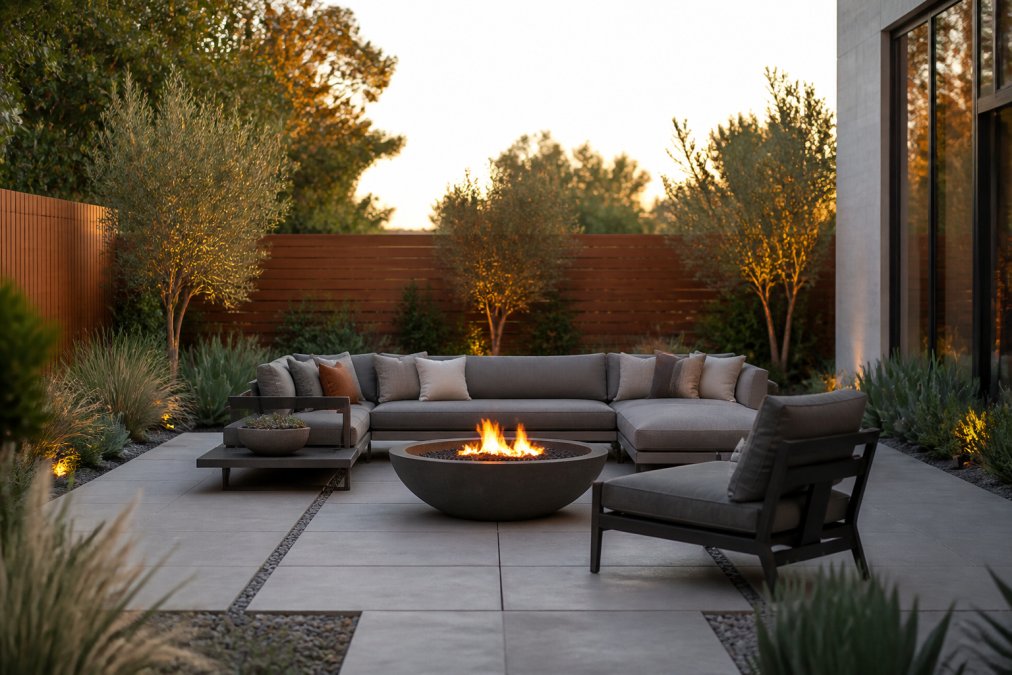
What separates a truly modern backyard is intentionality. Every element serves a purpose: hardscaping defines zones, softscaping connects the space to nature, and lighting and furniture transform it into an evening destination. Homeowners want spaces that reduce stress, support wellness, entertain elegantly, and require minimal upkeep.
| Design Priority | Key Elements | Best For |
|---|---|---|
| Sustainability | Native plants, xeriscaping, permeable surfaces | Eco-conscious homeowners |
| Entertaining | Outdoor kitchen, fire feature, pergola | Social homeowners |
| Wellness | Sauna, cold plunge, water feature | Recovery and relaxation focus |
| Low-maintenance | Drought-tolerant planting, smart irrigation | Busy professionals |
| Small-space design | Vertical gardening, modular furniture | Compact patios and yards |
Sustainable and Eco-Friendly Landscaping
Sustainable landscaping has become the baseline expectation for modern backyard design, driven by water scarcity, rising utility costs, and environmental concerns. An eco-friendly backyard can be just as beautiful as a traditional one.
Xeriscaping and Native Flora
Xeriscaping reduces or eliminates supplemental irrigation by using drought-tolerant, climate-adapted plants. For most American homeowners, this means replacing thirsty turf grass with native flora that evolved to thrive locally without extra care.
Native plants support local pollinators, require minimal fertilizer, and resist pests naturally. They create textural contrast and visual interest across seasons, something a uniform lawn cannot offer. According to EPA WaterSense landscape design guidance, landscape irrigation accounts for significant residential water use, and switching to drought-tolerant plants is one of the most effective ways to reduce household consumption.
Practical starting points:
- Replace lawn sections with gravel mulch, decomposed granite, or native ground covers
- Cluster plants by water needs to create efficient irrigation zones
- Choose ornamental grasses, sedums, lavender, or region-specific natives as focal points
- Use raised beds with drought-tolerant herbs near outdoor kitchen areas
Permeable Surfaces and Natural Materials
Traditional concrete and asphalt create runoff that overwhelms storm drains. Permeable surfaces, including permeable pavers, gravel paths, and decomposed granite, allow rainwater to filter back into soil. Natural materials like weathered limestone, raw slate, and reclaimed wood bring textural contrast and warmth while creating spaces that feel connected to the landscape rather than imposed upon it.
Outdoor Kitchens, Fire Features, and Entertaining Zones
A genuinely functional outdoor kitchen is a zone: dedicated prep surfaces, weather-resistant storage, refrigeration, and a layout that keeps the cook engaged with guests.
A fire feature completes the entertaining zone. Fire features extend the usable season well into fall.
Spatial zoning organizes these spaces effectively:
- Cooking and prep zone: outdoor kitchen with counter space, appliances, and storage
- Dining zone: weather-resistant table positioned for conversation
- Lounge zone: deep-seating furniture around the fire feature
- Transition zone: planting beds or privacy screening that define edges
Privacy screening adds structure without solid walls. A pergola ties the entertaining area together.
Wellness-Focused Outdoor Spaces
The backyard wellness hub is the defining trend of 2026. Homeowners are building dedicated recovery and relaxation zones as private alternatives to expensive spa memberships.
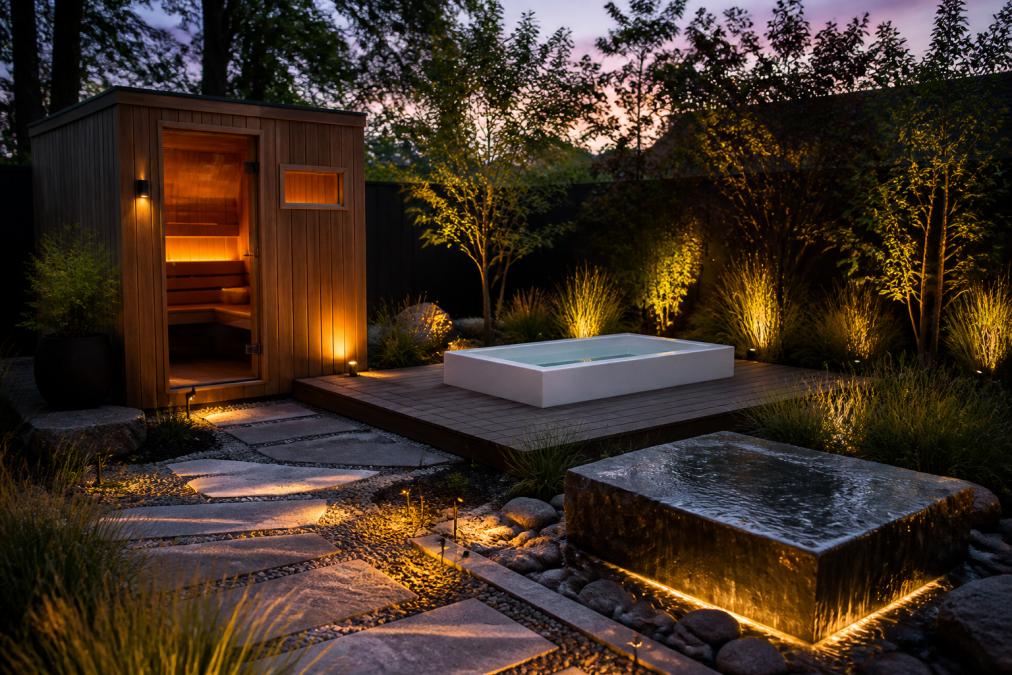
A well-designed outdoor wellness space typically anchors around a home sauna, cold plunge, and water feature. The contrast therapy protocol of alternating between heat and cold has gained significant attention, and having both elements at home removes friction that makes consistent practice difficult.
Spirit of Willow's curated collection includes home saunas, cold plunges, outdoor fountains, and accessories that complete a wellness-focused outdoor space. A wellness-focused backyard zone benefits from:
- Separation from the entertaining area: privacy and quiet are essential
- Natural materials: cedar, stone, and water create a sensory environment that supports relaxation
- Soft ambient lighting: warm, low-level light rather than bright overhead fixtures
- A water feature as a sound anchor: moving water masks ambient noise and signals transition into calm
Biophilic design principles are especially relevant. Surrounding the wellness zone with dense native planting, incorporating natural stone, and using wood-toned finishes creates a genuinely restorative space.
Layered Outdoor Lighting and Smart Home Integration
Most outdoor lighting plans treat light as a single layer rather than a composition. A well-lit modern backyard uses three distinct lighting layers: ambient lighting (string lights, pathway markers), task lighting (kitchen counter, dining table, steps), and accent lighting (uplighting on trees, lit water features, fire features).
Smart outdoor lighting systems manage this layering effectively. You can set the entertaining zone to full brightness for a dinner party and shift to dim, warm ambient scenes for quiet evenings.
Audio integration completes the experience. Installed discreetly along fence lines or within planting beds, they provide immersive audio without cluttering the visual design.
Smart home integration extends to irrigation, connecting directly to low-maintenance goals.
Low-Maintenance Backyard Design That Stays Beautiful
A low-maintenance backyard is not a bare backyard. The goal is a space that looks intentional and cared-for without constant attention. This requires making the right decisions at the design stage, because retrofitting low-maintenance features is far more expensive than building them in from the start.
Choose materials and plants that age gracefully. Composite decking weathers predictably without cracking and splintering. Powder-coated aluminum furniture resists rust and UV fading. Native and drought-tolerant plants fill in over time, crowding out weeds naturally. According to landscape architecture best practices from the American Society of Landscape Architects, thoughtful plant selection and material specification at the design stage are the most effective tools for reducing long-term maintenance.
Smart Irrigation Systems for Homes
Smart irrigation systems are the single most impactful upgrade for low-maintenance backyard design. A smart controller connects to local weather data and adjusts watering schedules automatically, eliminating over-watering and under-watering problems.
The practical setup involves:
- Zone mapping: divide the yard by plant type and sun exposure
- Controller selection: choose a weather-based smart controller compatible with existing valves
- Drip conversion: replace spray heads in planting beds with drip emitters
- Scheduling: set base schedules and let weather integration handle adjustments
According to WaterSense program guidelines from the EPA, smart irrigation controllers can reduce outdoor water use significantly compared to timer-based systems.
Backyard Renovation Budget Planning: Small Space to Full Transformation
Backyard renovation budget planning determines whether projects succeed or stall. The most effective approach is phased renovation: identify elements that deliver the most daily value and install those first, then build out over successive seasons.
Budget-Friendly DIY Modern Upgrades
Several high-impact upgrades are genuinely achievable as DIY projects:
- Pergola kit installation: Pre-cut cedar pergola kits are designed for two-person assembly over a weekend
- Privacy screen installation: Decorative privacy screens can be mounted to existing fence posts without major construction
- Native planting beds: Replacing lawn sections costs primarily in plant material and mulch
- Smart lighting retrofit: Replacing existing fixtures with smart-compatible equivalents requires no new wiring
- Vertical gardening: Wall-mounted planters add softscaping to fence lines in minimal footprint
Small-Space Modern Backyard Solutions
A compact patio, even 8 by 10 feet, can function as a fully realized modern outdoor space. Treat it as a room with defined edges, a clear focal point, and furniture scaled to the footprint.
Small-space design principles:
- Scale furniture appropriately: a two-seat bistro set works better than oversized sectionals
- Go vertical: vertical gardening draws the eye upward, making space feel larger
- One strong focal point: a small water feature or compact fire feature anchors without consuming floor area
- Consistent materials: using the same paving throughout makes small spaces read as larger
- Mirrors and reflective surfaces: weather-resistant outdoor mirrors create illusion of depth
- Climate-specific planting: shade structures in hot climates, fire features in cool climates
Climate-specific modern design deserves attention. A humid Southeast backyard should prioritize shade structures and mold-resistant materials. An arid Southwest design leans into xeriscaping and shade-first planning. Working with your climate is the most reliable path to a low-maintenance, beautiful space.
For climate-appropriate plant selection, the USDA Plant Hardiness Zone Map is the most reliable reference for matching plants to your region.
Spirit of Willow curates outdoor living and wellness products designed to turn a backyard renovation plan into a finished retreat. Explore the Spirit of Willow collection for fire pits, outdoor fountains, home saunas, cold plunges, and carefully selected outdoor living pieces built for lasting beauty. Continue shopping and find the elements that complete your outdoor space.
Frequently Asked Questions
What are the top backyard design trends for 2026?
The biggest trends for 2026 center on biophilic design, outdoor wellness spaces, and multi-functional zoning. Homeowners are replacing traditional lawns with drought-tolerant native plantings, adding outdoor kitchens and fire features for entertaining, and carving out dedicated wellness corners with saunas, cold plunges, and water features. Layered ambient lighting, natural raw materials like stone and cedar, and smart home integration are also defining the modern backyard design aesthetic this year.
How can I make my backyard look more modern and expensive?
The fastest way to elevate a backyard is to focus on spatial zoning, cohesive materials, and intentional focal points. Define areas with permeable pavers or decking, anchor the space with a fire feature or water feature, and layer lighting from path-level up to overhead. Swapping mismatched furniture for a curated, weather-resistant outdoor furniture set makes an immediate difference. Vertical gardening and privacy screening add structure without requiring a large footprint.
Which backyard landscaping features add the most resale value?
Outdoor kitchens, structured hardscaping like patios and retaining walls, and well-designed landscape architecture consistently rank among the highest-return improvements. Sustainable landscaping with native flora reduces water costs, which appeals to buyers. Pergolas and covered outdoor living areas extend the usable season of the backyard, adding practical square footage that appraisers and buyers notice. A cohesive, low-maintenance design signals quality and reduces perceived upkeep costs for prospective buyers.
What are the biggest backyard design mistakes to avoid in 2026?
The most common mistakes are choosing furniture and materials without considering climate, skipping spatial zoning so the backyard feels like one undifferentiated space, and over-planting without a maintenance plan. Ignoring lighting entirely is another major miss, ambient lighting transforms how a space feels after dark. Buying the cheapest outdoor furniture tends to cost more over time when cushions fade and frames corrode. Finally, neglecting drainage and permeable surfaces creates flooding and erosion issues that undermine even the most attractive designs.
This article was written using GrandRanker