

Best Weather Resistant Materials for Outdoor Sofas
Table of Contents
- Why Material Choice Matters for Outdoor Sofas
- Powder-Coated Aluminum: Lightweight Durability
- All-Weather Wicker and Synthetic Resin Rattan
- Best Outdoor Fabric for Rain Protection
- Stainless Steel vs. Wrought Iron Frames
- How to Clean Outdoor Furniture Cushions Effectively
- Protecting Outdoor Sofas from Sun Damage and Fading
- Cost-Per-Year Analysis and Recyclability
Last Updated: August 24, 2026
Why Material Choice Matters for Outdoor Sofas
Selecting the right materials for outdoor sofas determines durability, maintenance demands, and long-term value. The best weather-resistant materials balance performance across moisture, UV exposure, temperature swings, and wind while remaining practical to maintain. At Spirit of Willow, we've curated outdoor furniture collections specifically designed to withstand harsh outdoor conditions without sacrificing design or comfort.
| Material Type | Weather Resistance | Maintenance Level | Best Climate | Typical Lifespan |
|---|---|---|---|---|
| Powder-coated aluminum | Excellent | Low | All climates | 8-12 years |
| PE synthetic wicker | Excellent | Low | All climates | 7-10 years |
| Stainless steel frames | Excellent | Low | All climates | 10+ years |
| Wrought iron frames | Good | High | Dry climates | 5-8 years |
| HDPE lumber | Excellent | Very low | All climates | 15+ years |
| Grade A teak | Excellent | Medium | All climates | 15+ years |
Powder-Coated Aluminum: Lightweight Durability
Powder-coated aluminum has become the industry standard for outdoor sofa frames because it delivers rust-proof performance without the weight penalty of steel. The powder coating, applied electrostatically and cured with heat, creates a protective barrier that resists moisture, salt air, and UV exposure far better than paint alone.
The material excels in coastal climates and humid regions where corrosion resistance matters most. Unlike bare metal frames that require constant maintenance, powder-coated aluminum stays stable with minimal upkeep, a rinse with fresh water after salt spray exposure is often enough. Aluminum frames are roughly one-third the weight of comparable steel frames, making repositioning easier.
Spirit of Willow's 7-Piece Outdoor Patio Furniture Set with Fire Pit Table features a powder-coated steel frame paired with hand-woven PE wicker, delivering lightweight durability combined with weather-resistant seating.

All-Weather Wicker and Synthetic Resin Rattan
Synthetic wicker, typically made from polyethylene (PE) or polypropylene (PP) resin, eliminates the maintenance nightmare of natural wicker while preserving its aesthetic. Hand-woven PE rattan looks virtually identical to natural wicker but won't rot, splinter, or degrade under moisture and UV exposure.
Unlike natural wicker, which is hollow and absorbs water, synthetic resin fibers are solid or semi-solid. Water runs off rather than soaking in, making synthetic wicker ideal for high-humidity climates, poolside installations, and areas with frequent rain.
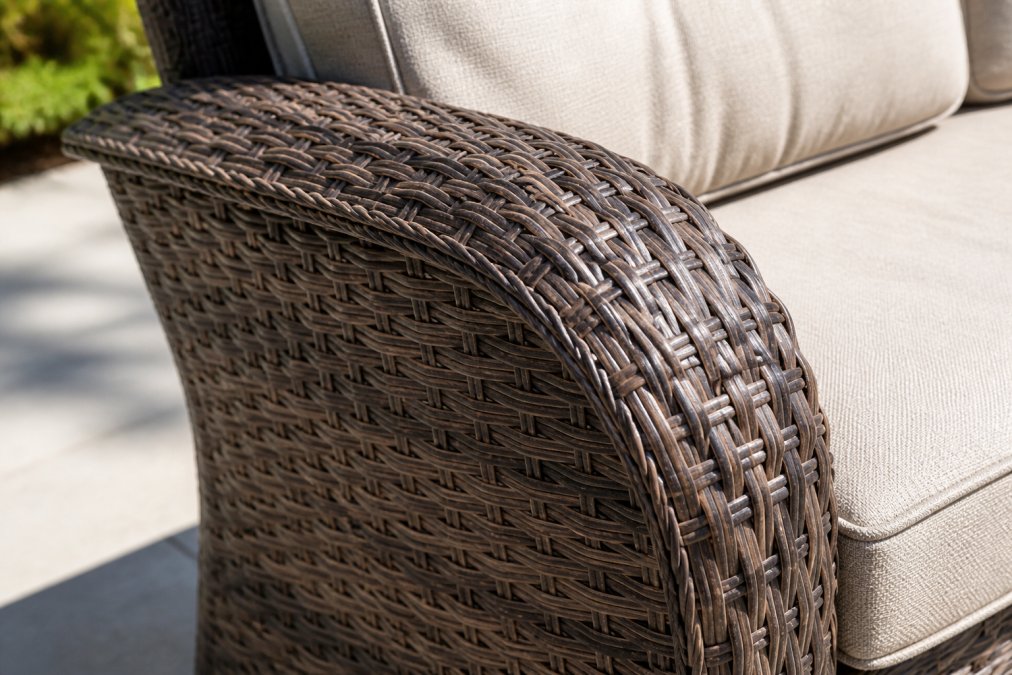
Premium PE rattan uses solution-dyed fibers, where color is integrated into the material itself, resisting fading far better than painted alternatives. Budget wicker often yellows or grays after 2-3 seasons of direct sun exposure.
The frame underneath matters equally. Most outdoor wicker sofas use powder-coated steel or aluminum frames. Look for frames that are powder-coated and welded at stress points to prevent sagging.
Spirit of Willow's 7-Piece Outdoor Sectional Sofa combines hand-woven brown PE rattan with a sturdy steel frame designed to withstand rain and sun while maintaining appearance.

Best Outdoor Fabric for Rain Protection
The best outdoor fabrics fall into two categories: solution-dyed acrylic and high-performance synthetic blends. Solution-dyed acrylic (like Sunbrella) has color throughout the fiber rather than on the surface, meaning fading is minimal even after thousands of hours of UV exposure (peer-reviewed research). Olefin fabric, a polypropylene-based material, offers similar performance at lower cost and is lightweight and quick-drying.
Look for fabrics tested to AATCC Class 4 or higher for UV fade resistance, meaning the fabric has been exposed to 800+ hours of simulated sunlight with minimal color change (aatcc.org). Water repellency is critical, a truly water-resistant fabric sheds rain quickly without absorbing moisture. However, no fabric is completely waterproof; heavy rain will eventually saturate cushions if left exposed. Removable, machine-washable covers solve this problem.
Spirit of Willow's Outdoor Bench Cushion features water-resistant and tear-resistant fabric. The removable cover is machine washable.
Stainless Steel vs. Wrought Iron Frames
Stainless steel offers superior corrosion resistance, especially in coastal or high-humidity environments. The alloy contains chromium, which creates a naturally protective oxide layer that prevents rust, making stainless steel frames essentially maintenance-free (peer-reviewed research). The downside is cost, stainless steel frames are significantly more expensive than powder-coated steel or wrought iron.
Wrought iron, a low-carbon iron that's hand-forged or welded, has been used in outdoor furniture for centuries. It's strong and elegant but rusts without protection. A quality powder coating extends its life, but maintenance is required. In humid or coastal climates, rust can appear within 1-2 seasons if the coating is compromised.
Wrought iron works best in dry climates where moisture exposure is minimal. In the Southeast, Midwest, or near coasts, stainless steel or powder-coated aluminum is the smarter investment.
The 9-Piece Aluminum Outdoor Dining Set from Spirit of Willow uses aluminum frames, lighter and more corrosion-resistant than either steel option, paired with olefin cushions for all-weather durability.

How to Clean Outdoor Furniture Cushions Effectively
For solution-dyed acrylic and olefin fabrics, start with a soft brush to remove loose dirt and debris. Mix a solution of mild dish soap and lukewarm water, avoid harsh chemicals or bleach, which can damage fibers. Use a soft-bristled brush to gently scrub the fabric, working in the direction of the weave.
Rinse thoroughly with clean water and allow to air dry. Most outdoor cushions dry within 2-4 hours in direct sun. For mildew or mold, use a solution of one part white vinegar to three parts water. Spray the affected area, let it sit for 10-15 minutes, then scrub gently and rinse.
Removable cushion covers simplify maintenance. If your cushions have zippered covers, remove and wash separately following manufacturer instructions. Store cushions indoors during off-season months or heavy rain periods to prevent mildew growth.
| Stain Type | Cleaning Method | Drying Time | Prevention |
|---|---|---|---|
| Dirt and dust | Soft brush, mild soap and water | 2-4 hours | Regular brushing |
| Mildew or mold | Vinegar solution (1:3 ratio) | 3-5 hours | Air circulation, indoor storage |
| Food or drink spills | Immediate blotting, mild soap solution | 2-3 hours | Wipe spills immediately |
| Tree sap or pollen | Soft cloth with lukewarm water, gentle rubbing | 2-4 hours | Rinse after storms |
Protecting Outdoor Sofas from Sun Damage and Fading
UV rays are the primary cause of color fading and material degradation in outdoor furniture. Position your sofa in partial shade whenever possible. Even 2-3 hours of direct midday sun daily will accelerate fading compared to furniture in dappled shade or morning sun only. Consider installing a shade structure, a pergola, retractable awning, or patio umbrella, to reduce direct exposure.
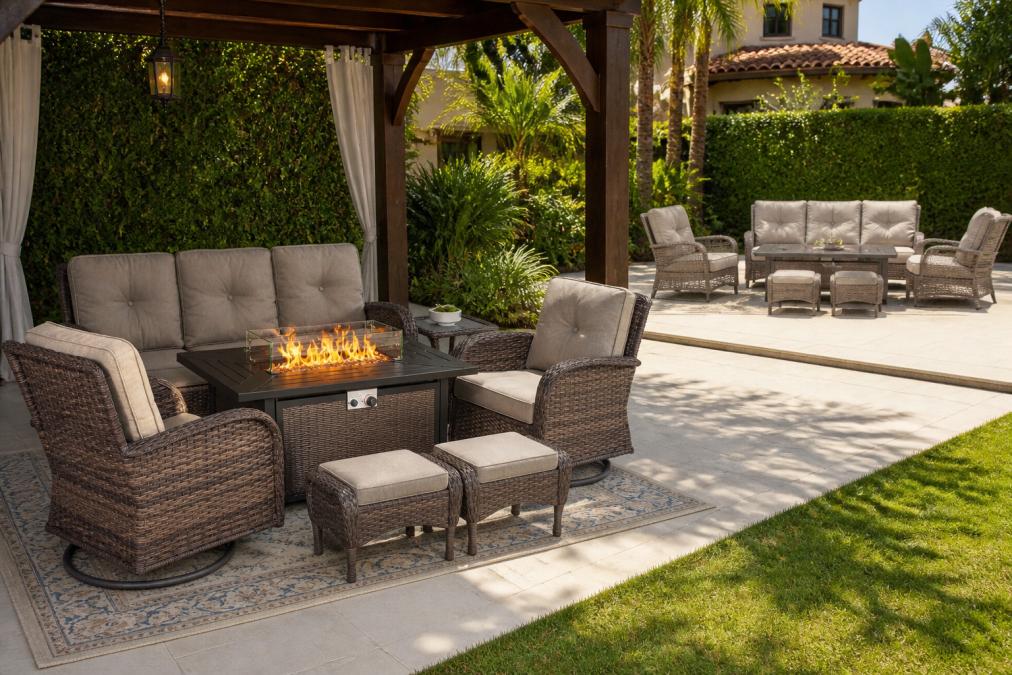
Solution-dyed acrylic and premium olefin resist fading far better than budget alternatives. These materials maintain color for multiple seasons even in full sun, whereas lower-grade fabrics noticeably gray or yellow within a single season.
Powder-coated finishes can chalk or dull over time under intense sun. This is cosmetic rather than functional, the coating still protects the metal underneath. Cushion covers fade fastest because they receive the most direct UV exposure. Removable covers solve this problem, allowing you to refresh your sofa's look without replacing the entire piece.
During winter or extended off-season periods, store cushions indoors or under weatherproof covers.
Cost-Per-Year Analysis and Recyclability
Comparing outdoor sofas purely on purchase price misses the real cost equation. A sofa that costs half as much but lasts three years instead of ten is far more expensive over time. Calculate cost-per-year by dividing the purchase price by expected lifespan. A $1,500 sofa lasting 10 years costs $150 per year. A $750 sofa lasting 3 years costs $250 per year.
Maintenance costs factor in too. A wrought iron frame requiring annual repainting adds $200-400 yearly. A stainless steel or powder-coated aluminum frame requires only occasional rinsing. Over a decade, the maintenance-free option saves hundreds of dollars.
Aluminum frames are fully recyclable, the metal can be melted down and reformed indefinitely. Steel frames are also recyclable. Synthetic wicker and olefin fabrics are recyclable at facilities equipped to handle plastics, though many standard recycling centers don't accept them. Teak and HDPE lumber can be recycled or repurposed.
Frequently Asked Questions
What is the most weather resistant outdoor sofa material?
All-weather wicker with a powder-coated steel frame offers a strong combination of weather resistance and durability. PE rattan wicker resists moisture, UV rays, and temperature swings without rotting or warping. Pair it with solution-dyed acrylic or olefin cushion fabric for enhanced protection. Aluminum frames provide lightweight corrosion resistance, while stainless steel offers maximum rust-proof performance in coastal or humid climates.
How do I choose outdoor furniture for humid or rainy climates?
Prioritize moisture-wicking and hydrophobic materials. Select synthetic resin rattan or powder-coated aluminum frames that won't absorb water or rust. Choose cushion fabrics labeled solution-dyed acrylic or PFAS-free olefin, which shed water and resist mildew. Ensure cushions have removable, machine-washable covers for easy maintenance. Avoid untreated wood and wrought iron unless you commit to regular sealing and protective coatings.
What is the best fabric for outdoor sofa cushions in terms of durability?
Solution-dyed acrylic and olefin fabrics rank highest for outdoor durability. Both resist fading, water, and mildew. Olefin is lighter and dries faster, making it ideal for rainy regions. Solution-dyed acrylic offers superior color retention and softness. Look for fabrics tested to AATCC Class 4 standards after 800+ hours of UV exposure. High-density foam cores prevent sagging and extend cushion life across multiple seasons.
How do weather resistant materials compare in cost over time?
Powder-coated aluminum and synthetic wicker sofas cost more upfront but can last 8-10 years with minimal maintenance, potentially lowering annual cost. Teak wood sofas can be a significant investment but develop a natural patina and can last 15+ years. Wrought iron may require regular rust treatment, which can increase long-term labor costs. Calculate cost-per-year by dividing total price by expected lifespan. Premium materials with low maintenance often deliver better value than cheaper options requiring constant cleaning and repair.
This article was written using GrandRanker