

Small Patio Furniture Layout Ideas: Design for Every Space
Table of Contents
- Measure Your Space and Map Your Layout
- How to Arrange Patio Furniture on a Small Deck
- Space-Saving Outdoor Furniture That Works
- Small Patio Design Mistakes to Avoid
- Layout Strategies for Different Patio Shapes
- Designing Around Fire Pits and Focal Points
- Conclusion
Last Updated: August 22, 2026
Measure Your Space and Map Your Layout
The foundation of any successful small patio furniture layout starts with understanding your exact dimensions. Before you buy a single piece, measure your space in feet, length, width, and height if you have overhead structures like pergolas or eaves. Note any architectural features: steps, drainage areas, permanent fixtures, or utility access points that will shape your layout.
A small patio furniture layout works best when you know precisely what you're working with. Many homeowners skip this step and end up with pieces that look cramped or block natural traffic patterns. Sketch your space on graph paper or use a simple digital tool to map furniture placement at scale. This takes 15 minutes and prevents costly mistakes.
Consider traffic flow as your primary design principle. The path from your door to the edge of the patio should remain clear, most designers recommend at least 24-30 inches of open passage (asla.org). If your patio is 8x10 feet, that's already tight, so every inch matters. Identify where people naturally walk and protect that zone from furniture placement.
Spirit of Willow customers frequently ask about maximizing limited square footage, and the answer always comes back to intentional measurement. Once you've mapped your actual dimensions, you can evaluate whether a full dining set makes sense or if a bistro set with lounge chairs better suits your space. This clarity prevents impulse purchases that don't fit.

How to Arrange Patio Furniture on a Small Deck
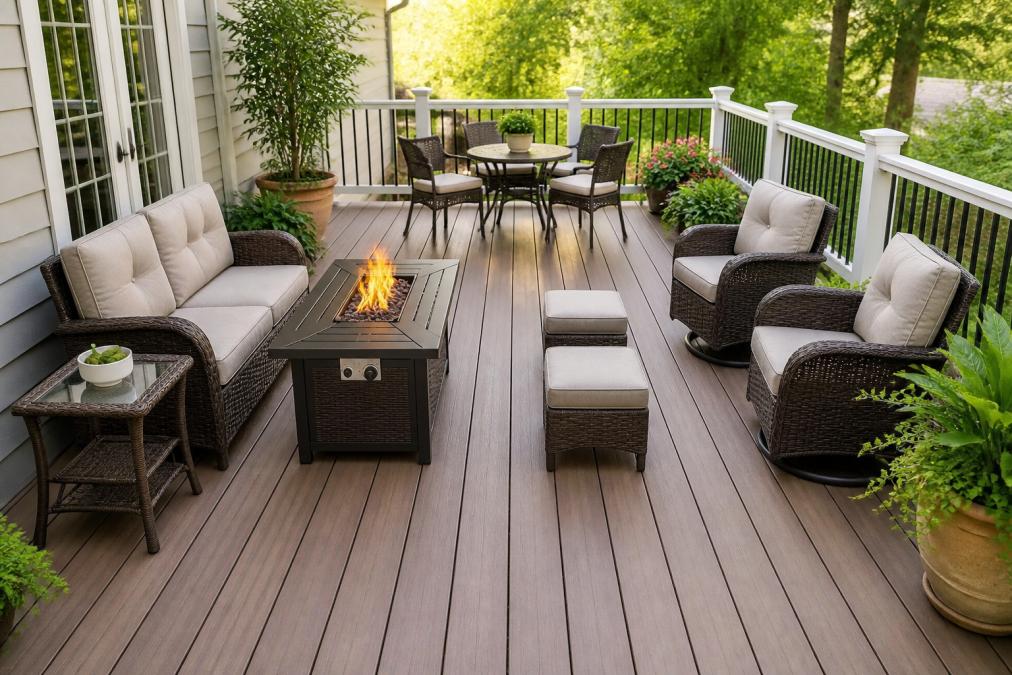
Arranging furniture on a small deck requires a strategic approach that balances seating, visual balance, and usable space. The most effective arrangements follow one of two core patterns: the perimeter approach or the conversation zone method. Your choice depends on how you plan to use the space.
The Perimeter Approach
Positioning furniture around the edges of your deck maximizes the open center, creating the illusion of more space. This arrangement works particularly well for patios under 100 square feet (peer-reviewed research). Place your largest pieces, a sectional, lounge chairs, or a small dining table, against the outer walls. This approach maintains an open visual weight in the middle and makes the patio feel less cluttered.
The perimeter method also simplifies traffic flow. Guests can move through the center without navigating around furniture clusters. If you have a small patio with limited seating needs, this is often the cleanest solution. A single rocking chair, a bistro set, and a few accent tables arranged along the perimeter create a sophisticated, uncluttered aesthetic.
When using this approach, maintain consistent spacing between pieces. Avoid pushing furniture directly into corners, leave 6-12 inches of breathing room. This prevents the space from feeling boxed in and allows for easier cleaning and maintenance around the edges.
Creating Conversation Zones
Rather than spreading furniture evenly, conversation zones cluster seating into distinct, intimate areas. This approach works better for patios where you entertain frequently or want multiple functional spaces. Arrange lounge chairs and accent tables in a semi-circle or L-shape to create a natural gathering spot.
A conversation area typically needs 4-6 linear feet of depth to feel comfortable (asla.org). Two lounge chairs facing each other with a small table between them create an inviting zone without overwhelming a compact space. This strategy also allows you to define separate activities, a dining zone in one corner, a relaxation zone in another, even on a small footprint.
The key is intentionality. Every piece in a conversation zone should serve the social function of that area. Avoid scattering single chairs randomly; instead, group them with purpose. This creates visual coherence and makes the space feel designed rather than haphazard.
Space-Saving Outdoor Furniture That Works
Choosing the right furniture type makes the difference between a cramped patio and one that feels intentional and open. Space-saving outdoor furniture doesn't mean sacrificing comfort or style, it means selecting pieces designed for compact living.
Modular Sectionals and Nesting Tables
Modular sectionals are engineered for flexibility. Unlike traditional sectionals that demand a fixed footprint, modular pieces allow you to configure seating based on your actual space. You might use two pieces to create an L-shape or arrange them in a line. As your needs change, you can reconfigure without replacing the entire set.
Nesting tables solve the dual-purpose problem elegantly. A set of three nesting tables takes up the footprint of one standard accent table but provides flexible surface space for drinks, plants, or décor. When guests leave, you nest them together, instantly reclaiming floor space. This approach works beautifully in small patio design mistakes scenarios where every square foot counts.
The Spirit of Willow 7-piece outdoor patio furniture set with fire pit table combines modular flexibility with integrated functionality. The sectional pieces can be arranged to fit your specific layout, and the fire pit table serves as both a heat source and a gathering point, eliminating the need for a separate table and seating.
Multi-Functional Pieces with Storage
Storage benches and ottomans with hidden compartments serve double duty. They provide seating or a place to rest your feet while storing cushions, garden tools, or entertaining supplies inside. This eliminates the need for a separate storage shed and keeps your patio visually clean.
A multi-functional approach extends to pieces like accent tables with shelving underneath or lounge chairs with built-in side tables. Every element should earn its place by serving more than one purpose. Cushion storage benches are particularly valuable, they protect your cushions from weather while providing additional seating and a visual anchor for your layout.
When evaluating multi-functional furniture, consider durability alongside functionality. Weather-resistant materials like teak, rattan, or powder-coated steel ensure your pieces maintain their beauty over time. Spirit of Willow's collection focuses on pieces that combine aesthetic appeal with practical longevity, addressing the common concern that outdoor furniture fades or deteriorates within a year.
Small Patio Design Mistakes to Avoid
Understanding what doesn't work is as valuable as knowing what does. Common errors in small patio layouts stem from overlooking traffic flow, overcrowding, or choosing pieces that don't match your actual use patterns.
Overcrowding is the most frequent mistake. Homeowners fill small patios with too many pieces, assuming more furniture means more functionality. In reality, a cluttered patio feels smaller and becomes harder to navigate. Start with essential pieces, seating and a surface for drinks, then add only items that serve a clear purpose.
Ignoring scale and proportion creates visual chaos. A full-sized dining table designed for eight people will dominate a 10x12 patio. Instead, a bistro set or a compact dining table scaled to your space maintains proportion and leaves room for other activities. Choose pieces that fit your actual entertaining style, not an aspirational version of it.
Neglecting traffic patterns is another critical error. If the natural path from your door cuts through your seating area, guests will constantly navigate around furniture. This creates tension and makes the space feel smaller. Always protect your primary traffic route.
Many people also underestimate the importance of weather-resistant materials. Cushions that fade after one season or metal that rusts undermine the entire investment. Quality matters more in small spaces, one durable, beautiful piece outperforms three cheaper alternatives that deteriorate quickly.
Layout Strategies for Different Patio Shapes
Your patio's shape dictates which layout strategies work best. Rectangular, L-shaped, and corner spaces each present unique challenges and opportunities.
Rectangular Patios
Rectangular patios are the easiest to design for because they offer clear visual lines. For a standard rectangular space, the perimeter approach works naturally. Place your longest furniture piece along the longest wall, then balance with seating on the opposite side.
If your rectangular patio is narrow (like 6 feet wide), arrange furniture in a single line facing outward toward your garden or yard view. This prevents a bowling-alley feel and creates a linear conversation zone. A bistro set with two chairs and a small table fits comfortably in narrow rectangles without blocking sightlines.
For wider rectangular spaces (10+ feet), you have room to create multiple zones. A dining area at one end and a lounge seating area at the other work well if you have at least 12-15 feet of length. Separate these zones with a change in flooring material, a rug, or strategic plant placement.
L-Shaped or Corner Spaces
L-shaped patios offer hidden advantages. The corner naturally creates an intimate conversation zone. Position your primary seating in the corner, using the two walls as natural anchors. This reduces the number of pieces you need while creating a defined gathering space.
The secondary arm of the L can serve a different function, a dining area, a quiet reading nook, or a dedicated entertaining zone. This separation prevents the space from feeling like one continuous area and allows you to use the layout more flexibly.
Corner spaces benefit from angular furniture arrangement. Rather than pushing pieces against walls, angle lounge chairs or sectionals slightly inward toward the corner. This creates visual interest and makes the space feel more intentional than a rigid, wall-hugging layout.
Designing Around Fire Pits and Focal Points
A fire pit or focal point, a water feature, an architectural element, or a view, becomes the organizing principle for your entire layout. Everything else arranges around this central element.
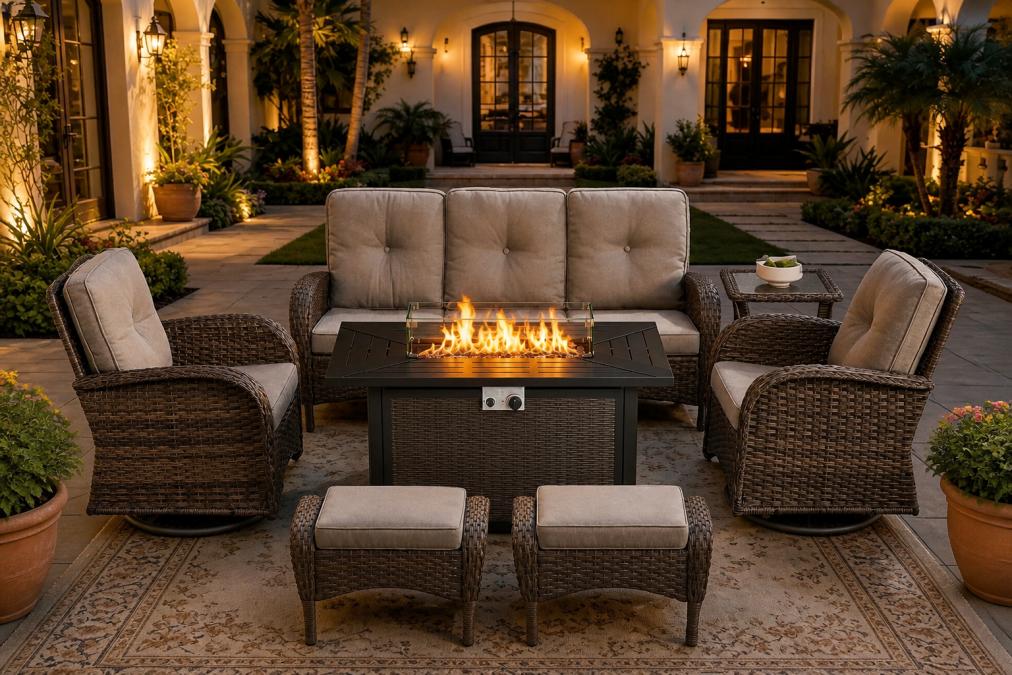
Fire pits naturally draw people inward. Arrange seating in a semi-circle or loose circle facing the pit, creating an inherent conversation zone. This arrangement works beautifully in small patios because it organizes all your seating around a single, compelling focal point. The fire pit table, combining heat, light, and surface area, eliminates the need for separate accent tables.
The Spirit of Willow 7-piece outdoor patio furniture set with fire pit table demonstrates this principle perfectly. The rattan wicker sectional and lounge seating arrange naturally around the fire pit, creating an intimate gathering space that feels complete and intentional. The weather-resistant materials ensure the setup maintains its beauty through seasons of entertaining.
If you don't have a fire pit, choose another focal point: a garden view, a water feature, a pergola, or even a striking architectural detail. Orient your primary seating toward this focal point rather than toward your house. This creates a more engaging, outward-facing layout that draws people into the patio experience.
For small patios, a focal point eliminates decision fatigue. Instead of wondering how to arrange furniture in an undefined space, you have a clear organizing principle. Everything radiates from or relates to this central element, creating visual coherence and a sense of intentional design.
Creating a beautiful small patio furniture layout transforms your outdoor space from overlooked to essential. The challenge isn't finding room for everything, it's choosing pieces that serve your actual lifestyle and arranging them with intention. Start with measurement, prioritize traffic flow, and let a focal point guide your arrangement. Spirit of Willow's curated collection of weather-resistant outdoor furniture, including modular sectionals and fire pit tables, makes it easier to create a sophisticated layout that feels spacious and welcoming. Shop the collection today and discover how thoughtful design elevates your outdoor living experience.
Frequently Asked Questions
How do you choose the right scale of furniture for a compact outdoor area?
Match furniture size to your patio dimensions using the 60-40 rule: furniture should occupy no more than 60% of your space, leaving 40% open for movement. Measure your patio length and width, then select pieces with a combined footprint roughly half that total. For an 8x10 patio, aim for furniture that takes up about 40 square feet. Bistro sets and single lounge chairs work better than oversized sectionals in tight spaces. Look for pieces with open legs or transparent materials like rattan, which create visual lightness and don't overwhelm small patios.
What are common furniture mistakes that make a small patio look cluttered?
The biggest mistakes are overcrowding with too many pieces, placing furniture in the center of the space instead of along edges, and choosing pieces with heavy visual weight. Avoid mixing too many materials or colors, which fragments the space. Don't place large outdoor dining sets in tiny patios, and skip decorative items that don't serve a purpose. Keep traffic flow clear by leaving a 2-3 foot pathway through your patio. Choose a cohesive color palette with one or two accent colors, and select furniture with a minimal footprint, nesting tables, foldable chairs, and modular sectionals compress when not in use.
How can space-saving outdoor furniture help transform a small patio?
Space-saving furniture reduces your patio's visual and physical footprint while maintaining seating capacity. Modular sectionals adapt to your exact layout, nesting tables stack away, and storage benches provide seating plus hidden cushion storage. Multi-functional pieces like a fire pit table that seats six while serving as a focal point eliminate the need for separate dining and lounge zones. Foldable chairs disappear when guests leave. These pieces allow you to maximize functionality without the cramped feeling of traditional fixed furniture. Weather-resistant materials like rattan and teak maintain durability while keeping profiles lightweight and open.
What's the best way to arrange patio furniture on a small deck to maximize functionality?
Start with a perimeter arrangement: push furniture to the edges to keep the center open for movement and sight lines. Define conversation areas with two lounge chairs facing each other across an accent table, creating intimate zones within your small space. Use traffic flow patterns, imagine how people move through your patio, and keep pathways clear. Position dining away from lounge areas if space allows. Vertical storage and wall-mounted elements free up floor space. Layer lighting zones to define areas without adding furniture. A bistro set anchors one zone while a small sectional or pair of chairs defines another, creating the impression of a larger, well-organized space.
This article was written using GrandRanker