

Best Low Maintenance Patio Furniture Materials
Table of Contents
- What Makes Patio Furniture Low Maintenance
- Powder-Coated Aluminum: Weather-Resistant and Rust-Proof
- Synthetic Wicker and High-Density Polyethylene
- Teak and Hardwood Characteristics for Outdoor Durability
- How to Clean Outdoor Furniture Cushions and Covers
- Outdoor Furniture Maintenance Tips by Material Type
- Best Outdoor Furniture for Harsh Climates and Regions
- Conclusion
Last Updated: August 20, 2026
What Makes Patio Furniture Low Maintenance
Low maintenance patio furniture starts with material selection. The right choice eliminates hours of seasonal cleaning, refinishing, and repairs. Spirit of Willow curates outdoor furniture specifically designed to withstand weather while requiring minimal upkeep.

The best low maintenance patio furniture materials share three core characteristics: weather resistance, UV protection, and easy cleaning. Weather resistance means the material won't absorb moisture or degrade when exposed to rain, humidity, and temperature swings. UV protection prevents fading and structural breakdown from sun exposure. Easy cleaning means you can wipe down surfaces or rinse with a hose without specialized treatments.
What separates truly low-maintenance pieces from those requiring constant attention is how the material ages. Some materials develop a protective patina over time. Others maintain their original appearance with minimal effort. Understanding these differences helps you choose furniture that fits your climate and aesthetic preferences.
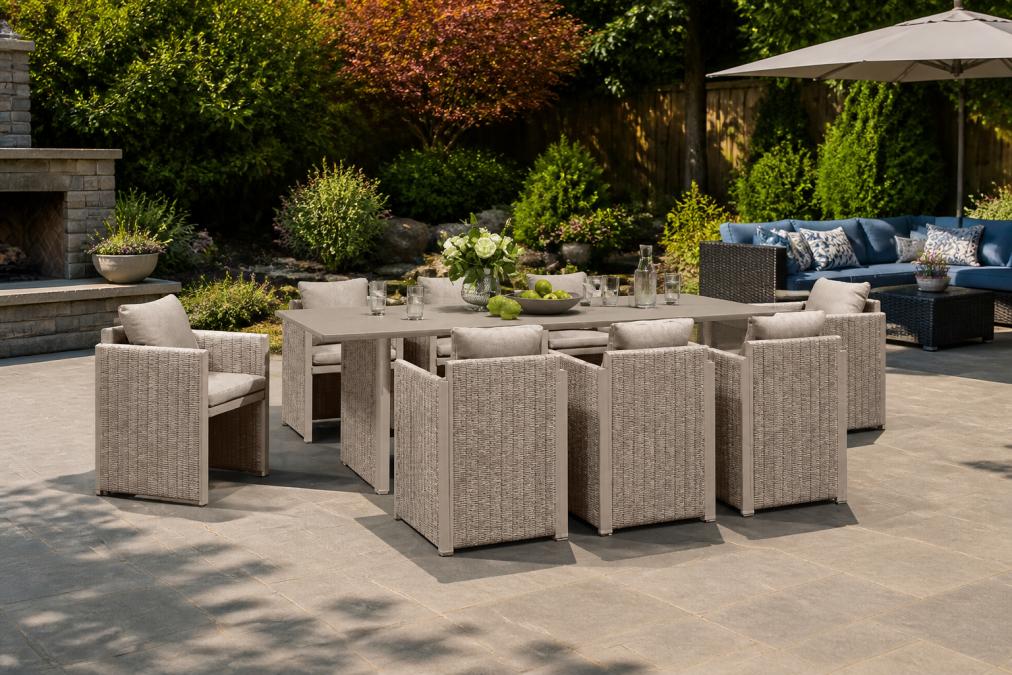
The investment in quality materials pays dividends. Premium low-maintenance pieces maintain their beauty for years, sometimes decades, making them better value despite higher upfront costs.
| Material Type | Weather Resistant | UV Protected | Cleaning Frequency | Best Climate |
|---|---|---|---|---|
| Powder-coated aluminum | Yes | Yes | Monthly | All climates |
| Synthetic wicker | Yes | Yes | Monthly | Humid/wet |
| Teak hardwood | Yes | No | Quarterly | Dry/temperate |
| Recycled plastic (HDPE) | Yes | Yes | Monthly | All climates |
| Resin | Yes | Yes | As needed | All climates |
Powder-Coated Aluminum: Weather-Resistant and Rust-Proof
Powder-coated aluminum is the gold standard for low-maintenance outdoor furniture. The aluminum frame itself won't rust, corrode, or absorb moisture. The powder coating, a factory-applied finish, creates a protective barrier that resists fading, scratching, and weather damage.
This combination makes aluminum ideal for humid climates, coastal areas, and harsh winters. Unlike bare metal, powder-coated aluminum won't develop rust spots even with salt spray exposure. The coating maintains structural integrity for years without refinishing or special treatments.
Cleaning is straightforward. A damp cloth removes dust and dirt. For stubborn stains, mild soap and water work perfectly. No sealers, oils, or protective treatments required. The 9-Piece Aluminum Outdoor Dining Set from Spirit of Willow demonstrates this advantage, the aluminum frame paired with UV-resistant olefin cushions creates a complete low-maintenance dining solution starting at $3,587.93.

Powder-coated aluminum is susceptible to denting if struck hard, though the coating itself is durable. Weight capacity is typically excellent, and the material is lightweight enough to move seasonally.
Synthetic Wicker and High-Density Polyethylene
Synthetic wicker, typically made from high-density polyethylene (HDPE) or polypropylene, offers the aesthetic appeal of natural rattan without the maintenance nightmare. Real wicker rots and splits; synthetic wicker resists moisture, UV rays, and temperature swings while maintaining visual warmth.
High-density polyethylene wicker is mildew-resistant and won't harbor mold even in damp climates. The material is non-porous, so water runs off rather than soaking in. This makes it ideal for humid regions where natural materials struggle.
Cleaning synthetic wicker is effortless. Dust wipes away with a soft cloth. For deeper cleaning, spray with a garden hose and let air dry. No special cleaners needed. The 7-Piece Outdoor Patio Furniture Set with fire pit table from Spirit of Willow uses hand-woven PE wicker with a powder-coated steel frame, priced at $1,484.83. The eco-friendly olefin cushion covers are UV-resistant and water-repellent.

The key advantage is longevity without effort. Natural rattan requires annual oiling and eventual replacement. Synthetic wicker maintains its appearance for a decade or more with occasional rinsing.
Synthetic wicker can fade if exposed to intense, direct sunlight for years, though this is cosmetic rather than structural. Position wicker furniture in partially shaded areas if appearance matters most. Recycled plastic wicker (made from reclaimed HDPE) adds environmental benefits while delivering superior durability.
Teak and Hardwood Characteristics for Outdoor Durability
Teak is the premium hardwood choice for outdoor furniture. Its high oil content naturally resists rot, insects, and moisture damage. It develops a silver-gray patina over time, a natural protective layer many homeowners find beautiful.
Maintenance is minimal but not zero. Teak doesn't require annual sealing, but occasional cleaning helps. A soft brush and mild soap remove surface dirt and mildew. Once or twice yearly, rinse with a garden hose. Some owners apply teak oil annually to maintain the original color, but this is optional, the patina is equally attractive and requires nothing.
Teak's main limitation is cost and weight, making rearrangement difficult. While teak resists rot and insects, it's not immune to splitting in extremely dry climates with large temperature swings. In arid regions, periodic light oiling prevents checking and cracking.
Other hardwoods like eucalyptus and cedar offer similar benefits at lower prices. Eucalyptus is durable and affordable but lacks teak's natural oils, requiring more frequent maintenance. Cedar is naturally rot-resistant but softer and less durable than teak. Both develop patina over time.
For homeowners seeking natural wood without teak's cost, eucalyptus is a solid alternative. It's sustainably harvested, naturally durable, and requires only occasional cleaning.
How to Clean Outdoor Furniture Cushions and Covers
Cushions and fabric covers require different care than furniture frames. Most outdoor cushion fabrics are designed for easy maintenance.
Start with regular vacuuming using a soft brush attachment to remove dust, pollen, and debris. Do this monthly during the season to prevent dirt from embedding into the fabric.
For spot cleaning, use a solution of mild dish soap and water. Mix one teaspoon of soap in a quart of warm water. Apply with a soft cloth, gently scrubbing stained areas. Rinse thoroughly with clean water and allow to air dry completely.
For deeper cleaning, most outdoor cushion fabrics tolerate gentle machine washing on a delicate cycle. Remove cushions, place them in a mesh laundry bag, and wash with cold water and mild detergent. Air dry completely before reinstalling. Check the manufacturer's label first.
Olefin fabric, commonly used on quality outdoor cushions like those on Spirit of Willow's furniture, is particularly forgiving. It resists water absorption and staining. Most spills wipe away immediately with a cloth.
Mildew prevention is critical in humid climates. Store cushions indoors during off-season months. If mildew appears, spray with equal parts white vinegar and water, let sit for 15 minutes, then rinse and air dry in direct sunlight.
For cushions stored on the patio year-round, consider weatherproof storage boxes. The 2-Pack Storage Bench from Spirit of Willow provides 240 gallons of weatherproof storage for cushions and supplies, starting at $412.26. Keeping cushions dry extends their lifespan significantly.
Zipper covers on cushions allow you to remove and wash just the outer layer. Wash covers separately, and they dry quickly.
Outdoor Furniture Maintenance Tips by Material Type
Different materials require different approaches.
Aluminum furniture: Monthly cleaning with a damp cloth suffices. For coastal environments, rinse with fresh water weekly to prevent salt buildup. Avoid abrasive scrubbers that damage the powder coating. If the coating chips, touch up with clear coat immediately to prevent corrosion.
Synthetic wicker: Rinse with a garden hose monthly. For stubborn dirt, use a soft brush with mild soap and water. Dry with a cloth to prevent water spots. Store cushions indoors during winter in cold climates.
Teak wood: Rinse with water and a soft brush twice yearly to remove mildew and dirt. Allow to air dry completely. If you prefer to maintain the original color, apply teak oil annually. In extremely dry climates, light oiling prevents cracking.
Resin furniture: Wipe clean with a damp cloth monthly. For deeper cleaning, use mild soap and water. Resin is extremely low-maintenance and can remain outside year-round. No sealers or special treatments needed.
Recycled plastic (HDPE): Rinse with a garden hose to remove dust and dirt. For stains, use mild soap and water with a soft cloth. Store out of direct sunlight if possible to slow minor fading.
Wrought iron and cast aluminum frames: Inspect annually for rust or corrosion. If bare metal is exposed, apply rust-preventive paint immediately. Avoid storing in damp conditions during off-season.
Create a simple maintenance calendar. Mark monthly cleaning dates to prevent neglect. Fifteen minutes of monthly maintenance prevents hours of remedial work later.
Best Outdoor Furniture for Harsh Climates and Regions
Climate dramatically affects which materials perform best.
Hot, dry climates (Arizona, Nevada, Southern California): Powder-coated aluminum and recycled plastic excel here. UV protection is critical. Teak develops checking and cracking in extreme heat unless oiled regularly. Synthetic wicker is ideal because it won't dry out and crack. Store cushions indoors to prevent UV damage.
Humid, wet climates (Florida, Louisiana, coastal areas): Synthetic wicker and high-density polyethylene dominate. These materials resist mildew and moisture absorption. Powder-coated aluminum performs excellently. Avoid natural wood unless committed to regular oiling. Always store cushions indoors during rainy seasons. The 7-Piece Outdoor Patio Furniture Set with synthetic wicker from Spirit of Willow is specifically designed for these conditions, priced at $1,484.83.
Cold climates with freeze-thaw cycles (Northeast, Midwest, Mountain regions): Aluminum and resin are superior choices. These materials expand and contract minimally, resisting freeze-thaw damage. Synthetic wicker handles cold well but store cushions indoors. Teak and hardwoods can crack with rapid temperature swings. Remove cushions and store furniture indoors during winter.
Coastal salt-spray environments: Powder-coated aluminum is the best choice. The coating resists salt corrosion far better than bare metal. Synthetic wicker also performs well. Avoid natural wood and uncoated metals. Rinse aluminum furniture weekly with fresh water to prevent salt buildup. Store cushions indoors year-round.
Windy regions: Weight and stability matter most. Heavier furniture resists tipping. Powder-coated aluminum with a sturdy base handles wind well. The Cheyenne 40-inch square aluminum fire pit at $1,594.81 provides stability for entertaining even in breezy conditions.
Regional climate matching prevents buyer's remorse. Choose material based on your actual climate, not just aesthetics.
Repairability and Long-Term Value
Repairability is often overlooked when choosing outdoor furniture. Some materials are easily repaired; others require replacement.
Powder-coated aluminum is highly repairable. Bent frames can be straightened. Chipped coatings can be touched up. Replacement parts are often available, making aluminum a smart long-term investment.
Synthetic wicker is moderately repairable. Individual sections can be re-woven, but it's labor-intensive. Damaged chairs are more commonly replaced than repaired.
Teak wood is highly repairable. Cracks can be filled. Splinters can be sanded. Entire sections can be replaced. This repairability is one reason teak commands premium pricing.
Resin is difficult to repair. Cracked pieces typically require replacement, though resin rarely cracks under normal use.
Recycled plastic (HDPE) is moderately repairable. Small cracks can be sealed. Entire sections can be replaced if necessary.
When evaluating furniture, consider repairability as part of the long-term cost equation. A repairable piece might cost more upfront but save money over decades.
Choosing the best low maintenance patio furniture means matching material properties to your climate and preferences. Powder-coated aluminum and synthetic wicker excel in most environments, requiring only monthly cleaning and occasional cushion care. Teak offers timeless beauty with minimal maintenance for those willing to pay premium prices. Recycled plastic combines durability with environmental responsibility.
Spirit of Willow's curated collection brings together these proven materials in designs engineered for low maintenance. The 9-Piece Aluminum Outdoor Dining Set combines weather-resistant aluminum with UV-resistant olefin cushions, creating a complete dining solution that handles seasons of use without degradation. Pair it with storage solutions like the Weatherproof Resin Storage Bench to keep cushions protected and your patio organized year-round. Start building your low-maintenance outdoor retreat today with furniture designed to maintain its beauty for years.
Frequently Asked Questions
What is the best material for low-maintenance outdoor furniture?
Powder-coated aluminum and synthetic wicker (PE rattan) are the top choices for low-maintenance patio furniture. Aluminum resists rust and corrosion, requires only occasional rinsing, and won't splinter or warp. Synthetic wicker offers weather-resistant durability without the rotting concerns of natural wood, and both materials maintain their appearance with minimal upkeep compared to teak or untreated wood.
How often should you clean outdoor furniture cushions?
Clean cushions every 2-4 weeks during the season, or when you notice visible dirt or stains. For UV-resistant olefin fabric covers, simply wipe with a damp cloth or rinse with a hose. For stubborn stains, use mild soap and water. Cushions with water-resistant polyester covers are equally easy to maintain, just let them air dry completely before storing to prevent mildew.
Is teak wood considered low maintenance for outdoor use?
Teak is naturally weather-resistant and won't rot or attract insects, but it's not truly low-maintenance. It develops a silvery patina over time, which some homeowners prefer, but others treat it annually with teak oil to maintain its original color. This requires more effort than aluminum or synthetic wicker, making it a moderate-maintenance choice rather than low-maintenance.
What outdoor furniture materials work best in harsh climates?
Powder-coated aluminum excels in harsh conditions, it resists salt spray, UV damage, and extreme temperatures without corroding. High-density polyethylene (HDPE) and synthetic wicker handle moisture and humidity well. Resin-based materials resist fading and moisture damage. Avoid untreated wood, cast iron without protective coatings, and natural wicker in areas with heavy rain, salt air, or intense sun exposure.
This article was written using GrandRanker