

Live Outer vs Other Premium Outdoor Brands: 2026 Guide
Table of Contents
- Live Outer vs Other Premium Outdoor Brands: A Direct Comparison
- What Defines the Best Outdoor Sofa Brands in 2026?
- Weather-Resistant Outdoor Furniture Materials Compared
- How to Choose High-End Patio Furniture That Lasts
- The Hidden Cost of Premium Outdoor Brands: Repairability and Resale Value
- Spirit of Willow's Curation: Where Quality Meets Value
- Conclusion: Choosing the Right Premium Outdoor Brand
- Frequently Asked Questions
Last Updated: September 5, 2026
Live Outer vs Other Premium Outdoor Brands: A Direct Comparison
When shoppers compare Live Outer vs other premium outdoor brands, price tags tell only part of the story. The real distinction lies in material specifications, construction methods, and how those choices hold up after several seasons of real weather. At Spirit of Willow, we evaluate outdoor furniture against these same criteria because durability and repairability justify the investment.
Most buyers assume a higher price guarantees longevity. In practice, the premium market splits into brands selling lifestyle aesthetics with standard construction, and those engineering pieces with specific performance materials. The difference becomes obvious after year one, particularly with cushion density, frame welds, and fabric warranties.
What Defines the Best Outdoor Sofa Brands in 2026?
The best outdoor sofa brands in 2026 share a commitment to structural integrity and material transparency, publishing frame gauge, cushion foam density, and fabric testing standards rather than relying on vague terms like "all-weather" or "luxury outdoor."
Three criteria separate leaders from the rest. Frame construction matters first: powder-coated steel or welded aluminum resists rust far longer than standard tubular steel. Cushion density comes second, with high-density foam holding its shape where lower-grade polyurethane collapses within a season. Fabric performance rounds out the list, with UV-protected, water-repellent fabrics resisting fading and mildew far better than standard polyester blends.

Weather-Resistant Outdoor Furniture Materials Compared
Material selection determines whether patio furniture survives harsh sun, heavy rain, and freezing winters or becomes fast furniture destined for the curb. A deeper look at technical specifications reveals why performance fabrics over engineered frames have become the dominant choice for premium brands.
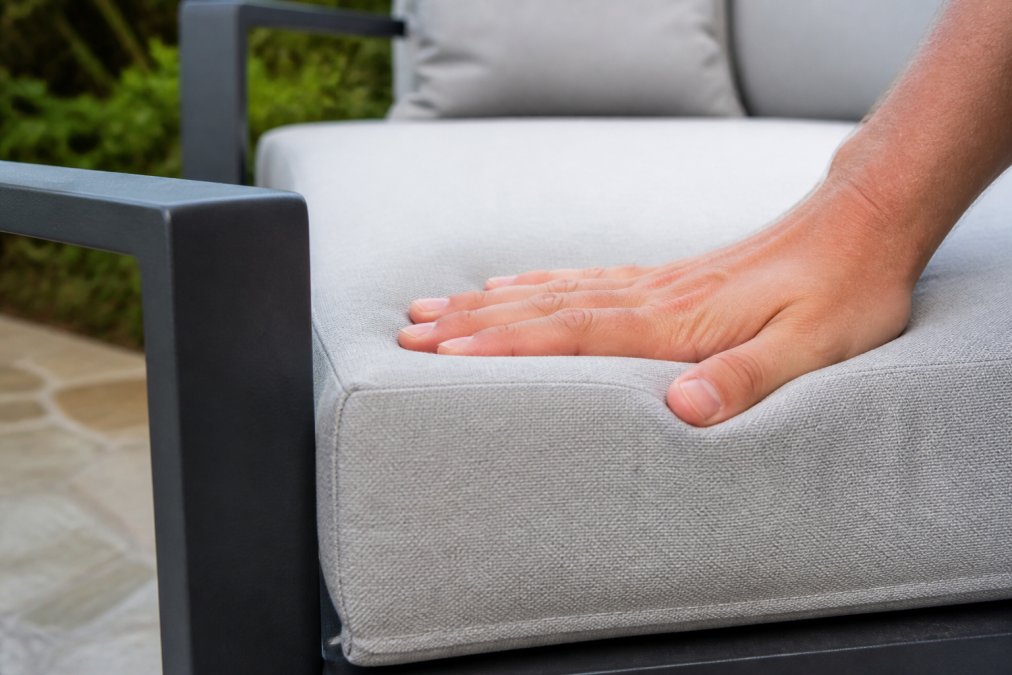
The Technical Case for Performance Fabrics
The two dominant approaches are performance fabrics over engineered frames, and traditional materials like teak and natural wicker. The difference is not just aesthetic, it is measurable performance against specific environmental stressors.
UV Resistance and Fading: Standard polyester blends begin showing color loss after roughly 300 hours of direct sunlight. Solution-dyed acrylic and olefin fibers have pigment infused into the fiber itself, so the color cannot wash out or wear off. Most commercial-grade olefin fabrics withstand over 1,000 hours of UV exposure before noticeable fading. A Southwest patio receives roughly 3,000+ hours of direct sun annually, making this critical for buyers in Arizona, Nevada, and Southern California.
Moisture and Mildew: In humid climates like Florida or the Gulf Coast, the enemy is moisture. Standard polyester absorbs water, breeding mildew. Performance fabrics use a tight weave and hydrophobic treatment that causes water to bead up and roll off. The fibers themselves do not absorb moisture, so even a cushion left in a rainstorm will not stay damp long enough for mildew to establish, a measurable advantage over wicker, which wicks moisture into its core.
Frame Corrosion Resistance: The frame beneath the fabric is equally critical. Premium brands use a multi-stage process: the metal is cleaned, treated with a corrosion inhibitor, then coated with UV-stabilized polyester powder. Cheaper brands use a single layer of standard paint, which chips and exposes bare metal. Ask for the frame's coating thickness (measured in microns) and whether the powder coat is UV-stabilized. A 60-80 micron coating is the industry standard; anything less is a red flag.
Where Traditional Materials Still Win
Traditional teak remains the choice for buyers prioritizing natural materials and a classic aesthetic. The tradeoff is clear: teak ages gracefully but demands care, while performance fabrics deliver consistent, low-effort resilience. Plantation-grown teak has lower oil content than old-growth teak, requiring more frequent oiling to prevent cracking in dry climates. Buyers should look for Grade A teak with high silica content and tight grain, and be prepared for an annual sanding and oiling ritual to maintain its golden honey color. Left untreated, teak weathers to a silver-gray patina, a look some owners prefer.
Climate-Specific Performance Testing: A Missing Data Point
Most outdoor furniture reviews ignore that a sofa thriving in San Diego may fail in Houston. In high-humidity environments, the primary failure mode is mildew on cushions and rust at uncoated joints. In desert climates, it is UV degradation of fabric and embrittlement of the frame's powder coating. In freeze-thaw climates, water infiltrates frame joints, expands when frozen, and can crack welds.
Ask the brand directly about testing in your specific climate zone. Brands that sell nationally should have data on how their materials perform in each environment. If a brand cannot articulate how their fabric handles 90% humidity or how their frame coating survives -20°F winters, they have not engineered for your climate.
For a homeowner who hosts frequently and wants furniture that looks pristine without weekend upkeep, performance fabrics over a rust-proof frame offer the more practical path. Verify the specific ratings, UV hours, coating thickness, and water repellency, rather than accepting a brand's assurance that their materials are 'premium.'
How to Choose High-End Patio Furniture That Lasts
Choosing high-end patio furniture that lasts requires shifting focus from surface appearance to the components you cannot see. The frame, joinery, and cushion core determine whether a piece delivers a decade of service or fails after two summers.
Start by testing the frame. A powder-coated steel or aluminum frame with welded joints provides superior structural integrity compared to bolted or riveted connections that loosen over time. Lift one corner of the sofa; if it flexes or creaks, the frame is too light. Check the cushion zippers and foam inside, high-density foam should spring back immediately when compressed.
Evaluating Frame Construction and Cushion Density
Frame construction and cushion density most directly predict long-term performance. A quality outdoor sofa should feature a powder-coated steel or rust-proof aluminum frame that feels solid when you sit down. Cushion density, measured in foam firmness, should exceed standard grades to maintain ergonomic support over years of use.
For example, a 7-piece patio set with a powder-coated steel frame and hand-woven PE wicker offers resilience and comfort at a reasonable price point. The high-density foam in the backrest cushions provides lumbar support, while olefin fabric covers resist UV damage and water. These specifications, not the brand name, determine whether the furniture still looks inviting after three summers.
The Hidden Cost of Premium Outdoor Brands: Repairability and Resale Value
The hidden cost of premium outdoor brands emerges when a cushion fades or a frame weld fails outside the warranty period. Brands that offer replacement parts and modular designs allow owners to repair rather than replace the entire sofa. Brands that do not force a full repurchase, turning a minor fix into a major expense. This is often the difference between a piece that lasts a decade and one that ends up at the curb in year four.
The Repairability Audit: Questions to Ask Before You Buy
Before purchasing, conduct a simple repairability audit. First, ask the brand directly: 'Can I purchase a replacement cushion cover for this specific sofa model in three years?' The answer reveals everything. Brands that stock spare parts demonstrate a commitment to repairability; brands that cannot answer are signaling their product is designed for a single lifecycle.
Second, examine how the piece is constructed. Modular designs, where seat sections, backrests, and armrests are separate components that can be unbolted and replaced, are inherently more repairable than one-piece glued and stapled constructions. This is particularly important for households with pets or children, where a single cushion is more likely to be damaged than the whole frame.
Third, check the warranty's parts and labor terms. Many premium brands offer a 5-year frame warranty but only a 1-year fabric warranty, a critical distinction since fabric is the first component to fail. A 5-year fabric warranty signals stronger material quality. Also ask whether the warranty covers shipping for replacement parts; some brands charge $50 per claim, which adds up.
The Secondary Market: What Your Furniture Is Worth in Year Five
Resale value follows the same logic as repairability. Modular furniture with standard, replaceable components retains value because secondary-market buyers know they can refresh cushions or swap a section. A one-piece glued and stapled sofa has little resale market because it cannot be repaired. A slightly higher initial price on a repairable, modular piece often delivers better long-term value than a cheaper, disposable alternative.
Premium modular sets typically retain 40-60% of their original value after five years, provided the frame is in good condition and replacement cushions are available. Non-modular sets typically retain less than 20% because the buyer has no way to refresh the piece. Checking resale platforms like Facebook Marketplace or Craigslist confirms this pattern consistently.
The 'Buy It For Life' Calculation
To quantify the value of repairability, consider total cost of ownership. A non-repairable sofa priced at $1,200 that needs full replacement in year four costs $300 per year. A repairable sofa priced at $2,000 that lasts ten years with a $200 cushion replacement in year five costs $220 per year, and avoids the environmental cost of sending a bulky item to a landfill.
A Framework for Evaluating Long-Term Value
When comparing premium brands, create a scorecard with three columns: Frame Warranty, Fabric Warranty, and Replacement Parts Availability. A brand scoring high on all three is making a genuine commitment to longevity; a brand scoring low on any one is likely cutting corners. This framework is more useful than any marketing claim about 'luxury' or 'premium.'
For buyers planning to keep furniture for a decade or more, repairability is the central factor in determining whether a premium price is justified. A piece that can be repaired and refreshed is an investment; a piece that cannot is an expense, regardless of how it looks on day one.
Spirit of Willow's Curation: Where Quality Meets Value
Spirit of Willow curates outdoor furniture and wellness pieces that meet the material standards discussed above, without inflating prices for brand cachet. Our collection focuses on pieces built with powder-coated steel frames, hand-woven all-weather wicker, and high-density foam cushions wrapped in UV-resistant, water-repellent fabric.
For example, our 7-piece outdoor patio furniture set with fire pit table combines a sturdy powder-coated steel frame with hand-woven PE wicker and eco-friendly olefin cushion covers. The high-density 28D foam provides ergonomic support, and the 2-in-1 fire pit table extends the set's usefulness into cooler months. At $1,484.83, it delivers the material quality of premium outdoor brands at a more accessible price point than comparable luxury outdoor collections.
For those expanding beyond seating, Spirit of Willow also carries outdoor saunas and kitchen islands that transform a backyard into a complete retreat. The Backyard Discovery Paxton sauna, priced at $5,566.08, features a 9kW heater that reaches temperature 50% faster than standard 6kW units, with a 5-year warranty covering every component. Our customers consistently note the premium experience from order to delivery, reflecting our commitment to quality at every step.

Conclusion: Choosing the Right Premium Outdoor Brand
The choice between Live Outer and other premium outdoor brands comes down to material honesty and long-term planning. The right brand publishes its specifications, supports products with replacement parts, and designs for repairability rather than planned obsolescence.
At Spirit of Willow, we apply those same standards to every piece we curate, from modular patio furniture to backyard saunas. Our focus is on products that maintain their beauty and function over time, backed by real warranties and thoughtful construction. Consumer Reports outdoor furniture buying guide and Architectural Digest's guide to outdoor living investments both reinforce that material quality and repairability matter more than brand names alone. The American Society for Testing and Materials standards for outdoor furniture provides additional technical reference for frame and fabric performance testing.
Browse the Spirit of Willow collection to find outdoor furniture and wellness pieces designed for years of relaxation, entertaining, and recovery at home. Continue shopping and build the outdoor retreat you deserve.
Frequently Asked Questions
Why is premium outdoor furniture so expensive?
Premium outdoor brands charge more because of the materials and construction. You are paying for powder-coated steel frames that resist rust, high-density foam cushions that hold their shape, and performance fabrics that are UV-protected and water-repellent. These components cost more upfront but avoid the fading, rusting, and sagging that cheaper sets show within a year or two. The higher price reflects longevity and the cost of warranty coverage that backs the product.
What are people saying about Live Outer furniture durability?
Customer reviews on Live Outer furniture often highlight the performance fabric and modular design as standouts. However, some long-term owners report that replacement cushions and parts can be expensive to source after a few years. When comparing premium outdoor brands, check whether the warranty covers cushions and moving parts, not just the frame. A brand that offers individual replacement parts can lower the cost of ownership over time.
How does Live Outer compare to traditional teak or wicker brands?
Live Outer uses a performance fabric over an aluminum frame, which is lighter and requires less maintenance than traditional teak. Teak needs annual oiling to maintain its color, while wicker can crack and fade. Live Outer's all-weather fabric resists stains and mildew, making it a strong choice for busy homeowners. However, teak offers a classic look and natural durability that some prefer. Your choice depends on whether you want a modern, low-maintenance look or a classic material that ages gracefully.
Is Live Outer worth the investment compared to other luxury outdoor brands?
Live Outer is worth considering if you value a specific modern aesthetic and the convenience of modular sofas. However, the 'luxury' label often adds a significant markup. When comparing premium outdoor brands, look at the warranty details, the density of the foam, and the gauge of the aluminum frame. You can often find comparable weather-resistant outdoor furniture materials from curated retailers like Spirit of Willow that offer similar construction and design at a more accessible price point, without sacrificing durability.
What should I look for when choosing high-end patio furniture?
Focus on three things: the frame, the cushions, and the warranty. For the frame, choose powder-coated aluminum or steel to prevent rust. For cushions, look for high-density foam (around 1.8 to 2.0 pounds per cubic foot) with a water-repellent, UV-protected cover. Finally, read the warranty carefully. A good warranty covers the frame for 5 years or more and includes a clear process for getting replacement parts. This protects your investment and ensures the furniture lasts beyond a single season.
This article was written using GrandRanker