

Why Premium Outdoor Furniture Costs More
Table of Contents
- Material Quality and Engineering Behind Premium Outdoor Furniture
- Environmental Resistance: What Weather-Proofing Really Costs
- Best Outdoor Furniture Materials for Long-Term Value
- Is Expensive Patio Furniture Worth It? The Lifecycle Cost Analysis
- Manufacturing Complexity and Labor Behind Premium Pricing
- The Hidden Costs of Cheap Outdoor Furniture
- How to Maintain Luxury Patio Furniture and Protect Your Investment
- Frequently Asked Questions
Last Updated: August 31, 2026
Material Quality and Engineering Behind Premium Outdoor Furniture
When you compare a $400 outdoor sofa to a $1,400 one, the difference isn't just marketing. Premium outdoor furniture is engineered, manufactured, and sourced to last, materials resist corrosion and UV damage, construction methods create structural integrity that survives temperature swings and wind stress, and quality control is rigorous.
Premium outdoor furniture starts with the frame. Budget pieces use hollow steel tubes with minimal wall thickness. Premium frames use powder-coated aluminum or marine-grade stainless steel, materials that resist corrosion at a molecular level. Powder-coating is a multi-layer electrochemical process that bonds protective polymers to metal, creating a barrier that cheap paint cannot match. Reinforced joints, welded connections designed to flex with temperature fluctuations, and frames engineered to distribute weight across multiple stress points ensure invisible details pay dividends over time.
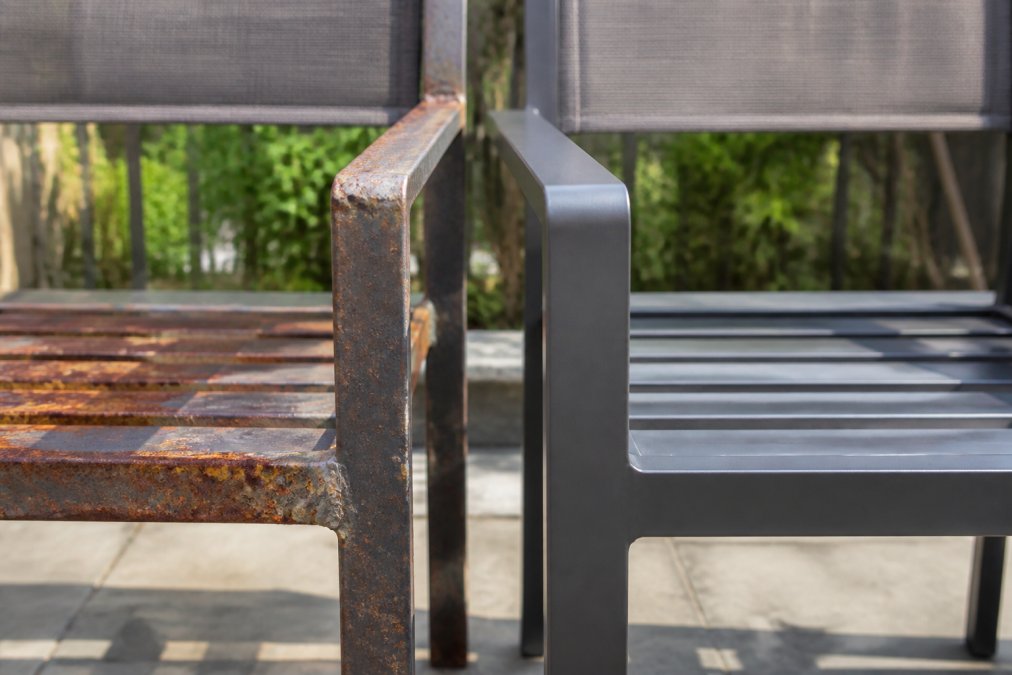
Powder-Coated Aluminum vs. Budget Steel Frames
Powder-coated aluminum costs roughly 40-60% more to manufacture than painted steel, but the performance gap is far wider. Aluminum doesn't rust and is naturally corrosion-resistant. When powder coating is applied properly, it creates a sealed environment where moisture cannot reach the underlying metal.
Budget steel frames rely on paint or cheap epoxy coatings that fail by chipping and exposing bare metal to moisture, or by slowly degrading under UV exposure. Once rust starts, it accelerates and becomes a structural weak point. Aluminum frames from premium manufacturers are typically 1.5mm to 2mm thick, providing rigidity without excessive weight, while budget frames often use thinner gauge steel (0.8-1.2mm) that flexes more and fatigues faster (astm.org).
Hand-Woven Wicker and Solution-Dyed Acrylic Fabrics
Premium outdoor wicker is engineered high-density polyethylene (HDPE) or polypropylene hand-woven over a steel frame. Hand-woven construction matters because each strand is individually secured, distributing stress across the entire piece rather than concentrating it at seams. Budget wicker is machine-woven with thinner strands and lower-density plastic that begins to crack and separate by year two.
Solution-dyed acrylic fabrics on premium pieces have dye added during fiber extrusion, so color goes all the way through. UV light doesn't reveal a lighter layer underneath, and color remains stable for years. Budget outdoor cushions use surface-dyed acrylic or polyester where dye sits on top of the fiber, causing visible fading within 6-12 months and mildew growth from moisture absorption.
Environmental Resistance: What Weather-Proofing Really Costs
Weather-proofing is a system of material choices, construction methods, and engineering tolerances that work together. Premium outdoor furniture survives temperature swings from below freezing to 95°F, UV radiation, rain, salt air, and humidity cycles that would destroy lesser pieces.
A premium cushion cover uses solution-dyed acrylic with a tight weave (typically 600+ denier) that sheds water, with closed-cell foam inside that resists moisture penetration. Budget cushions use open-cell foam that absorbs water like a sponge, then retains it, leading to mold and structural breakdown. Frame joints on premium pieces are sealed or welded to prevent water infiltration, while cheap furniture uses bolted connections where moisture collects and corrodes fasteners, causing wobbling after a few seasons.
Premium furniture assumes year-round outdoor exposure. Budget furniture assumes seasonal use or storage. Once you factor in that assumption, the cost structure makes sense, you're paying for durability under continuous exposure.
Best Outdoor Furniture Materials for Long-Term Value
Teak, Marine-Grade Stainless Steel, and High-Density Polyethylene
Teak is the gold standard for wooden outdoor furniture because of its natural oil content and tight grain structure that resists rot, insect damage, and weather degradation. A premium teak dining set costs $4,000-$8,000 but lasts 20+ years with minimal maintenance, making the per-year cost lower than cheaper wood that needs replacement every 5-7 years.

Marine-grade stainless steel (316 grade) is used in boat construction because it resists saltwater corrosion. For homeowners in coastal areas or regions with winter salt on roads, marine-grade stainless is worth the premium at 2-3x the cost of painted steel, requiring virtually no maintenance.
High-density polyethylene (HDPE) is engineered specifically for outdoor use. It doesn't rot, splinter, or resist UV poorly like lower-density plastics. Premium HDPE furniture costs $1,200-$2,500 for a sectional but requires only occasional rinsing and lasts 10-15 years.
Cushion Density and Fabric Durability Standards
Cushion density is measured in pounds per cubic foot (PCF). Budget outdoor cushions use 1.5-2 PCF foam that compresses quickly; premium cushions use 3-4 PCF foam that maintains support for years (astm.org). Premium outdoor fabrics are rated for 500+ hours of accelerated UV exposure before showing visible fading, versus budget fabrics that fail within 200-300 hours (peer-reviewed research).
Premium fabrics are treated to repel water while allowing moisture vapor to escape, preventing trapped-moisture problems that lead to mildew. Budget fabrics either trap moisture or absorb it, creating mold and odor issues.
Is Expensive Patio Furniture Worth It? The Lifecycle Cost Analysis
A budget outdoor sectional costing $400-$600 lasts 2-3 seasons before cushions fade, wicker cracks, and frame corrosion becomes visible. Replacing it every 3 years means spending $1,200-$1,800 per decade, plus disposal costs of $75-$150 and repeated replacement shopping.
A premium outdoor sectional from Spirit of Willow, like the 7-Piece Outdoor Patio Furniture Set with fire pit table at $1,484.83, costs more upfront but lasts 8-10 years with minimal maintenance. The per-year cost is roughly $150-$185. Over a decade, you've spent less money and had no replacement hassle.

This analysis assumes occasional maintenance: rinsing, storing cushions in winter, applying sealant to wood annually. Premium materials make maintenance easier and extend life dramatically.
Manufacturing Complexity and Labor Behind Premium Pricing
Premium outdoor furniture costs more partly because it's made differently. Hand-woven wicker requires skilled labor to create intricate patterns and ensure proper tension on each strand. Powder-coating requires specialized equipment and multiple process steps. Welded joints on premium frames require more skilled labor than bolted connections.
Quality control adds cost. Premium manufacturers test samples from each production batch for coating thickness, fabric colorfastness, foam density, and frame structural integrity. Supply chain also matters, premium manufacturers source from suppliers with reputation and standards to maintain, willing to pay more for consistent quality.
A premium piece might take 3-4 hours of labor to produce; a budget piece takes 1-1.5 hours. That labor difference, multiplied across material sourcing, quality control, and process steps, explains a significant portion of the price gap.

The Hidden Costs of Cheap Outdoor Furniture
The sticker price of budget outdoor furniture doesn't tell the full story. A $500 sectional lasting 2-3 seasons costs $1,500-$2,000 per decade plus disposal fees. You'll also spend money trying to protect cheap furniture with sealants and covers, but underlying materials still degrade. Faded cushions, cracked wicker, and visible rust make your outdoor space look neglected, affecting quality of life and home value. Every 2-3 years, you're back shopping, making decisions, and dealing with setup, hours of time spent on a problem premium furniture solves permanently. Budget furniture from the same manufacturer often varies in quality from piece to piece, while premium manufacturers maintain tighter standards.
How to Maintain Luxury Patio Furniture and Protect Your Investment
Premium outdoor furniture requires less maintenance than budget pieces but still needs care. Store cushions indoors during winter or extended non-use to protect foam and fabric from moisture and UV exposure. Rinse cushions monthly with fresh water and allow them to air-dry completely. For wicker, occasional rinsing with a soft brush and mild soap keeps the material clean without damage, avoid pressure washers. For teak furniture, annual oiling with teak sealer maintains color and provides weather protection. For metal frames, inspect annually for coating damage and apply touch-up paint to prevent corrosion. Use breathable covers that allow moisture to escape rather than plastic covers that trap it.
The maintenance schedule for premium furniture is straightforward: rinse occasionally, store cushions seasonally, inspect for damage annually, and address small issues immediately. This routine takes a few hours per year and costs minimal money.
When you calculate the true cost, price per year of ownership plus hidden costs of replacement, failed maintenance, and aesthetic decline, premium furniture is often the more economical choice. At Spirit of Willow, we've curated a collection of outdoor pieces designed with this philosophy. Our 7-Piece Outdoor Patio Furniture Set and 9-Piece Aluminum Outdoor Dining Set represent the engineering standards that deliver lasting beauty and durability. These aren't pieces you'll replace in a few years. They're investments in outdoor spaces that remain inviting and functional for a decade or more. Start exploring your options and create the outdoor retreat you deserve.
Frequently Asked Questions
Why is outdoor furniture so much more expensive than indoor furniture?
Outdoor furniture must withstand UV rays, moisture, temperature swings, and salt air, conditions that degrade standard materials quickly. Premium outdoor pieces use corrosion-resistant frames (powder-coated aluminum, stainless steel), solution-dyed fabrics that resist fading, and high-density foam cushions engineered for weather exposure. Indoor furniture skips these engineered components entirely, which is why outdoor-rated alternatives cost 2-4 times more. The upfront investment reflects years of durability rather than weeks of outdoor use.
What are the hidden costs of cheap outdoor furniture?
Budget outdoor furniture often fails within 1-2 seasons due to rust, cushion deterioration, and frame warping. You'll spend on replacement cushions ($150-400 per set), rust treatment, refinishing, or buying entirely new pieces every few years. Premium furniture spreads its cost over 5-10 years of use, making the per-year expense lower. Cheap pieces also require constant maintenance, power washing, fabric treatments, frame repairs, that busy homeowners often skip, accelerating decline. The true cost isn't the price tag; it's the replacement cycle.
How do I know if expensive outdoor furniture will actually hold up better?
Look for specific material markers: powder-coated aluminum or stainless steel frames (rust-proof), solution-dyed acrylic or polyester fabrics (UV and moisture-resistant), and cushion density ratings above 24 kg/m³. Ask about weatherproofing treatments and frame warranties, premium brands typically offer 5-10 year structural guarantees. Check if wicker is high-density polyethylene (HDPE) rather than rattan, and if cushions have moisture-wicking cores. These specifications indicate engineering for outdoor exposure; budget alternatives lack them.
Is expensive patio furniture worth it if I only use my outdoor space seasonally?
Yes, especially for seasonal use. Premium furniture maintains its appearance and structure through storage cycles, temperature fluctuations, and occasional exposure. Budget furniture deteriorates even when covered or stored improperly, moisture creeps in, fabrics weaken, and frames corrode. If you're investing in an outdoor living space worth enjoying, premium pieces protect that investment across years of seasonal use. You're paying for longevity and structural integrity, not just aesthetics.
This article was written using GrandRanker