

How to Clean Outdoor Furniture Cushions
Table of Contents
- What You'll Need Before You Clean Outdoor Cushions
- Step-by-Step: How to Clean Outdoor Furniture Cushions
- DIY Outdoor Cushion Cleaner Solution Recipes
- How to Remove Mold from Patio Cushions
- Can You Machine Wash Outdoor Cushion Covers?
- Fabric-Specific Care: Matching Your Cleaning Method to Your Cushion
- Post-Cleaning Protection, Storage, and Preventative Maintenance
- Conclusion
Last Updated: August 12, 2026
What You'll Need Before You Clean Outdoor Cushions
Gathering the right supplies before you start protects your cushions from accidental damage and saves you from stopping mid-clean to hunt down missing tools. This guide covers everything from basic prep to post-cleaning protection.
Cleaning supplies you'll need:
- Soft-bristle brush or sponge (avoid wire brushes, they damage synthetic fibers)
- Garden hose with adjustable nozzle or a pressure washer on the lowest setting
- Two clean buckets
- Mild dish soap (fragrance-free works best)
- White vinegar (for mold and mildew treatment)
- Baking soda (for stubborn stains and odor absorption)
- Clean microfiber cloths or old towels
- Rubber gloves
Optional but useful:
- A spray bottle for targeted spot treatment
- Fabric-safe water-repellent spray for post-cleaning protection
- Zippered storage bags or a waterproof storage bin for off-season storage
Always check your cushion's care label before you start. Many outdoor cushions, especially those with zippered enclosures and removable covers, have specific manufacturer instructions. Ignoring the label is the fastest way to shrink a cover or ruin the cushion filling.
Step-by-Step: How to Clean Outdoor Furniture Cushions
Follow these steps in order. Skipping ahead, especially to scrubbing before removing loose debris, grinds surface grime deeper into the fabric instead of lifting it out.
Step 1: Remove Loose Debris and Inspect the Fabric
Take the cushions off the furniture and shake each one firmly to dislodge loose dirt, leaves, pollen, and organic matter. For textured weaves, use a dry soft-bristle brush to sweep debris out before any moisture touches the surface.
Inspect the fabric closely for mold or mildew (dark spots, often greenish or black, with a musty odor), discoloration from UV damage, stains, and seam or zipper damage. This inspection tells you which cleaning approach you need. A lightly soiled cushion needs mild cleaning and a rinse. A cushion with mold requires a vinegar-based solution and more aggressive agitation.
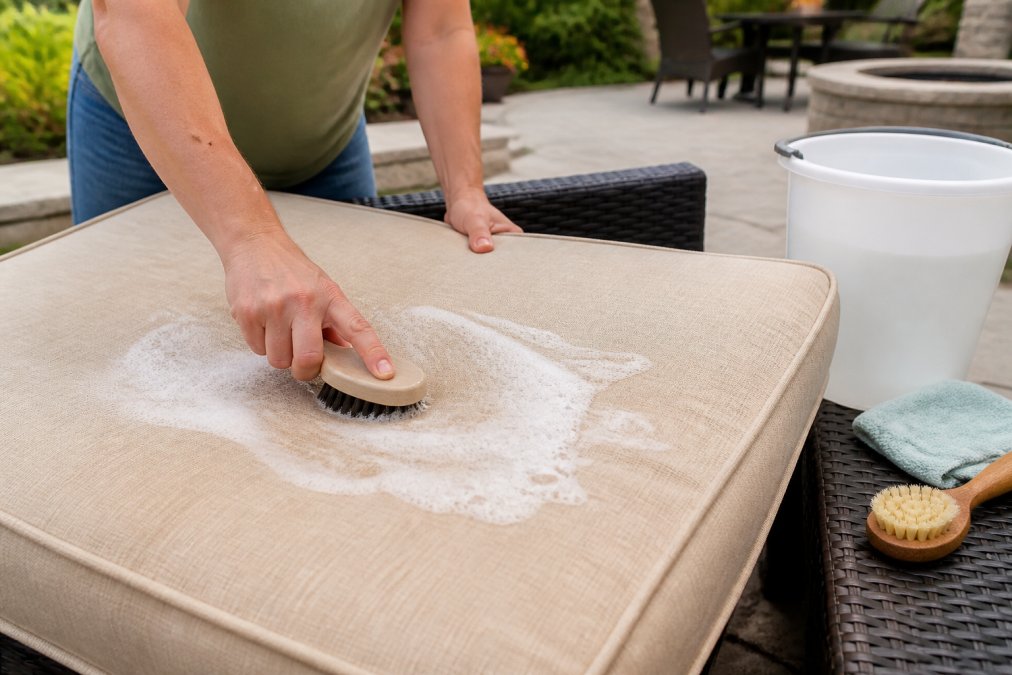
Step 2: Apply Your Cleaning Solution and Scrub
Mix your cleaning solution in a bucket. For general cleaning, add a small amount of mild dish soap to warm water. For mold and mildew, use the recipes in the dedicated section below.
Apply the solution generously to the cushion surface and let it sit for five to ten minutes. This soaking period breaks down surface grime and makes scrubbing more effective. Use your soft-bristle brush in firm, circular motions, working from the outside of any stained area inward to avoid spreading it. For deep-set stains, a second application is more effective than aggressive scrubbing, which damages fabric fibers over time.
Step 3: Rinse Thoroughly and Remove Excess Water
Thorough rinsing is critical. Soap residue left in the fabric attracts dirt faster, making your cushions look grimy again within days.
Rinse with a garden hose on a steady, medium-pressure setting, working from top to bottom. If using a pressure washer, keep it on the lowest setting and hold the nozzle at least 30 centimeters from the surface. High pressure tears fabric weaves and forces water deep into cushion inserts, dramatically increasing drying time.
After rinsing, press down firmly on the cushion with both hands to squeeze out as much water as possible. Repeat several times.
Step 4: Dry Completely Before Replacing
Placing a damp cushion back on patio furniture traps moisture, creating ideal conditions for mold and mildew to develop.
Air drying is the best method. Prop cushions upright or drape them over a clean railing in a spot with good airflow and indirect sunlight. Drying time varies depending on cushion thickness and humidity, but plan for at least four to six hours for thinner cushions and up to 24 hours for thick inserts.
| Cushion Type | Estimated Drying Time | Best Drying Method |
|---|---|---|
| Thin seat pad (under 2") | 3-5 hours | Upright in shade with airflow |
| Standard cushion (2-4") | 6-10 hours | On edge, rotated midway |
| Thick insert (4"+) | 12-24 hours | Flat on a clean surface, flipped |
| Removable cover only | 1-2 hours | Line dry or lay flat |
DIY Outdoor Cushion Cleaner Solution Recipes
Effective DIY solutions use ingredients you already have and are gentler on synthetic fibers than many commercial cleaners.
All-purpose mild cleaner: Mix one tablespoon of mild dish soap with one liter of warm water. This works for routine cleaning of most weather-resistant fabric covers.
Mold and mildew solution: Combine one cup of white vinegar with one cup of warm water in a spray bottle. Spray directly onto affected areas, let it sit for 15 minutes, then scrub with a soft-bristle brush and rinse thoroughly.
Baking soda paste for stubborn stains: Mix three parts baking soda with one part water to form a thick paste. Apply directly to the stain, let it dry completely, then brush off the residue and rinse.
According to the Environmental Protection Agency's guidance on mold in homes, mold can begin growing on damp surfaces within 24 to 48 hours, which is why fully drying cushions after cleaning is as important as the cleaning itself.
How to Remove Mold from Patio Cushions
Mold on patio cushions is common and often mishandled. The instinct is to scrub hard immediately, but that spreads mold spores across the fabric before the solution has had time to work.
Follow this sequence:
- Take the cushion outdoors immediately if stored inside
- Use a dry brush to remove any loose surface mold before applying liquid
- Apply the white vinegar solution directly to all affected areas
- Let the solution sit for at least 15 minutes
- Scrub with a soft-bristle brush using firm, overlapping strokes
- Rinse completely with a garden hose
- Allow to dry fully in a well-ventilated area
For severe mold covering a large area, a second treatment cycle is often necessary. If mold has penetrated deep into the cushion filling and the odor persists after two treatments, the insert may need replacement. The fabric cover can often be saved.
As noted in CDC guidelines on household mold, mold exposure can cause respiratory irritation, so wear gloves and work in a ventilated space when treating heavily affected cushions.
Can You Machine Wash Outdoor Cushion Covers?
Many outdoor cushion covers with zippered enclosures are machine washable, but not all. Machine washing the wrong fabric cover can cause shrinkage, warping, or color bleed that permanently damages the material.
How to tell if your cover is machine washable:
- Check the care label sewn inside the cover
- Look for fabric content: polyester and olefin covers are generally machine-safe on cold, gentle cycles
- Avoid machine washing covers with foam-backed lining, printed graphics, or decorative trim
If machine washing is permitted:
- Use cold water and a gentle cycle
- Add a small amount of mild, fragrance-free detergent
- Skip fabric softener, which coats synthetic fibers and reduces water-repellent properties
- Air dry the cover rather than using a dryer; heat can cause shrinkage
The cushion insert itself should never go in a washing machine. Agitation and water saturation can break down the foam structure and cause clumping that ruins the cushion's shape.
Fabric-Specific Care: Matching Your Cleaning Method to Your Cushion
Not all outdoor cushion fabrics respond the same way to cleaning. Using the wrong method on the wrong material causes premature deterioration.
Olefin (polypropylene): One of the most durable and stain-resistant synthetic fibers used in outdoor upholstery. Olefin handles mild soap and water easily and resists mold growth better than most fabrics. The Outdoor Fabric Institute's care recommendations suggest that olefin can tolerate slightly stronger cleaning agents than other synthetics, though mild dish soap remains the safest choice. Our 9-piece aluminum outdoor dining set features olefin cushions specifically for their UV resistance and easy upkeep.

Polyester: Common in budget to mid-range patio furniture cushions. Polyester cleans well with mild soap and warm water but is more prone to UV fading than olefin. Avoid hot water, which can cause fibers to pill.
Acrylic (solution-dyed): Premium outdoor fabric used in high-end patio furniture. Solution-dyed acrylic has excellent UV protection and color retention. Clean with mild soap and cold water. Never use bleach, which breaks down the dye-locking process.
Linen-textured synthetic blends: These fabrics combine the aesthetic of natural linen with synthetic durability. They clean well with mild soap and a soft-bristle brush, but benefit from a water-repellent treatment after cleaning.
| Fabric Type | Cleaning Solution | Avoid | Machine Washable? |
|---|---|---|---|
| Olefin | Mild soap + water | Harsh solvents | Often yes (check label) |
| Polyester | Mild soap + warm water | Hot water, bleach | Often yes (cold, gentle) |
| Solution-dyed acrylic | Mild soap + cold water | Bleach, hot water | Rarely |
| Linen-textured synthetic | Mild soap + soft brush | Abrasive scrubbers | Check label |
Post-Cleaning Protection, Storage, and Preventative Maintenance
Cleaning extends cushion life. Protection and proper storage extend it further.
Applying Water-Repellent and UV Protection Treatments
After cleaning and fully drying your cushions, applying a fabric water-repellent spray restores the protective barrier that regular use gradually strips away. Look for products specifically formulated for outdoor textiles. UV protection sprays work similarly, adding a layer that slows fading and fiber weakening. For cushions in direct sun several hours daily, reapplying UV protection at the start of each outdoor season is practical maintenance.
Apply both treatments in a well-ventilated area, holding the can 20-25 centimeters from the fabric, and allow complete drying before use.
Storage Solutions to Extend Cushion Life
Proper storage is the most underrated element of cushion maintenance. Cushions left outside through harsh weather or stored damp deteriorate far faster than those stored correctly.
Best storage practices:
- Store cushions only when completely dry
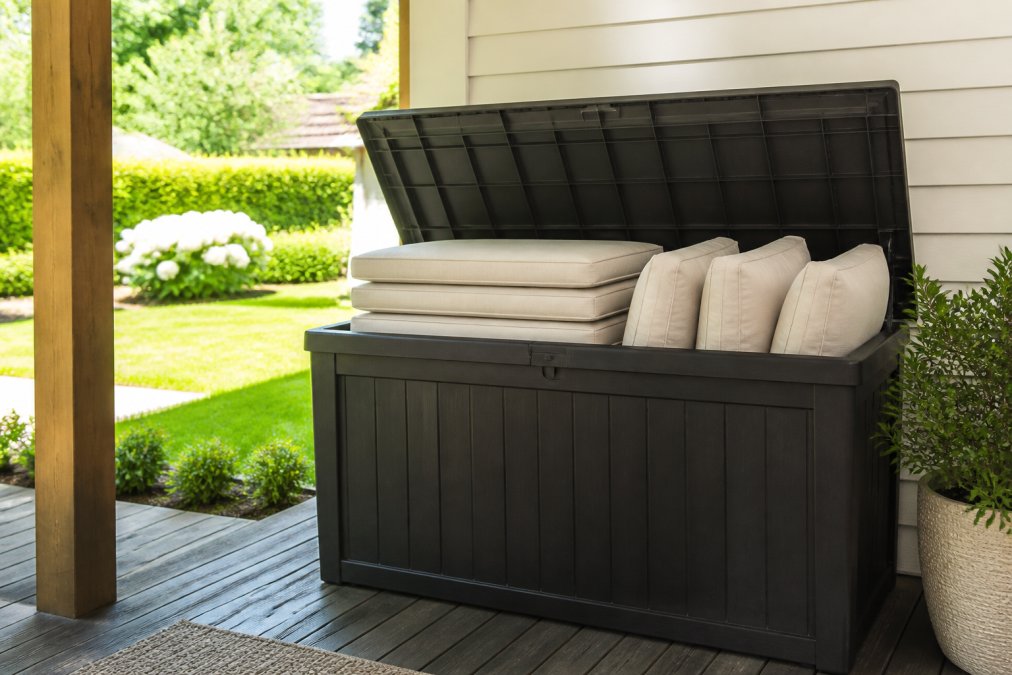
- Use a weather-resistant storage bin with a tight-fitting lid
- Stack cushions flat rather than on edge to prevent uneven compression
- For long-term storage, use individual breathable fabric bags to prevent dust without trapping moisture
- Store in a cool, dry location away from direct sunlight
If you're investing in quality outdoor furniture like our wicker patio sets, protecting the cushions with proper storage keeps the entire setup looking sharp season after season.

Preventative maintenance schedule:
| Task | Frequency |
|---|---|
| Brush off loose debris | Weekly during outdoor season |
| Spot treat stains | As soon as they occur |
| Full deep clean | Every 4-6 weeks during use |
| Apply water-repellent spray | Start of each outdoor season |
| Inspect for mold | Monthly during humid months |
| Off-season storage | Before first frost or extended rain |
When cushions reach the end of their useful life, check whether the foam insert can be separated from the fabric cover. Many recycling programs accept polyurethane foam separately, and fabric covers made from synthetic fibers may be accepted by textile recycling services.
Frequently Asked Questions
Can I use vinegar to clean outdoor cushions?
Yes. White vinegar mixed with water is one of the most effective DIY solutions for outdoor cushion cleaning. A common ratio is one cup of white vinegar per gallon of warm water. It cuts through surface grime, helps neutralize mildew odors, and is safe on most synthetic fibers. Apply it with a soft-bristle brush, scrub gently, then rinse thoroughly with a garden hose. Always air dry completely before storing or replacing cushions on your patio furniture.
How do you get mold and mildew out of outdoor cushions?
Mix one cup of bleach with a quarter cup of mild dish soap in a gallon of water. Apply the solution to the affected area, let it sit for 10-15 minutes, then scrub with a soft-bristle brush. Rinse thoroughly with a garden hose until no residue remains. For fabric covers that are bleach-sensitive, such as Sunbrella or solution-dyed acrylics, substitute white vinegar for bleach. Always test any solution on a hidden spot first and allow cushions to air dry fully before use.
Is it safe to pressure wash outdoor furniture cushions?
It depends on the fabric. A pressure washer set to a low PSI (under 1,200 PSI) with a wide-angle nozzle can rinse heavy surface grime from durable synthetic fabrics. However, high pressure saturates cushion filling deeply, dramatically extending drying time and risking mold growth inside the insert. For most cushions, a garden hose on a strong spray setting is safer and just as effective. Reserve pressure washing for the furniture frames themselves, not the upholstery.
How do I make outdoor cushions look new again?
Start with a thorough deep cleaning using a mild cleaning agent and soft-bristle brush to remove discoloration and organic matter. After rinsing and air drying, apply a fabric protector spray rated for outdoor textiles to restore water-repellent performance. For faded colors, UV-protection sprays can slow further discoloration. Cushions with removable, zippered enclosures benefit most, you can wash covers separately for a fresher appearance. Consistent spot treatment after each use prevents buildup that makes cushions look worn.
Keeping outdoor cushions clean doesn't have to feel like a seasonal chore, the right routine makes it manageable. Spirit of Willow curates outdoor furniture and cushions built with weather-resistant, UV-protected fabrics designed to hold up through regular use and cleaning. Browse the collection at Spirit of Willow and find pieces worth protecting.
This article was written using GrandRanker