

How to Choose Weather Resistant Outdoor Furniture
Table of Contents
- What Makes Outdoor Furniture Truly Weather Resistant
- Best Outdoor Furniture Materials for Rain, Sun, and Wind
- Choosing Weather Resistant Outdoor Furniture for Your Climate
- Outdoor Furniture Cushions and Fabrics: What to Look For
- How to Maintain Patio Furniture Through Every Season
- Outdoor Furniture Covers vs Storage: Which Protects Better
- Repairability, Sustainability, and Chemical Safety
- Conclusion
Last Updated: August 11, 2026
What Makes Outdoor Furniture Truly Weather Resistant
Weather resistant outdoor furniture maintains its structural integrity, finish, and comfort through repeated exposure to rain, UV radiation, temperature swings, and humidity. The difference between furniture that lasts a decade and furniture that deteriorates after a season comes down to material selection and construction quality.
At Spirit of Willow, we help homeowners build outdoor spaces that stay beautiful year after year. The most common frustration? Furniture that looked great in the showroom but started rusting, fading, or warping within 18 months. That failure traces back to two things: the wrong frame material for the environment, and a finish that wasn't built for sustained outdoor exposure.
Frame Materials and Structural Integrity
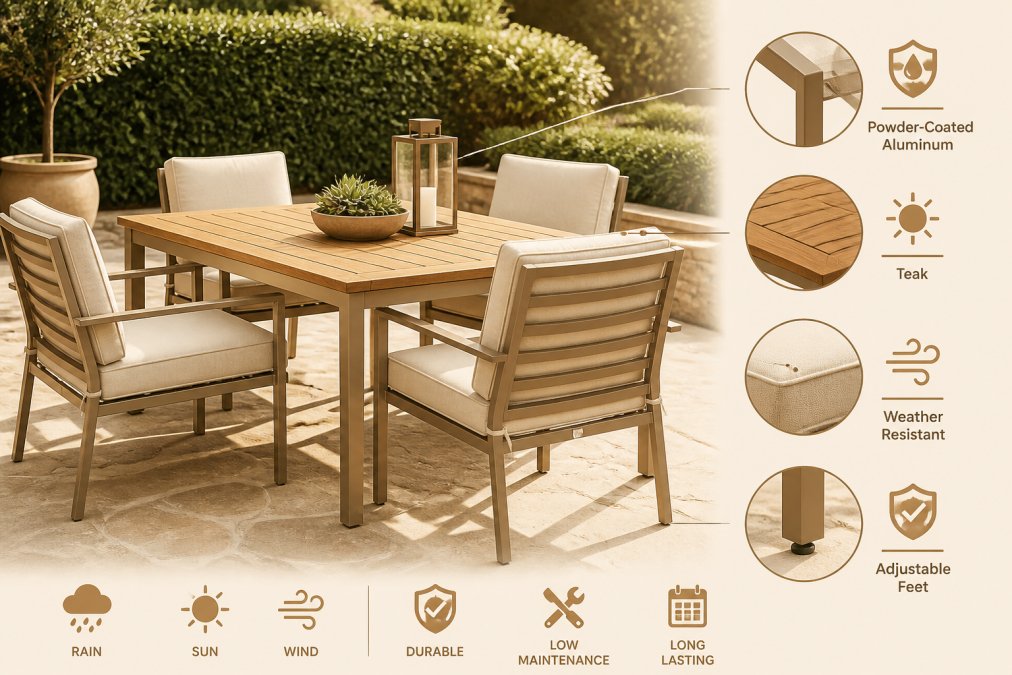
The frame is the backbone of any outdoor piece. Look for welded joints rather than bolted connections in metal frames, and solid or kiln-dried timber in wood pieces. Marine-grade or powder-coated aluminum with wall thickness above 2mm holds its shape through years of all-weather use. High-density polyethylene resin frames are molded from a single material, which means there's no core to absorb moisture or rot, giving them genuine longevity advantages.
Finish, Coating, and Corrosion Protection
Powder-coated aluminum is the industry standard for metal outdoor furniture because the coating bonds electrostatically to the metal surface, then cures under heat into a hard shell that resists chipping, fading, and corrosion. For wood, the finish matters as much as the species. Teak naturally contains silica and oils that repel water without treatment, but eucalyptus and other hardwoods benefit from a penetrating oil or sealant applied annually.
Best Outdoor Furniture Materials for Rain, Sun, and Wind
The best outdoor furniture materials for rain, sun, and wind are powder-coated aluminum, teak or eucalyptus hardwoods, and synthetic wicker over HDPE poly frames. Each has a distinct performance profile, and the right choice depends on your climate, aesthetic preference, and maintenance commitment.
| Material | Weather Resistance | Maintenance Level | Best Climate | Weight |
|---|---|---|---|---|
| Powder-coated aluminum | Excellent | Very low | All climates | Light |
| Teak hardwood | Excellent | Low-moderate | Humid, coastal | Heavy |
| Eucalyptus | Good | Moderate | Temperate, humid | Heavy |
| Synthetic wicker / HDPE | Very good | Very low | All climates | Moderate |
| Stainless steel | Good | Low (inland) | Avoid coastal | Heavy |
| Softwood (pine, cedar) | Poor-moderate | High | Mild, dry | Moderate |
Powder-Coated Aluminum
Powder-coated aluminum is the most versatile all-weather material available for patio furniture. It doesn't rust, won't crack in freezing temperatures, and a quality powder coat holds its color through years of UV exposure. The Spirit of Willow 9-Piece Aluminum Outdoor Dining Set pairs an all-weather aluminum frame with UV-resistant olefin cushions to deliver a set that handles season changes without requiring special treatment.

Teak and Eucalyptus Hardwoods
Teak is the benchmark hardwood for outdoor furniture. Its natural oil content makes it inherently water-repellent and resistant to insect damage. Left untreated, teak weathers to a silver-gray patina. Treated regularly with teak oil, it retains its warm honey tone. Eucalyptus is a more affordable hardwood alternative with similar density and natural oil content. It requires annual oiling to maintain its finish but offers comparable durability at a lower entry price.
Synthetic Wicker and HDPE Poly
Synthetic wicker woven over a powder-coated aluminum or HDPE poly frame is one of the most practical all-weather options available. The wicker itself is UV-stabilized polyethylene resin, which resists fading and doesn't absorb moisture. The key is the frame underneath: wicker over aluminum or HDPE poly eliminates rust risk entirely.
The Spirit of Willow 7-Piece Rattan Wicker Patio Set with Fire Pit Table uses a powder-coated steel frame with weather-resistant wicker, making it compelling for homeowners who want the warmth of a woven aesthetic without sacrificing durability.

Choosing Weather Resistant Outdoor Furniture for Your Climate
Climate is the single most important variable most buyers underweight. A furniture set that performs perfectly in Phoenix will degrade within a couple of seasons in coastal Maine, and vice versa.
Humid and Rainy Regions
High humidity and frequent rain accelerate rot in organic materials and corrosion in metals. For humid climates across the Gulf Coast, Pacific Northwest, and Southeast, prioritize teak, eucalyptus, powder-coated aluminum, or HDPE poly. Avoid untreated iron, softwoods, and any furniture with unsealed wood joints where water can pool. Drainage matters as much as material: slatted seats and open weave designs shed water faster than solid-surface pieces.
Coastal and Salt-Air Environments
Coastal living creates the most demanding conditions for outdoor furniture. Salt air is corrosive to most metals, and the combination of UV radiation, humidity, and salt spray degrades finishes faster than any other environment. For coastal environments, marine-grade stainless steel (grade 316), teak, and powder-coated aluminum are the materials that hold up. Rinse aluminum furniture with fresh water monthly to remove salt deposits.
Hot, Sunny, and Arid Climates
UV radiation is the primary threat in hot, sunny climates like the Southwest and Southern California. Powder-coated aluminum reflects heat better than dark metal finishes and resists UV degradation. For cushions, solution-dyed acrylic fabrics (where the color is embedded in the fiber) are the most fade-resistant option available. Shade protection from a pergola, umbrella, or gazebo significantly extends the life of every piece underneath it.
Cold-Weather and Freeze-Thaw Regions
Freeze-thaw cycles are particularly destructive because water expands as it freezes. Powder-coated aluminum and HDPE poly are the most freeze-thaw resistant frame materials available. Both are non-porous and don't expand or contract enough to cause structural damage. Teak handles cold well if kept off the ground during winter to prevent ground moisture absorption.
Outdoor Furniture Cushions and Fabrics: What to Look For
Outdoor cushion quality is where most patio furniture sets fail first. The frame survives, but the cushions fade, mildew, and flatten within a season or two. The two fabric types worth knowing are solution-dyed acrylic and olefin. Solution-dyed acrylic (Sunbrella is the most recognized brand) is the gold standard for UV resistance and color retention. Olefin is a moisture-wicking, fade-resistant synthetic that costs less and performs well in most conditions.
What to look for specifically:
- Fabric type: Solution-dyed acrylic or olefin, not polyester
- Cushion density: High-density foam resists compression and maintains its shape
- Water resistance: Look for water-repellent treatment; the best cushions shed water rather than absorbing it
- Removable covers: Zippered, machine-washable covers make maintenance practical
- Mildew resistance: Outdoor fabrics should explicitly state mildew resistance
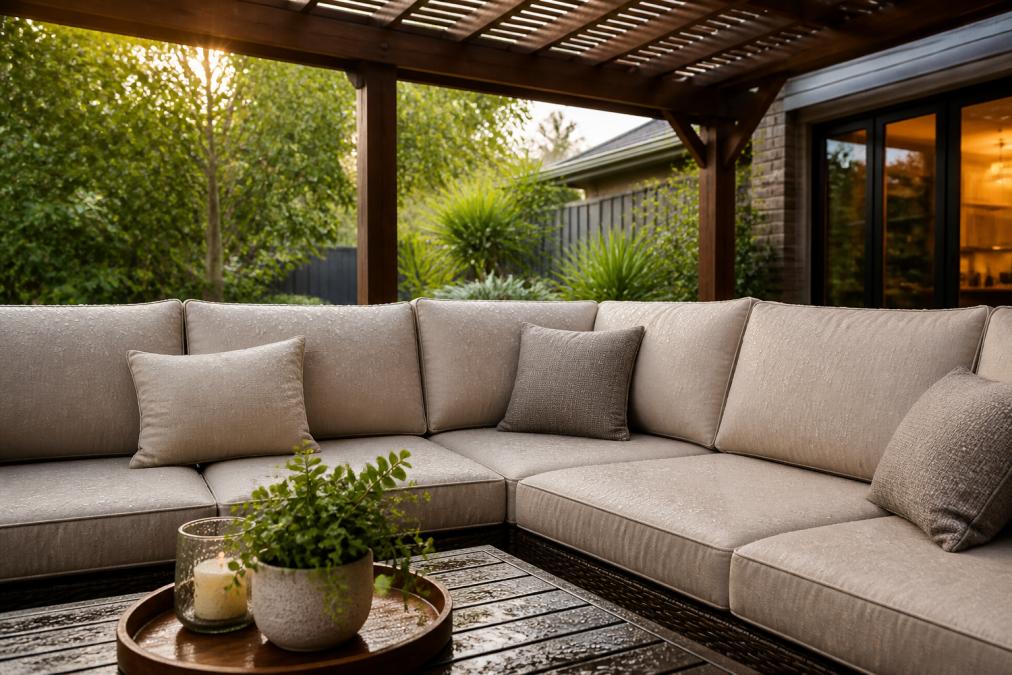
The Spirit of Willow Outdoor Bench Cushion illustrates this well: water-resistant and fade-resistant fabric with a removable linen-textured cover that can be cleaned without removing the entire cushion.
How to Maintain Patio Furniture Through Every Season
A simple seasonal routine takes less than an hour per season and extends furniture life significantly.
Spring (season start): Inspect frames for chips in powder coat or finish and touch up bare metal spots immediately to prevent rust. Clean frames with mild soap and warm water; rinse thoroughly. Condition teak or eucalyptus with appropriate oil if the wood looks dry or gray. Check all hardware and tighten anything loose. Reapply water-repellent spray to cushion fabric if water is no longer beading.
Summer (active season): Rinse furniture monthly in coastal environments to remove salt deposits. Keep cushions stored or covered when rain is expected for extended periods. Wipe down aluminum and synthetic frames after heavy rain to prevent water spots.
Fall (season close): Clean all pieces thoroughly before storage or covering. Apply a protective oil to hardwood frames before winter. Store cushions indoors or in a weatherproof storage container.
Winter (off-season): Use quality furniture covers or store pieces indoors depending on climate severity. Elevate wood furniture off the ground to prevent moisture absorption.
Outdoor Furniture Covers vs Storage: Which Protects Better
Outdoor furniture covers vs storage is a genuine tradeoff, not a clear winner. The right answer depends on your climate, available space, and how often you use the furniture through the colder months.
When Covers Are Enough
Covers are sufficient in mild climates with moderate winters, for furniture made from inherently weather-resistant materials like powder-coated aluminum and HDPE poly, and for any situation where full storage isn't practical. A quality cover keeps debris, UV radiation, and moisture off the furniture surface and reduces cleaning time at the season start. Look for covers with UV-resistant fabric, vented panels to prevent condensation buildup, and tie-down straps that prevent the cover from blowing off in wind.
When Full Storage Makes More Sense
Full indoor storage is the right choice for hardwood furniture in freeze-thaw climates, for cushions in any climate (cushions should always come inside for winter), and for any furniture with a finish that's already showing wear. A garage, shed, or basement provides complete protection that no cover can match.
Small Patio Storage Solutions
For homeowners with compact patios, practical solutions include weatherproof resin deck boxes sized to fit cushions, wall-mounted hooks and fold-flat furniture, and multi-function pieces with built-in storage like ottomans with interior compartments. The Spirit of Willow 10x12 Wooden Hardtop Gazebo with its galvanized steel double metal roof is windproof, waterproof, and snow-load bearing, making it a permanent shelter solution that eliminates the seasonal storage problem for the furniture underneath.

Repairability, Sustainability, and Chemical Safety
Repairability is a genuine differentiator between furniture categories. Powder-coated aluminum can be touched up with aerosol powder coat paint when chipped. Teak can be sanded and re-oiled when the surface weathers. HDPE poly rarely needs refinishing. Synthetic wicker is the hardest to repair: individual strands that break are difficult to replace without professional help. Before buying, ask whether replacement parts, cushions, or hardware are available from the manufacturer.
Sustainability is increasingly relevant to how outdoor furniture is sourced. Teak from FSC-certified plantations is the responsible choice for hardwood buyers. Recycled HDPE poly (often made from reclaimed milk jugs) diverts plastic waste from landfill and produces a material that itself is fully recyclable. Powder-coated aluminum is also recyclable at end of life.
Chemical safety is worth considering, particularly for families with children or pets. Some outdoor fabrics are treated with per- and polyfluoroalkyl substances (PFAS) for water repellency. Water-based, PFAS-free fabric treatments are increasingly available and worth specifying when purchasing cushions. Powder coat finishes, once cured, are generally considered safe and non-toxic. Water-based wood sealants and oils are preferable to solvent-based products for both indoor air quality and environmental impact.
Frequently Asked Questions
What is the most weather-resistant outdoor furniture material?
Powder-coated aluminum is widely regarded as the most weather-resistant option for most climates. It does not rust, resists UV fading, and requires minimal upkeep. For coastal settings where salt air is a factor, marine-grade stainless steel hardware and teak or HDPE poly frames add an extra layer of durability. The right choice depends on your specific climate, but aluminum covers the widest range of conditions reliably.
What outdoor furniture can be left outside all year?
Powder-coated aluminum, HDPE poly lumber, and teak are the best candidates for year-round outdoor use. These materials handle moisture, UV exposure, and temperature swings without warping, cracking, or corroding. Synthetic wicker over aluminum frames also performs well in most climates. Even with all-weather materials, using furniture covers during prolonged off-season periods extends the finish life and keeps cushions in better condition longer.
Is teak or aluminum better for outdoor furniture?
Both perform well, but they suit different priorities. Teak develops a silver-gray patina over time and is exceptionally dense, making it naturally water-repellent and resistant to rot. Aluminum is lighter, rust-resistant, and easier to move or store. Teak requires occasional oiling to maintain its warm color, while powder-coated aluminum needs only a rinse. For low-maintenance year-round use, aluminum has the edge. For a warmer, classic aesthetic, teak is hard to beat.
How do I protect my outdoor furniture from sun and rain damage?
Start by choosing UV-resistant materials and fade-resistant fabrics like olefin or solution-dyed acrylic. Apply a water-repellent spray to wood frames each season and store or cover cushions when not in use. Furniture covers protect frames from prolonged rain and debris. Adding a gazebo or shade structure over your seating area cuts direct UV exposure significantly, extending the life of both frames and fabrics without constant hands-on maintenance.
Spirit of Willow curates outdoor furniture built to last, with pieces selected specifically for their durability, finish quality, and all-weather construction. If you're ready to build an outdoor space that holds its beauty through every season, explore the full collection.
This article was written using GrandRanker