

Incorporating Smart Technology Into Outdoor Living Spaces
Last Updated: October 23, 2026
Quick Summary
Incorporating smart technology into outdoor living spaces transforms how you manage, maintain, and enjoy your backyard by automating tasks like lighting, watering, and temperature control from anywhere. Smart devices save water by 30-50%, create ambiance at sunset, and let you monitor conditions with sensors, all while requiring reliable Wi-Fi coverage and weatherproof power as your foundation.
- Smart irrigation systems cut water use by 30-50% compared to timer-based systems by checking weather and soil moisture.
- Mesh Wi-Fi systems extend signal coverage to every corner of your yard for reliable device connectivity.
- Smart outdoor lighting can be grouped into scenes like Dinner, Evening, and Movie for one-tap mood control.
- Environmental sensors monitor temperature, humidity, soil moisture, and rainfall to guide watering and entertaining decisions.
- Devices must have IP67 or IP68 ratings to withstand permanent outdoor installation with rain, sun, and temperature swings.
Table of Contents
- Why Incorporate Smart Technology Into Outdoor Living Spaces
- What You'll Need Before Starting
- Step 1: Establish Outdoor Wi-Fi Coverage
- Step 2: Install Weatherproof Smart Plugs and Power Solutions
- Step 3: Set Up Smart Outdoor Lighting and Remote Controls
- Step 4: Automate Watering With Smart Irrigation Systems
- Step 5: Add Sensors and Environmental Monitoring
- Protecting Smart Devices From Weather and Connectivity Issues
- Frequently Asked Questions
Why Incorporate Smart Technology Into Outdoor Living Spaces
Incorporating smart technology into outdoor living spaces transforms how you manage, maintain, and enjoy your backyard. Smart devices automate tasks that once demanded constant attention. They let you control lighting, watering, and temperature from anywhere. The real benefit goes deeper: you reclaim time and create spaces that work for you, not against you.
At Spirit of Willow, we've helped homeowners move beyond basic outdoor furniture into fully connected outdoor environments. The difference is tangible. A homeowner who adds smart irrigation stops wasting water on rainy days. Someone who installs smart lighting creates ambiance at sunset without stepping outside.
Smart technology also addresses a practical reality: outdoor spaces need maintenance. Understanding the cost implications and ROI of premium outdoor living investments helps you plan upgrades strategically. Sensors catch problems early. Automation handles routine tasks.
The technology has matured enough that setup no longer requires a tech degree. Modern smart devices work together seamlessly. And the payoff compounds over time as you add more layers of control and insight.
What You'll Need Before Starting
Before you buy a single device, establish the foundation. Learn how to choose weather resistant outdoor furniture by material, climate, and use case to ensure durable pieces work well with your smart devices. Smart outdoor technology depends on three things: reliable power, stable connectivity, and a system that ties everything together. Get these wrong, and even the best devices will frustrate you.
Essential Infrastructure: Power and Connectivity
Power and connectivity are non-negotiable. Outdoor devices live in harsh conditions. They need weatherproof power sources and strong signal coverage. Without these, your smart setup becomes a collection of expensive paperweights.
Most outdoor smart devices run on either battery power or hardwired electricity. Battery-powered devices are easy to install but need regular charging or battery replacement. Hardwired devices require outdoor outlets or low-voltage wiring, but they run indefinitely without maintenance. For a serious smart outdoor space, plan for both: batteries for portable sensors, hardwired power for permanent fixtures like lighting and pumps.
Connectivity matters equally. Standard home Wi-Fi often doesn't reach the backyard reliably. You'll need to extend coverage with a mesh Wi-Fi system or outdoor access points. A weak signal means delayed commands, dropped connections, and devices that simply stop responding. Before installing anything, test your signal strength at the far corners of your yard.
Choosing Your Smart Home Ecosystem
Every smart device speaks a language. The major ecosystems are Amazon Alexa, Google Home, and Apple HomeKit. Most devices support at least one, some support all three. The ecosystem you choose determines which devices work well together and how easily you control them.
Alexa has the widest device selection. Google Home integrates tightly with Google services. HomeKit offers the strongest privacy controls. Pick one based on what you already use in your home. Mixing ecosystems works, but it creates friction. You'll end up with multiple apps instead of one unified control panel.
Once you choose, check device compatibility before buying. A device that works with Alexa might not work with Google Home. Verify this upfront to avoid returns and frustration.
Step 1: Establish Outdoor Wi-Fi Coverage
Strong Wi-Fi is the backbone of smart outdoor technology. Without it, devices disconnect, apps lag, and automation fails. Your first step is extending coverage to every corner of your yard.
Test your current signal first. Stand at the far edge of your outdoor space and open a Wi-Fi app on your phone. If the signal is weak (fewer than three bars), you need to extend it.
Mesh Wi-Fi systems solve this problem. They use multiple nodes to blanket your property with strong signal. Place one node near your outdoor space, ideally with a clear line of sight. Most mesh systems let you name different nodes, so you can see which one your device is connecting to.
For renters or those who can't run cables, outdoor Wi-Fi extenders work too. They're less elegant than mesh systems but they work. Place the extender halfway between your router and the farthest point you need coverage.
Once coverage is solid, move on to devices. A weak signal will undermine everything else you build.
Step 2: Install Weatherproof Smart Plugs and Power Solutions
Smart plugs are the easiest entry point into outdoor automation. They turn any device into a smart device. Plug a fountain into a smart plug, and you can turn it on or off from your phone.
Install weatherproof smart plugs in outdoor outlets. These plugs are rated for moisture, temperature swings, and direct sun exposure. Standard indoor smart plugs fail quickly outdoors. Buy outdoor-rated plugs from the start.
For permanent installations like outdoor lighting or pumps, consider hardwired smart switches or relays. These connect directly to your electrical system and don't rely on plug-in power. They're more complex to install but more reliable long-term.
Group plugs by function. All entertaining devices on one plug, all garden devices on another. This lets you create scenes: flip one switch and your patio lights up while background music starts.
Step 3: Set Up Smart Outdoor Lighting and Remote Controls
Smart outdoor lighting creates ambiance and security. Unlike static lighting, smart lights adjust color, brightness, and timing based on your needs. They turn on at dusk and off at dawn automatically. They brighten when motion is detected.
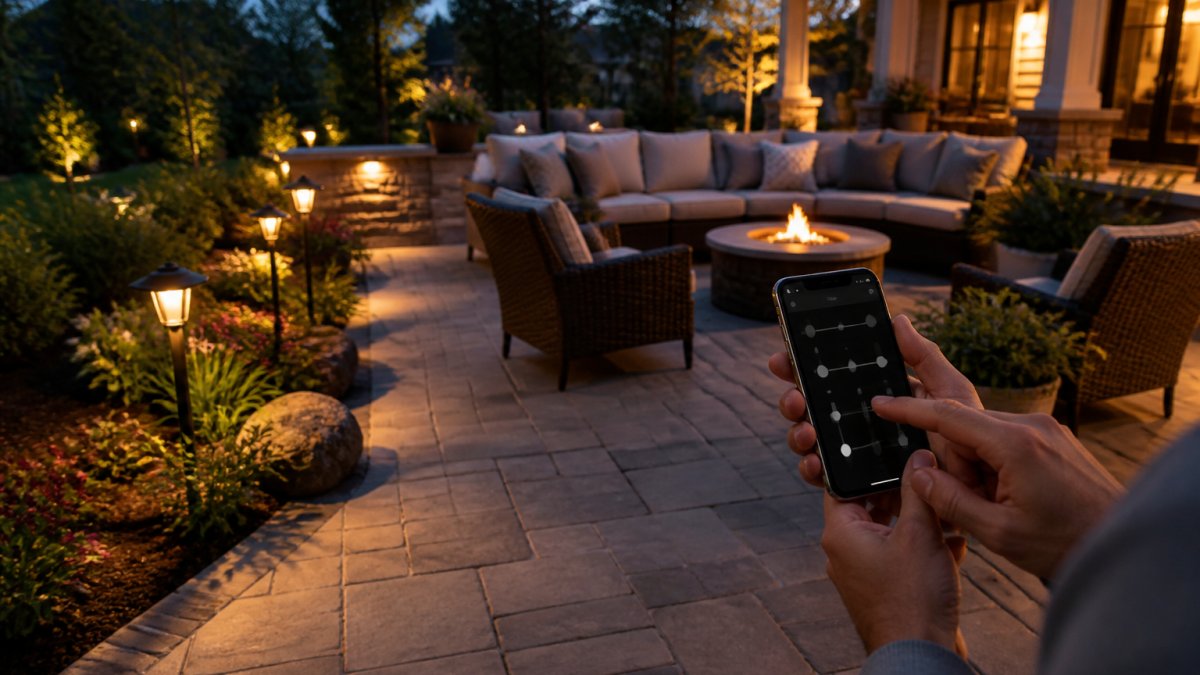
Start with pathway lighting. Solar-powered smart pathway lights are easy to install and don't require wiring. Stick them in the ground along walkways. Most connect via Wi-Fi or Bluetooth and let you adjust brightness from your phone.
Next, add accent lighting around seating areas. For premium outdoor living spaces, consider smart outdoor lighting for home security to understand how lighting enhances both aesthetics and safety.
Backyard Discovery Paxton 4-6 Person Traditional Cedar Outdoor Barrel Sauna →
Group all lights into scenes within your app. Create a "Dinner" scene that dims lights to 40% and sets them to warm white. Create an "Evening" scene that brightens them to 80% and shifts to cool white.
Motion sensors add another layer. Pair them with lights so illumination appears when someone approaches. This enhances security and convenience without requiring manual control.
Step 4: Automate Watering With Smart Irrigation Systems
Smart irrigation systems are where automation saves real money and water. Traditional sprinklers run on timers, ignoring weather. They water during rain. They water when temperatures are too cold for plants to absorb moisture. Smart systems check weather forecasts and soil moisture before watering.
The simplest approach is a smart water controller. It attaches to your existing outdoor faucet and controls soaker hoses or sprinkler lines. Set zones for different garden areas. The system learns your yard's water needs and adjusts automatically. Most systems let you pause watering from your phone if rain is coming.
For a more comprehensive approach, install a smart irrigation controller that replaces your existing sprinkler timer. These systems connect to soil moisture sensors placed in your garden beds. If soil is already moist, they skip watering. If it's dry, they water until sensors detect adequate moisture.
Schedule watering for early morning when evaporation is lowest. Set different zones for sun-exposed areas versus shaded areas. Shaded zones need less water. Let the system learn and adjust over time.
Step 5: Add Sensors and Environmental Monitoring
Sensors transform your outdoor space from a static environment into a responsive one. They monitor temperature, humidity, soil moisture, and light levels.
Start with a weather station sensor. It measures temperature, humidity, and rainfall in your yard. This data feeds into your smart irrigation system and lighting automation. You get accurate, hyperlocal weather information instead of relying on general forecasts.
Add soil moisture sensors in garden beds. These small devices tell you when soil is dry and ready for watering. Pair them with smart irrigation for completely hands-off garden management. You'll know exactly when plants need water without guessing.
For outdoor living spaces with water features, water temperature sensors are essential. A 2.4G WiFi pool thermometer wireless with app remote lets you monitor hot tub or pool temperature from anywhere. Set alerts for when temperature drifts outside your comfort range.

Environmental sensors also help with entertaining. A sensor that measures temperature and humidity tells you when conditions are ideal for outdoor activities. Too hot? Too humid? The data guides your decisions about timing and comfort adjustments.
Protecting Smart Devices From Weather and Connectivity Issues
Smart outdoor devices face constant challenges: rain, sun, temperature swings, and signal interference. Protecting them extends their lifespan and keeps them working reliably.
Weatherproofing starts with choosing devices rated for outdoor use. Look for IP67 or IP68 ratings.
Position devices strategically to minimize weather exposure. Mount sensors under eaves or roof overhangs. Place Wi-Fi access points in weatherproof enclosures.
For connectivity, create redundancy. If one Wi-Fi node fails, another takes over.
Monitor your system regularly. Check device status in your app weekly. Replace batteries before they die. Update firmware when updates are available.
Consider the full ecosystem. As you add more devices, complexity grows. A unified smart home platform makes management easier.
| Component | Purpose | Installation Complexity | Weatherproofing Need |
|---|---|---|---|
| Wi-Fi mesh system | Extends signal to entire yard | Medium | High |
| Smart outdoor plugs | Powers devices remotely | Low | High |
| Smart lighting | Ambiance and security | Low to Medium | High |
| Smart irrigation | Automates watering | Medium | High |
| Environmental sensors | Monitors conditions | Low | High |
The investment in incorporating smart technology into outdoor living spaces pays dividends in convenience, efficiency, and enjoyment. Start with Wi-Fi coverage and smart plugs.
Weather conditions and device compatibility vary by location and setup. Test everything before fully committing.
Creating a smart outdoor living space doesn't require technical expertise or a massive budget. Start with the foundation: reliable Wi-Fi and weatherproof power.
Frequently Asked Questions
What smart technology can you use in an outdoor living space?
Smart technology for outdoor spaces includes connected lighting systems, automated irrigation controllers, weather sensors, wireless speakers, smart thermostats for saunas or hot tubs, remote-controlled outlets, and mobile apps that let you manage everything from your phone. Many of these devices integrate with major ecosystems like Amazon Alexa or Google Home, allowing voice control and automation schedules. The Backyard Discovery Paxton sauna, for example, includes Wi-Fi control and LED lighting so you can preheat from your phone before stepping outside.
How do you protect smart outdoor devices from weather damage?
Use devices rated IPX7 or higher for water resistance, mount electrical components under covered areas or weatherproof enclosures, and choose stainless steel or powder-coated hardware that resists corrosion. Apply silicone seals around cable entries and use outdoor-rated conduit for wiring. Position Wi-Fi extenders and gateways under eaves or in protected boxes. Check battery-powered devices seasonally and replace batteries before they fail in cold weather. Store spare components indoors during off-season months.
What is the best way to add smart technology to a patio or garden without overwhelming the space?
Start with one or two high-impact systems, such as smart lighting or automated irrigation, rather than installing everything at once. Choose devices with a cohesive design aesthetic that matches your outdoor furniture and decor. Conceal wiring and mounting hardware as much as possible. Use a single app or ecosystem to control multiple devices so the experience feels unified rather than fragmented. Test your setup in one zone before expanding, and prioritize devices that solve real problems, such as watering while you're away or adjusting lighting for entertaining.
How much does it cost to incorporate smart technology into an outdoor living space?
Costs vary widely based on scope. Basic smart lighting kits start around $100-$300, while smart irrigation controllers range from $150-$500. A Wi-Fi-enabled sauna like the Backyard Discovery Paxton ($5,566.08) combines heating, lighting, and app control in one investment. Weatherproof smart plugs cost $25-$60 each, and pool thermometers with Wi-Fi monitoring run $35-$50. Budget $500-$1,500 for a modest integrated outdoor system, or $2,000-$5,000+ for comprehensive automation across lighting, watering, temperature monitoring, and entertainment features.
