

How to Make Outdoor Furniture Last Longer: 2026 Guide
Table of Contents
- Start With a Material-by-Material Maintenance Schedule
- How to Clean Outdoor Furniture Cushions Without Fading Them
- How to Weatherproof Outdoor Furniture Before Storm Season
- How to Prevent Rust on Outdoor Furniture Frames and Fasteners
- How to Store Outdoor Furniture in Winter Without Cracks or Mildew
- Repair Small Damage Before It Spreads
- When to Cover, Bring Indoors, or Leave It Outside
- Conclusion
- Frequently Asked Questions
Last Updated: October 14, 2026
Start With a Material-by-Material Maintenance Schedule
The single biggest reason patio furniture ages fast is that owners treat every piece the same. Wicker, wood, metal, and fabric each fail in different ways, so they need different care. Learning how to make outdoor furniture last longer starts with matching your routine to the material in front of you.

Here is a recommended maintenance schedule:
| Material | Routine Cleaning | Deep Care | Watch For |
|---|---|---|---|
| Plastic / resin | Rinse weekly, wipe monthly | Mild soap scrub each season | Chalking, fading |
| Wood | Dust and rinse monthly | Oil or seal yearly | Cracks, gray surface |
| Metal | Wipe every 2 weeks | Touch up paint yearly | Rust spots, loose bolts |
| Fabric / cushions | Brush weekly | Wash covers each season | Mildew, fading |
Most guides skip this step. They hand you one generic checklist and call it done. In practice, a teak table and a powder-coated steel frame need completely different attention, and treating them alike is how both end up damaged.
Which Cleaners and Protectants Actually Belong on Each Material
The table tells you when to work. This part tells you what to reach for, and what to keep away from.
- Plastic and resin: Mild dish soap diluted in warm water, or a dedicated resin cleaner. Avoid abrasive pads and solvents like acetone or paint thinner, which dull the finish and accelerate chalking. A UV-protectant spray made for resin helps slow fading on pieces that sit in full sun.
- Wood (teak, acacia, eucalyptus, cedar): A soft-bristle brush with soapy water for routine cleaning. For deep care, use a penetrating oil (tung oil or teak oil) on oiled finishes, or a film-forming sealer on sealed finishes. Do not mix the two, oil over a sealer will not absorb, and sealer over oil will not bond. If the surface has gone silver-gray, a two-part wood brightener restores color before you oil.
- Metal (aluminum, steel, wrought iron): Mild soap and water, then a dry cloth. For touch-ups, use matching enamel paint on powder-coated steel and a rust-inhibiting primer on bare spots. A silicone or carnauba-wax protectant on joints and fasteners slows corrosion. Never use steel wool on aluminum, it embeds particles that trigger rust.
- Fabric and cushions: A mild soap solution or a cleaner labeled for outdoor fabric. Avoid bleach on solution-dyed acrylics and olefins, which can strip color. A fabric protectant spray (fluoropolymer-based) adds water and stain resistance between washes.
A Simple Seasonal Cadence
If you only do four things a year, do these:
- Spring: Wash everything, inspect for winter damage, re-oil or re-seal wood, touch up metal chips.
- Summer: Weekly rinse of frames, weekly brush of cushions, spot-clean spills immediately.
- Fall: Deep clean, apply protectant, tighten all hardware before storm season.
- Winter: Clean, dry fully, and store or cover with ventilation.
How to Clean Outdoor Furniture Cushions Without Fading Them
The best way to clean outdoor furniture cushions is gentle and boring: brush off loose dirt, spot clean with mild soap and water, rinse well, and let them air dry fully in the shade. Harsh cleaners and direct sun during drying are what fade fabric and break down the weave.
A few habits that protect cushions for years:
- Brush crumbs and pollen off weekly with a soft brush
- Blot spills right away instead of scrubbing
- Use a mildew-resistant cleaner made for outdoor fabric, not bleach
- Dry cushions standing on edge so air reaches both sides
- Store cushions in a vented box, never a sealed plastic bag
Look for covers with UV resistance built in. Olefin and solution-dyed fabrics hold color far better than untreated cotton. Our 7 Piece Outdoor Patio Furniture Set uses eco-friendly olefin covers that are UV-resistant and water-repellent, which means less fading and faster drying after rain.
Match the Method to the Fabric
Not every cushion cover wants the same treatment. Check the tag before you commit.
- Solution-dyed acrylic (Sunbrella-style): The color runs through the fiber, so it resists fading and mildew well. Mild soap and water, or a diluted outdoor-fabric cleaner, is enough. Avoid bleach unless the manufacturer explicitly allows it.
- Olefin: Naturally water-repellent and quick-drying. Mild soap, rinse, air dry. It can pill if scrubbed hard, so use a soft brush.
- Polyester: Durable but prone to oil-based stains. Treat grease with a small amount of dish soap worked in before rinsing.
- Cotton blends: The least weather-resistant. Wash gently, dry fully in shade, and expect to replace covers sooner than synthetic options.
Stain-by-Stain Playbook
Different stains need different moves. Scrubbing the wrong way sets the stain instead of lifting it.
- Mildew (black spots): Mix one part mild soap with four parts water, add a small amount of oxygen bleach if the fabric allows, apply, let sit 10-15 minutes, then rinse thoroughly. Sun-dry to finish killing spores.
- Tree sap or grease: Dab with a small amount of rubbing alcohol or dish soap on a cloth, work from the outside in, then rinse.
- Bird droppings: Lift with a damp cloth first, then treat the residue with mild soap. Do not scrub dry, it grinds the stain into the weave.
- Red wine or juice: Blot immediately, then flush with cool water. Warm water can set the pigment.
- Sunscreen or lotion: These leave an oily film that attracts dirt. A diluted dish soap wash usually removes it.
Drying and Storage That Prevent Mildew
Mildew needs moisture and darkness. Remove both and it cannot return.
- Dry cushions standing on edge, in shade, with airflow on both sides. Flip once halfway through.
- Never stack damp cushions. Trapped moisture between layers is the number-one cause of mildew.
- If you must store them outside, use a vented storage box rather than a sealed bag. Our 2 Pack Storage Bench holds 120 gallons per box and lets air circulate, which is what cushions need over winter.
How to Weatherproof Outdoor Furniture Before Storm Season
Weatherproofing outdoor furniture means three things: seal porous surfaces, tighten and protect metal parts, and make sure water can't pool anywhere.
Start with a clean, fully dry surface. Sealant won't bond to dirt or damp wood.
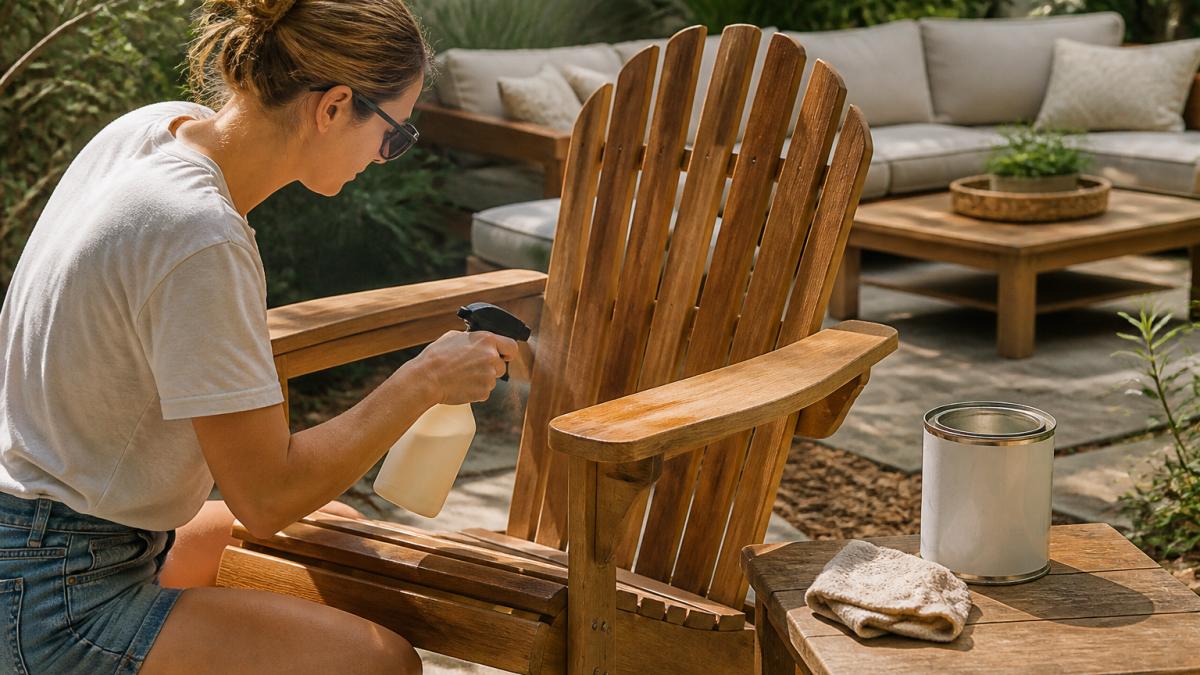
- Wash every piece and let it dry for a full day
- Apply a wood sealer or oil to bare wood surfaces
- Spray a silicone or wax protectant on metal joints and fasteners
- Check that water drains off tabletops and doesn't pool in seat frames
- Tighten every bolt and screw before the first storm
Pay attention to covers, too. A waterproof cover traps moisture if the furniture is still damp underneath. Use a vented cover so air can move, or skip the cover entirely on dry, mild weeks.
How to Prevent Rust on Outdoor Furniture Frames and Fasteners
Rust starts small and spreads fast. The fix is simple: keep metal dry, touch up scratches the week you find them, and never let water sit in joints or hollow legs.
Powder-coated steel and aluminum resist rust far better than bare metal, but even coated frames chip. A scratch the size of a coin can turn into a rust ring in one wet season if you ignore it.
7 Piece Outdoor Patio Furniture Set, Patio Furniture Set with Fire Pit Table →
- Wipe metal frames every two weeks with a dry cloth
- Touch up chips with matching enamel paint right away
- Replace rusted bolts with stainless steel hardware
- Raise furniture off wet ground with small feet or pads
- Dry joints with a cloth after heavy rain
How to Store Outdoor Furniture in Winter Without Cracks or Mildew
Storing outdoor furniture for winter comes down to one rule: dry, cool, and off the ground. Damp storage causes mildew; freezing temperatures crack wood and split wicker if moisture is trapped inside.
If you have space, move cushions and smaller pieces indoors. For everything staying outside, use a weatherproof storage box so items stay dry and ventilated all season.
Our 2 Pack Storage Bench holds 120 gallons per box and doubles as patio seating. The fade-free resin keeps contents dry and ventilated, which is exactly what cushions need over winter. A smaller option, our 70 Gallon Patio Storage Box, works well on tighter patios.
Before storing anything:
- Clean and fully dry every piece
- Remove cushions and store them separately
- Stack chairs so water can't collect in seats
- Keep everything off bare concrete or soil
- Leave a little airflow around stacked items
Repair Small Damage Before It Spreads
Small fixes save furniture. A loose screw, a frayed cushion seam, or a hairline wood crack costs almost nothing to fix now. Wait a season and the same problem often means replacing the piece.
Here's how we'd handle the common ones:
- Loose bolts: tighten and add a drop of thread lock
- Hairline wood cracks: fill with wood filler, sand, then seal
- Frayed cushion seams: stitch by hand or replace the cover
- Chipped paint: sand the edge and repaint before rust starts
- Wobbly legs: add a rubber foot pad to level it
Replacement parts are usually cheap. A new set of stainless bolts or a fresh cushion cover costs far less than a new chair. Keep a small repair kit on hand: matching paint, wood filler, a few spare bolts, and a needle and thread.
When to Cover, Bring Indoors, or Leave It Outside
Cover furniture when rain, snow, or long idle stretches are coming. Bring it indoors when temperatures drop below freezing or when you won't use it for weeks. Leave it outside uncovered during dry, mild weather so it can breathe.
Covering too much is a real problem. Trapped moisture under a tight cover causes mildew faster than no cover at all. Use vented covers, and never cover damp furniture.
A simple rule to follow:
- Dry and mild: leave it out, no cover
- Rainy stretch: vented cover on, cushions in
- Freezing or snow: move indoors or into a sealed storage box
- Off-season: clean, dry, then store
Conclusion
Outdoor furniture lasts longer when you match care to material, act on small damage fast, and store pieces dry. Most owners lose years of life to moisture and neglect, not to bad products.
At Spirit of Willow, we curate pieces built to handle real weather, from powder-coated frames to UV-resistant cushions. Browse our outdoor living collection, and build a patio that stays beautiful season after season.
Frequently Asked Questions
What is the most durable material for outdoor furniture?
Powder-coated steel frames wrapped in PE wicker, like the 7 Piece Outdoor Patio Furniture Set from Spirit of Willow, resist rain, sun, and wind without rusting. Teak and aluminum are also strong choices. Olefin cushion covers, such as those on the same set, are UV-resistant and water-repellent, so they hold color longer than standard polyester.
How often should you clean outdoor furniture?
Wipe frames and tabletops every two weeks during peak use, and deep clean cushions monthly. In humid or coastal areas, clean weekly to stop mildew before it sets. A quick rinse with mild soap and water keeps dirt from grinding into finishes. Check fasteners and joints each time you clean so small issues do not become expensive repairs.
Should outdoor furniture be covered when not in use?
Yes, but use a vented cover. A breathable cover keeps rain, pollen, and UV rays off your furniture while letting moisture escape. Trapping damp air under a non-vented tarp invites mildew on cushions and rust on metal frames. For long stretches of disuse, store cushions separately in a dry, ventilated deck box.
How can you restore faded or worn outdoor furniture?
Start with a deep clean using mild soap and a soft brush to lift dirt and mildew. For faded wood, sand lightly and apply a fresh coat of outdoor sealant or stain. For metal, touch up scratches with rust-inhibiting paint. Replace sagging cushions with high-density foam replacements, and consider a weatherproof storage bench to protect them between uses.