

Best Native Plants for Sustainable Landscaping
Last Updated: October 22, 2026
Quick Summary
Best native plants for sustainable landscaping transform ordinary yards into thriving ecosystems that require far less maintenance than traditional turf. Native plants are species evolved in your region's climate and soil, adapted to local rainfall patterns, temperature extremes, and seasonal changes. They support local wildlife, cut water consumption, eliminate chemical fertilizers and pesticides, and establish faster than non-native alternatives.
- Native landscapes cost significantly less to maintain within three to five years due to eliminated fertilizers, herbicides, and mowing services.
- Most native plants require no supplemental watering beyond normal rainfall once established, with deep roots accessing water three to five feet down.
- The establishment period typically spans three years, during which newly planted natives develop deep root systems that make them drought-tolerant and self-sustaining.
- Native flowering plants with varied bloom times from spring ephemerals through fall asters provide continuous pollinator habitat throughout the growing season.
- Match native plants to your site conditions by assessing sunlight, soil type, water drainage, and microclimates before selecting species.
Table of Contents
- Why Native Plants Matter for Sustainable Landscaping
- Native Plants Instead of Lawn: Rethinking Your Yard
- Low-Maintenance Native Plants That Thrive in Your Region
- Native Plants for Pollinators: Supporting Biodiversity
- Creating a Native Landscape Plan That Works
- Water Conservation and Drought Tolerance in Native Plantings
- Seasonal Interest and Year-Round Landscape Structure
- Frequently Asked Questions
Why Native Plants Matter for Sustainable Landscaping
Best native plants for sustainable landscaping transform ordinary yards into thriving ecosystems that require far less maintenance than traditional turf. Native plants are species that evolved in your region's climate and soil conditions, meaning they're already adapted to local rainfall patterns, temperature extremes, and seasonal changes.
Beyond aesthetics, native species support local wildlife, cut water consumption, eliminate chemical fertilizers and pesticides, and establish faster than non-native alternatives. A native landscape plan creates year-round interest while solving problems that plague conventional yards: drought brown patches, invasive weeds, and endless maintenance.
Native landscaping means working with what the land naturally wants to do rather than imposing a design onto it. That alignment between design and ecology is what makes native plantings both beautiful and sustainable.
Native Plants Instead of Lawn: Rethinking Your Yard
Most homeowners inherit the expectation that a yard should be a monoculture of grass.
Native plant communities, by contrast, are self-sustaining once established. Replace portions of your lawn with native groundcovers, flowering plants, and shrubs, and you've created habitat that supports pollinators, birds, and beneficial insects. You'll mow less frequently, water less often, and spend far fewer hours maintaining the space.
The financial argument is equally compelling. Within three to five years, a native landscape plan costs significantly less to maintain than a traditional lawn: no fertilizers, herbicides, or weekly mowing services, and a lower water bill. The time you reclaim is time spent relaxing rather than maintaining.
Low-Maintenance Native Plants That Thrive in Your Region
The key to success with native plants is matching species to your site conditions. A regional native will still struggle in deep shade if it prefers full sun, or in compacted clay if it needs well-draining soil. Assess your yard first, then select plants that match those conditions naturally.
Native Trees for Structure and Shade
Native trees form the backbone of a sustainable landscape, providing shade, windbreaks, year-round structure, wildlife canopy, and reduced cooling costs. Consider mature size, a tree reaching 60 feet shouldn't sit 10 feet from your house, and choose species with multiple seasons of interest: spring flowers, summer foliage, fall color, and winter branching.
Common native trees vary by region. In eastern regions, oaks, maples, and birches dominate. The Midwest features hickories and ash. Western areas include ponderosa pines, Douglas firs, and native oaks suited to drier conditions. Southeastern landscapes benefit from native magnolias, sweetbay, and tupelo.
Plant native trees in fall or early spring when dormant, and space them for their mature width, planting too densely invites disease and pests. A well-spaced native tree develops strong structure and lives for decades with minimal intervention.
Native Shrubs and Groundcovers
Native shrubs fill the middle layer, creating visual interest, wildlife habitat, and screening. Lower maintenance than trees but higher impact than herbaceous plants, many offer multiple seasons of appeal: spring flowers, summer berries for birds, fall foliage, and persistent seed heads or colorful winter stems.
Native groundcovers and low-growing plants replace lawn in areas where grass struggles or where you want to reduce mowing. Sedges, a grass-like plant native to many regions, thrive in shade and wet conditions where turf fails.
The understory, shrubs and groundcovers beneath the tree canopy, concentrates much of your landscape's ecological value: host plants for butterfly caterpillars, nectar sources for pollinators, and shelter for ground-nesting birds. A well-developed understory transforms a yard from decoration into a functioning ecosystem.
Ornamental Grasses and Sedges
Native ornamental grasses and sedges bring movement, texture, and winter interest. Left standing through winter, they provide food and shelter for wildlife and dramatic silhouettes when frost and snow coat dried stems. Once established, they're exceptionally drought-tolerant and need minimal maintenance.
Different species suit different conditions. Prairie dropseed and little bluestem thrive in dry, sunny sites. Switchgrass adapts to many conditions from wet to dry. Sedges excel in shade and moist soil where other plants struggle.
Many native grasses and sedges evolved in grassland ecosystems with deep root systems that access water unavailable to shallow-rooted turf, making them naturally drought-tolerant. Once established, they need no supplemental watering in normal rainfall years.
Native Plants for Pollinators: Supporting Biodiversity
Native flowering plants form the foundation of pollinator support.
A landscape rich in native flowering plants supports diverse pollinator populations, which improves fruit and vegetable production, sustains insect-eating birds, and creates a more resilient ecosystem. Varied bloom times, flower colors, and nectar volumes ensure pollinators have food from early spring through late fall.
Include a range of native forbs (non-grass herbaceous plants) that bloom at different times. Spring ephemerals provide early nectar when pollinators emerge from dormancy. Summer bloomers sustain populations through the warmest months. Fall-flowering natives like native asters and goldenrod fuel the final push before winter dormancy.
Creating a Native Landscape Plan That Works
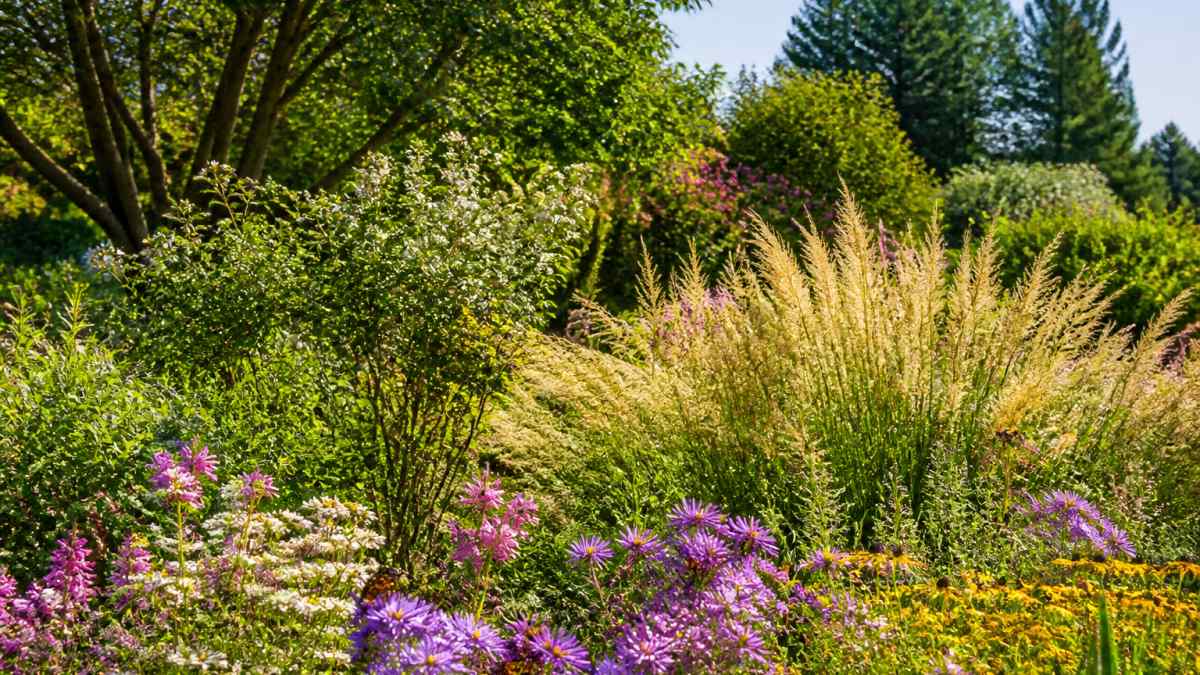
A successful native landscape plan starts with understanding what you're working with and what you want to achieve. The process, assessment, design, phased installation, establishment care, works with existing conditions and gradually transitions your yard into a self-sustaining ecosystem.
Assessing Your Site Conditions
Before selecting plants, spend time observing your yard. Note which areas receive full sun (six or more hours of direct sunlight), partial shade (three to six hours), or deep shade (less than three hours). Observe where water collects after rain and where it drains quickly.
Hardiness zones matter, but so does microclimate: a sheltered south-facing slope is warmer than an exposed north-facing area in the same zone, and low spots where cold air settles are colder. Understanding microclimates helps you place plants where they'll succeed rather than struggle.
Document existing vegetation, especially natives already present, they indicate what naturally thrives in your conditions. If native oaks grow in your neighborhood, oaks likely belong in your landscape; wildflowers in local meadows are adapted to your region.
Establishing Your Plants: Year One Through Year Three
The establishment period, typically three years, determines long-term success. During this time, newly planted native plants develop the deep root systems that make them drought-tolerant and self-sustaining. Proper establishment care means regular watering during the first growing season, mulching to retain moisture and suppress weeds, and minimal fertilizer applications (most native plants prefer poor soil and struggle in overly rich conditions).
Year one focuses on getting plants established. Water new trees and shrubs deeply once or twice weekly during the first growing season, depending on rainfall. Mulch with two to three inches of wood chips, kept a few inches from stems (Planting a Tree or Shrub). Remove competing weeds.
Year two means continued watering during dry periods, ongoing weed removal, and reduced supplemental inputs. Many natives establish faster than expected once roots develop, showing increased vigor. Keep removing competing weeds, but allow some self-seeding, volunteer seedlings often fill gaps better than transplants.
Year three marks the transition to minimal maintenance. Most natives should survive normal rainfall without supplemental watering. Reduce or eliminate fertilizer. Let plants set seed and self-sow. The landscape begins functioning as an ecosystem, with volunteer seedlings filling gaps and wildlife establishing.
Avoiding Invasive Lookalikes and Sourcing Responsibly
Not all plants labeled as "native" are equally valuable, and some plants that look similar to desirable natives can become problematic. Invasive lookalikes, non-native species that resemble native plants, can spread aggressively and degrade the very ecosystem you're trying to support.
Avoid plants collected from the wild, even natives, wild collection threatens native populations and often yields poor survival in cultivated landscapes. Buy from native plant nurseries that propagate from seed or cuttings, supporting sustainable practices and healthy, vigorous plants.
Ask your nursery about plant origin. The best sources propagate locally native species from local seed, ensuring genetic compatibility with wild populations and maximum adaptation. A plant native to your state but grown from seed collected 500 miles away may underperform a local-seed counterpart.
Water Conservation and Drought Tolerance in Native Plantings
Native plants evolved in your region's natural rainfall patterns, making them inherently adapted to local precipitation and drought cycles. Once established, most native plants require no supplemental watering beyond normal rainfall. This water conservation benefit is one of the most compelling reasons to transition to native landscaping.
Deep roots are the key to drought tolerance. Many natives develop roots three to five feet deep, accessing water reserves unavailable to shallow-rooted turf or non-native ornamentals, sustaining plants through dry periods while alternatives wilt. As natives establish and roots deepen, your landscape becomes increasingly drought-resistant.
Mulching newly planted natives conserves soil moisture and moderates soil temperature, supporting establishment during the critical first few years. As the landscape matures and plant density increases, living mulch from fallen leaves and plant material replaces supplemental mulch.
Seasonal Interest and Year-Round Landscape Structure
A well-designed native landscape provides visual interest throughout the year. Spring brings emerging foliage and early wildflowers. Summer offers lush growth, blooming perennials, and active wildlife.
This seasonal progression creates a landscape that's never boring, an ecosystem cycling through natural rhythms.
Year-round structure comes from trees and shrubs that maintain visual interest even when dormant. Native deciduous trees offer spring flowers, summer shade, fall color, and winter branching patterns. Evergreen natives provide year-round foliage.
Creating a landscape with the best native plants for sustainable landscaping is an investment in your property's long-term beauty and ecological value.
At Spirit of Willow, we believe your outdoor space should be a destination for relaxation and connection, not a source of endless maintenance. A native landscape plan creates that sanctuary while supporting local ecosystems.
Frequently Asked Questions
What are some native plants I can use instead of lawns?
Native groundcovers, sedges, and low-growing forbs replace turf effectively. Options include native sedge species (like Pennsylvania sedge in cooler regions), creeping phlox, bearberry, and native wildflowers suited to your hardiness zone. These reduce mowing, require less water and fertilizer, and provide habitat for pollinators and wildlife. Choose species adapted to your soil moisture and light conditions for best results.
Do native plants need less water than nonnative plants?
Yes. Native plants are adapted to your region's natural rainfall patterns and soil conditions, so they typically require less supplemental irrigation once established. Most native plants need regular watering during their first two to three years to develop deep root systems, but mature native plants often survive on rainfall alone. This drought tolerance reduces your water bill and maintenance burden significantly.
Which native plants attract pollinators?
Native flowering plants, native trees, and native shrubs that bloom at different times support pollinators year-round. Look for species that produce nectar and pollen: native milkweed (host plant for monarchs), black-eyed Susan, coneflowers, native asters, bee balm, and native dogwood shrubs. Sedges and native grasses provide nesting habitat. Avoid double-flowering varieties and pesticides, which harm pollinators. A diverse mix of bloom times from spring through fall maximizes pollinator support.
How do I create a native landscape plan for my yard?
Start by identifying your site conditions: sun exposure, soil type, soil moisture, and hardiness zone. List native species adapted to those conditions, then arrange them by mature size to create landscape structure (tall trees in back, shrubs in middle, groundcovers in front). Check that your selections bloom at different times for year-round interest. Source plants from native plant nurseries to ensure genetic authenticity. Plan a three-year establishment period with regular watering, then transition to minimal maintenance.