

Drought Tolerant Backyard Design for Modern Homes
Table of Contents
- Planning Your Drought Tolerant Backyard Design
- Modern Xeriscape Design Ideas
- Hardscaping Materials for Modern Backyards
- Smart Irrigation Technology for Water Conservation
- Low-Water Backyard Fire Pit Areas
- Water Features That Enhance Drought-Tolerant Design
- Maintaining Your Drought-Tolerant Outdoor Sanctuary
- Frequently Asked Questions
Last Updated: October 2, 2026
Planning Your Drought Tolerant Backyard Design
A drought tolerant backyard design transforms your outdoor space into a water-efficient sanctuary that requires minimal maintenance while maintaining year-round visual appeal. Rather than fighting against your climate, this approach works with it, selecting plants, materials, and irrigation methods that thrive in arid conditions.
The foundation of any successful drought tolerant backyard design starts with understanding your specific site. Before you choose a single plant or material, take time to assess what you're working with. This planning phase determines everything that follows.
Site Analysis and Sun Exposure
Your site's exposure to sunlight directly influences which plants will thrive and how much water they'll need.
Walk your yard at different times of day. Note which areas receive morning sun versus afternoon heat.
Soil drainage is equally critical. Dig a small hole, fill it with water, and observe how quickly it drains.
Document microclimates within your yard. A south-facing wall absorbs and radiates heat, creating a hotter zone perfect for heat-loving succulents.
Soil Preparation and Amendment
Healthy soil is the difference between thriving plants and struggling ones.
For sandy or rocky soil, add 2-3 inches of compost or aged organic matter to improve water retention without creating waterlogging. Work it into the top 8-12 inches of soil.
For clay-heavy soil, the challenge is different. Clay drains poorly, which kills most drought-tolerant plants through root rot.
Test your soil pH if possible.
Modern Xeriscape Design Ideas
Modern xeriscape design principles blend water-conservation techniques with contemporary aesthetics.
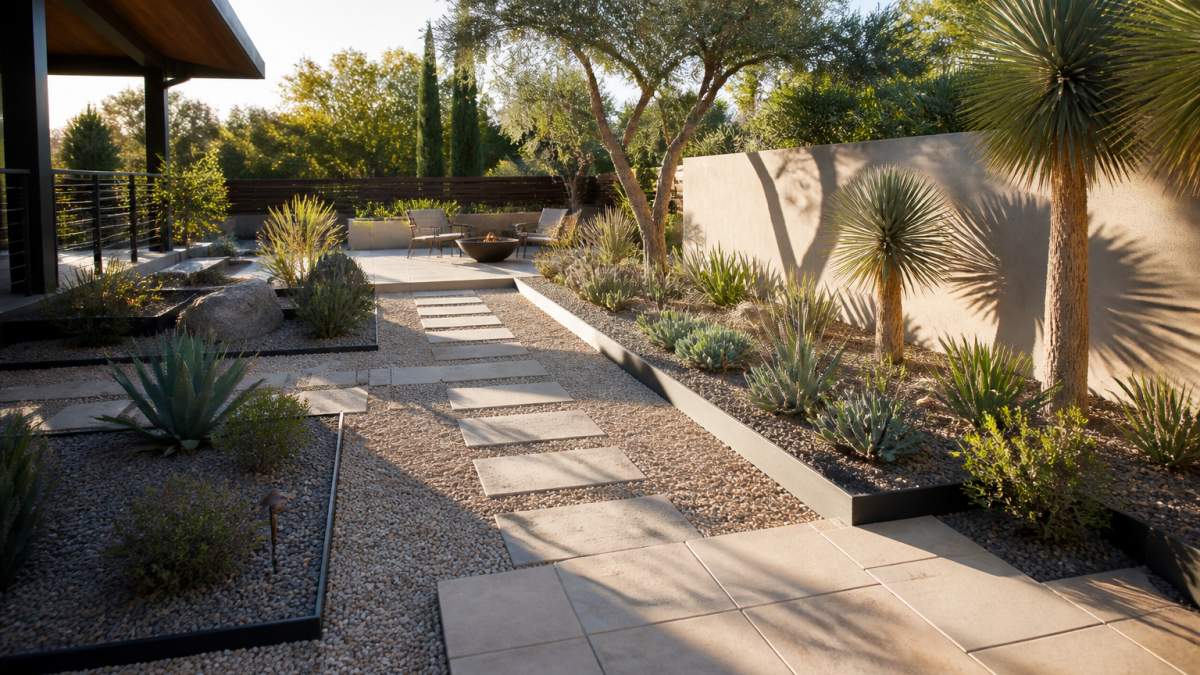
The key is treating your yard like an outdoor room. Use repeating materials, color palettes, and plant forms to create visual cohesion.
Hydrozoning for Water Efficiency
Hydrozoning groups plants by their water needs, allowing you to water efficiently without overwatering drought-tolerant species or underwatering plants that need more moisture.
High-water zones work best near your home or entertaining spaces, where you're willing to invest in irrigation. Medium-water zones buffer between high and low areas, creating visual transitions.
Within each zone, group plants with matching water requirements on the same irrigation line.
Native Plants and Drought-Tolerant Selections
Native plants adapted to your region's climate are your strongest foundation.
Research which native species work for your specific region. A desert native won't survive in a temperate zone, and vice versa.
Beyond natives, many non-native drought-tolerant plants perform beautifully in modern designs.
Succulents deserve special mention, sedums, echeveria, and agave species provide sculptural interest and thrive in poor, dry soil.
Select a mix of heights and textures. Tall grasses (fountain grass, blue fescue) provide movement and screening.
Hardscaping Materials for Modern Backyards
Hardscaping, the non-plant elements, defines your yard's character while serving practical functions. Modern design favors clean lines, geometric patterns, and materials that age gracefully.
Pavers, gravel, and stone create visual interest while reducing the area that needs irrigation. A well-designed hardscape can reduce your landscape's water footprint by 20-30% simply by replacing lawn or water-intensive planting beds with attractive, functional surfaces.
Permeable Pavers and Water Drainage
Permeable pavers allow water to drain through gaps rather than running off into storm drains. This approach recharges groundwater, reduces flooding, and supports the health of surrounding plants.
Permeable paver options include:
- Porous asphalt and pervious concrete: Modern materials engineered to drain while supporting vehicle or foot traffic
- Permeable pavers with gravel joints: Traditional-looking pavers set with gravel or sand that allows water infiltration
- Recycled plastic or rubber pavers: Eco-friendly options that drain well and feel contemporary
- Decomposed granite: A natural material that drains immediately while providing a warm, organic aesthetic
When installing permeable surfaces, ensure proper grading so water flows toward planted areas rather than pooling. A slight slope (1-2%) is sufficient. Consider directing runoff toward rain gardens or toward the base of drought-tolerant plants, where it benefits your landscape rather than becoming waste.
37 In. Outdoor Cascade Fountain Garden with LED Light, Built-In Electric Pump →
Mulching Techniques for Moisture Retention
Mulch serves multiple purposes: it suppresses weeds, moderates soil temperature, and most importantly for drought-tolerant design, it reduces evaporation. A 2-3 inch layer of mulch can cut water loss.
Choose mulch materials that complement your design aesthetic:
- Decorative gravel or stone chips: Long-lasting, mineral-based options that fit modern aesthetics. Lighter colors reflect heat; darker colors absorb it.
- Wood chips or bark: Organic materials that break down over time, improving soil structure. Reapply every 2-3 years.
- Native stone or river rock: Durable, visually striking options that age beautifully and fit contemporary designs.
Avoid mulching directly against plant stems, leave a 2-3 inch gap to prevent rot and pest issues. Refresh mulch annually, adding material as it decomposes. Over time, decomposed mulch enriches your soil, improving water retention even further.
| Mulch Type | Lifespan | Best For | Aesthetic |
|---|---|---|---|
| Decorative gravel | 3-5 years | Modern designs, minimal maintenance | Clean, contemporary |
| Wood chips | 2-3 years | Organic look, soil improvement | Natural, rustic |
| River rock | 5+ years | Focal points, high-traffic areas | Polished, elegant |
| Native stone | 5+ years | Architectural designs | Sophisticated, timeless |
Smart Irrigation Technology for Water Conservation
Smart irrigation systems adjust watering based on weather, soil moisture, and plant needs.
Modern smart controllers connect to weather services and local forecasts. If rain is predicted, the system skips watering. If temperatures drop, it adjusts for reduced evaporation.
Drip irrigation delivers water directly to soil at the base of plants, eliminating the waste of spray systems that water hardscape and air.
For drought-tolerant plants, smart irrigation is often temporary, used during establishment (first 2-3 years) and during extended drought.
Low-Water Backyard Fire Pit Areas
Fire pits create gathering spaces and extend outdoor living into cooler months. Integrating a fire pit into a drought-tolerant design means selecting fire-resistant plants and hardscaping materials that can withstand heat.
Position your fire pit in a clear area, away from overhanging branches and dense plantings.
For surrounding plantings, choose fire-resistant species with high moisture content and low oil levels. Agave, aloe, and sedums are excellent choices, they're drought-tolerant, visually striking, and naturally fire-resistant.
Seating areas around fire pits benefit from Spirit of Willow's carefully curated outdoor pieces designed to withstand outdoor conditions while maintaining timeless design. Quality fire-resistant furniture and accessories transform a functional fire pit into a sophisticated gathering space.

Water Features That Enhance Drought-Tolerant Design
Water features seem contradictory in a drought-tolerant design, but when chosen thoughtfully, they enhance the space while using minimal water. Fountains, for example, recirculate the same water continuously, they don't require constant refilling.
The EPA's WaterSense program identifies water-efficient outdoor products, including fountains designed to minimize evaporation and water loss. Closed-loop systems recirculate water rather than requiring constant replenishment.
A well-designed water feature becomes a focal point that justifies the modest water investment. The visual and auditory appeal, the sight and sound of moving water, creates a sense of tranquility and luxury in your outdoor space.
Spirit of Willow offers several fountain options that integrate beautifully into drought-tolerant designs. The 37 In. Outdoor Cascade Fountain Garden with LED Light features realistic rock and wood textures with an adjustable pump and LED lighting, creating visual interest without excessive water use. For those prioritizing sustainability, the 44 In. H White Fiberglass/Resin 2-Tier Solar Water Fountain uses solar power to operate, eliminating electricity costs while the auto-shutoff pump prevents water waste.

Maintaining Your Drought-Tolerant Outdoor Sanctuary
Once established, drought-tolerant landscapes require far less maintenance than traditional gardens.
During establishment, water newly planted drought-tolerant species more frequently than you would once they're mature. Gradually reduce watering frequency as plants settle in.
Remove weeds promptly during establishment. Weeds compete with young plants for water and nutrients.
Prune drought-tolerant plants lightly to shape them and remove dead growth.
Refresh mulch annually, adding material as it decomposes. Monitor soil moisture during the transition from establishment to independence. Once plants stop showing stress during natural dry periods, you can confidently reduce supplemental watering significantly.
Creating a drought tolerant backyard design for modern homes means working with your climate rather than against it.
Spirit of Willow helps you complete this vision with carefully curated outdoor pieces designed to withstand outdoor conditions while elevating your space's aesthetic. From fountains that add visual interest to quality outdoor furniture for entertaining, our collection supports the sophisticated, low-maintenance outdoor living experience you're creating. Continue shopping to explore pieces that complement your drought-tolerant design.
Frequently Asked Questions
What are the best drought-tolerant plants for a modern backyard design?
Native plants and succulents thrive in drought-tolerant backyard design while requiring minimal water. Sedums, ornamental grasses, lavender, and native shrubs adapted to your climate provide year-round interest with low maintenance. Select plants based on your local sun exposure and soil conditions. Group plants with similar water needs together through hydrozoning to maximize efficiency and create visual cohesion in modern landscape designs.
How does smart irrigation technology save water in drought-tolerant backyards?
Smart irrigation systems use soil moisture sensors and weather data to deliver water only when plants need it, reducing waste. Drip irrigation targets water directly to plant roots rather than spraying, minimizing evaporation. These systems can be controlled remotely and adjust automatically based on rainfall, making them ideal for busy homeowners seeking a low-maintenance, water-efficient outdoor space.
Can a drought-tolerant backyard still look luxurious and modern?
Absolutely. Modern xeriscape design ideas combine sophisticated hardscaping, water features like fountains, and carefully curated plantings to create elegant outdoor sanctuaries. Features such as permeable pavers, decorative gravel, and architectural focal points elevate the aesthetic while reducing water consumption. Adding amenities like fire pits and water fountains creates the upscale atmosphere homeowners desire without sacrificing sustainability.
What hardscaping materials work best in drought-tolerant backyards?
Permeable pavers, gravel, composite decking, and natural stone are excellent hardscaping materials for modern backyards. These materials reduce water runoff, allow groundwater recharge, and complement water-wise plantings. Permeable options prevent pooling and erosion while maintaining modern aesthetics. Combining hardscaping with mulched planting beds creates visual interest and reduces evaporation from soil.