

Low-Maintenance Backyard Landscaping Ideas for 2026
Table of Contents
- Why Low-Maintenance Backyard Landscaping Matters in 2026
- 1. Native Plants and Pollinator Gardens
- 2. Ground Covers and Lawn Alternatives
- 3. Small Backyard Landscaping Ideas That Maximize Space
- 4. Affordable Backyard Landscaping Ideas on Any Budget
- 5. Low-Maintenance Plants for Backyard Success
- 6. Water-Wise and Sustainable Landscape Ideas
- 7. Hardscaping, Lighting, and Water Features for Year-Round Appeal
- Summary: Creating Your Low-Maintenance Backyard Sanctuary
- Frequently Asked Questions
Last Updated: October 10, 2026
Why Low-Maintenance Backyard Landscaping Matters in 2026
Creating a beautiful outdoor space doesn't require endless hours of upkeep. Low-maintenance backyard landscaping has become the standard for homeowners who want to enjoy their gardens without constant maintenance. At Spirit of Willow, we understand that transforming your yard into a relaxing retreat shouldn't mean sacrificing your weekends to endless weeding, pruning, and watering schedules.
The shift toward sustainable, low-effort outdoor design reflects a broader trend in how people approach their homes. Busy professionals, wellness-focused homeowners, and families seeking quality time together all benefit from landscapes that work with nature rather than against it. The best designs combine hardscaping elements, strategic plant selection, and water-wise features that create visual impact while remaining genuinely easy to maintain year-round.
This guide covers seven proven approaches to low-maintenance backyard landscaping. Each idea includes practical implementation tips, realistic upkeep requirements, and how to adapt them to your space and climate. Whether you're working with a small patio or a sprawling yard, you'll find strategies that deliver that sophisticated outdoor living experience without the constant labor.
1. Native Plants and Pollinator Gardens
Native plants are the foundation of any truly low-maintenance landscape. These species evolved to thrive in your local climate without supplemental watering, fertilizers, or pesticide applications. Once established, native plantings require minimal intervention while supporting local pollinators and wildlife.
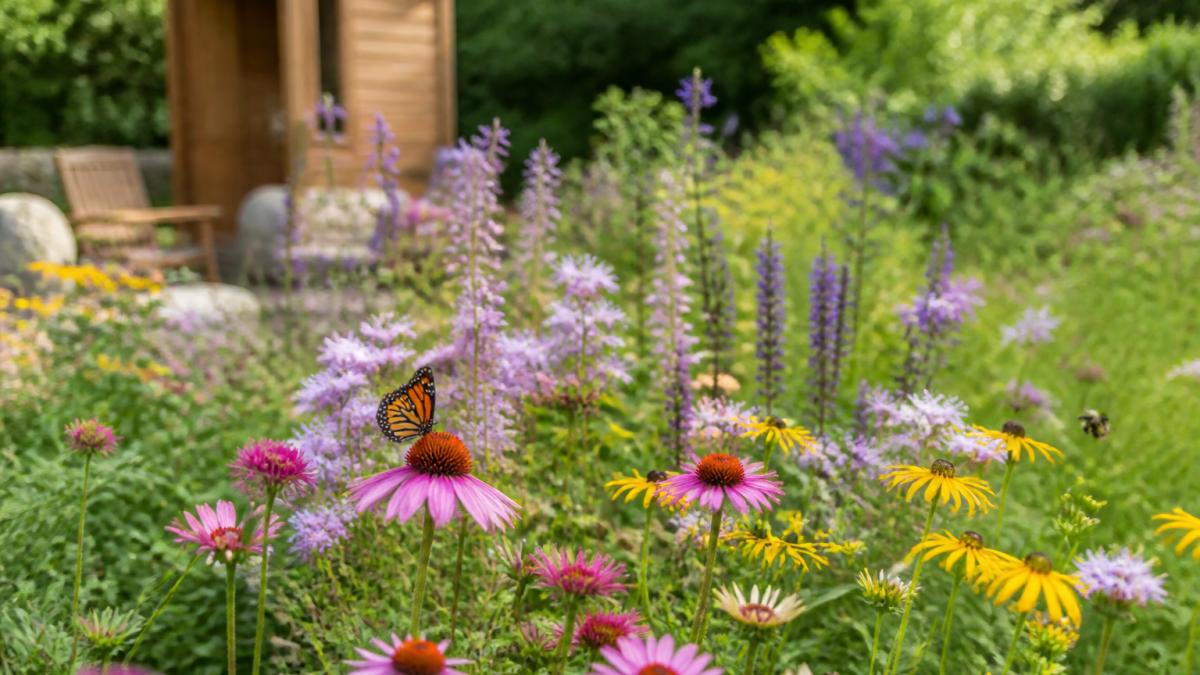
The advantage of native plants goes beyond low maintenance. They create habitat for butterflies, bees, and birds that enhance your outdoor space's ecological value. A pollinator-friendly garden becomes a living feature, something you'll actually want to spend time in, rather than a chore to manage.
Establishment takes one growing season. During year one, water newly planted natives regularly to help roots develop. After that, most native perennials and shrubs need water only during extended dry periods. No fertilizer, no pruning schedules, no pest management required.
A mixed native planting bed typically includes three layers: tall shrubs or small trees as a backdrop, mid-height perennials in the middle, and ground covers or low-growing natives in front.
2. Ground Covers and Lawn Alternatives
Replacing traditional grass with ground covers or alternative lawn materials eliminates one of the biggest maintenance burdens: mowing. Ground covers like creeping thyme, sedums, or native groundcovers spread horizontally, suppress weeds naturally, and thrive with minimal care once established.
The maintenance reduction is substantial. No mowing schedules, no fertilizer applications, no blade sharpening. Many ground covers actually improve over time as they fill in and create denser coverage.
For small backyards, ground covers transform underutilized space into functional, attractive areas. They work particularly well on slopes where mowing is dangerous or difficult. In shaded areas where grass struggles, shade-tolerant ground covers like vinca or ajuga establish quickly and require almost no intervention.
Gravel or permeable paving offers another approach. These materials provide a clean, modern aesthetic while eliminating grass maintenance entirely. Gravel needs occasional raking and replenishment, but that's minimal compared to weekly mowing. Permeable pavers support drainage while creating clean lines and defined planting areas.
The initial cost of installing ground covers or alternative surfaces runs higher than seeding grass, but the long-term maintenance savings, both in time and money, justify the investment for most homeowners.
3. Small Backyard Landscaping Ideas That Maximize Space
Small yards demand efficiency. Every element must serve multiple purposes, and poorly chosen plants or features create visual clutter that makes limited space feel even smaller. The best small backyard landscaping ideas focus on creating functional zones within tight constraints.
Vertical elements, trellises, wall-mounted planters, and climbing vines, add visual interest without consuming ground space. A single vertical planting area can replace what would otherwise be a sprawling ground-level garden.
Container gardens work exceptionally well in small spaces. They offer flexibility, you can rearrange, swap out seasonal plantings, or relocate pots as your needs change. Containers also simplify watering and pest management since they're isolated from the surrounding soil.
For entertaining or relaxation, a small patio becomes your primary outdoor living area. An outdoor rug like the Outdoor Rug Waterproof Washable Extra Large Reversible Sandproof Outdoor Patio Rugs at $161.12 defines your entertaining zone while adding warmth and texture.
A single focal point, whether a water feature, seating area, or architectural element, anchors a small space and prevents it from feeling chaotic. This is where layered lighting becomes crucial.
4. Affordable Backyard Landscaping Ideas on Any Budget
Low-maintenance landscaping doesn't require a large budget. The key is prioritizing elements that deliver the most impact while minimizing ongoing costs.
Start with what you already have. Existing trees provide shade and structure. Mature shrubs can be pruned rather than removed. Building on existing elements costs less than starting from scratch while maintaining continuity in your landscape.
DIY installation saves significantly. Many ground covers, native plantings, and mulch applications are straightforward enough for homeowners to handle. Hardscaping and water features benefit from professional installation, but you can tackle planting yourself.
Mulch is one of the most cost-effective investments. A 3-4 inch layer suppresses weeds, retains moisture, and reduces watering needs by up to 50%. It also creates visual definition between planting beds and lawn areas.
Lighting transforms a space without requiring ongoing maintenance. Solar options like the 2 Pack Solar Lanterns Outdoor Waterproof at $22.56 provide warm ambiance without electricity costs.
For a slightly larger budget, the 37 In. Outdoor Cascade Fountain Garden with LED Light at $315.76 becomes a focal point that requires no maintenance beyond occasional cleaning.

5. Low-Maintenance Plants for Backyard Success
Choosing the right plants determines whether your landscape thrives or becomes a constant source of frustration. Low-maintenance plants share common characteristics: they tolerate your local climate without supplemental care, resist common pests and diseases, and handle neglect better than fussy varieties.
44 In. H White Fiberglass/Resin 2-Tier Solar Water Fountain W/ Solar Panel →
Perennials return year after year, eliminating replanting costs. Many native perennials become more vigorous with age, filling in and creating denser coverage over time. Ornamental grasses add texture and movement with virtually zero maintenance, they don't even need deadheading in most cases.
Shrubs provide structure and year-round interest. Evergreen varieties maintain visual appeal through winter, while deciduous shrubs offer seasonal change. Select varieties bred for your hardiness zone and soil type. Avoid plants requiring frequent pruning or specialized care.
Sedums and succulents excel in challenging conditions. They store water in their leaves, tolerating drought better than almost any other plant category. Many varieties offer attractive foliage colors and require minimal soil preparation or fertilizer.
The common thread: select plants adapted to your specific conditions rather than fighting against them. A plant struggling in inappropriate conditions will never be low-maintenance, regardless of its reputation elsewhere.
6. Water-Wise and Sustainable Landscape Ideas
Water efficiency matters both environmentally and economically. Sustainable landscaping reduces your water consumption while maintaining visual appeal and functionality. The most effective approach combines plant selection, mulching, and smart irrigation.
Native plants adapted to your climate require less supplemental water. Grouping plants by water needs, hydrozoning, ensures you're not overwatering drought-tolerant species. Mulch reduces evaporation and keeps soil temperatures moderate, further reducing watering frequency.
Hardscaping elements like permeable paving manage stormwater runoff while creating functional surfaces. Gravel, permeable pavers, and decomposed granite all allow water to infiltrate rather than running off. This reduces flooding risk while recharging groundwater.
Water features add visual and auditory appeal while being surprisingly water-efficient. A recirculating fountain like the 44 In. H White Fiberglass/Resin 2-Tier Solar Water Fountain at $398.02 uses a closed-loop system where water cycles continuously.

Drip irrigation systems deliver water directly to plant roots, reducing waste compared to overhead sprinklers (the EPA). Many modern systems include timers and moisture sensors, further optimizing water use.
Rainwater harvesting captures free water for later use. A simple rain barrel system collects roof runoff for garden watering during dry periods. This approach reduces municipal water consumption while lowering your water bill.
7. Hardscaping, Lighting, and Water Features for Year-Round Appeal
Hardscaping, patios, pathways, retaining walls, and similar elements, provides structure and functionality while requiring minimal maintenance. Unlike plants that change seasonally, well-designed hardscaping maintains visual interest year-round.
Patios create outdoor living spaces where you'll actually spend time. Quality materials like natural stone or composite pavers develop character over time. Proper drainage prevents water pooling and surface deterioration.
Pathways define movement through your landscape while reducing foot traffic damage to planting areas. They also add visual interest and create the sense of exploration even in small spaces.
Lighting transforms your landscape after dark. Layered lighting, combining ambient, task, and accent lighting, creates sophisticated evening appeal. The Solar Lanterns Outdoor at $173.49 offer remote control brightness adjustment, allowing you to set the perfect ambiance for any occasion.
Water features provide focal points and sensory appeal. The 7 Tier Cascading Rock Outdoor Water Fountain at $131.42 creates a natural-looking focal point with built-in LED lighting.

Storage solutions keep your space functional without clutter. The 2 Pack Storage Bench at $412.26 provides 120 gallons of weatherproof storage while doubling as seating.
Summary: Creating Your Low-Maintenance Backyard Sanctuary
Low-maintenance backyard landscaping ideas for 2026 prioritize sustainability, functionality, and genuine ease of care over constant upkeep. The most successful landscapes combine native plants that thrive without supplemental care, hardscaping elements that provide structure and function, and carefully selected features that enhance ambiance without requiring ongoing maintenance.
Start by assessing your space, climate, and actual maintenance capacity. Be honest about how much time you're willing to invest. Build on existing elements rather than starting from scratch. Invest in quality pieces that last rather than budget items requiring constant replacement.
The goal isn't a perfect, magazine-cover landscape. It's a space that genuinely improves your quality of life, where you can relax, entertain, and connect with nature without the stress of constant maintenance. When your landscape works with your climate and your lifestyle rather than against them, you'll actually use your outdoor space instead of resenting it.
At Spirit of Willow, we help homeowners transform their backyards into sophisticated retreats that require minimal maintenance while delivering maximum enjoyment. Our carefully curated collection of water features, lighting, storage solutions, and outdoor furnishings work together to create spaces that feel luxurious yet genuinely low-effort.
Frequently Asked Questions
What are the best low-maintenance plants for a backyard?
Native perennials, sedums, ornamental grasses, and ground covers like creeping thyme require minimal watering and upkeep once established. Shrubs such as boxwood and serviceberry thrive in most climates with little pruning. Avoid annuals and plants that need frequent fertilizing. Choose species suited to your local climate and soil type to reduce maintenance by 50% or more compared to non-native plants.
How can I landscape a small backyard on a budget?
Start with a clear focal point like a water feature or seating area, then layer affordable ground covers and perennials around it. Use mulch and gravel instead of expensive hardscaping, and add a solar lantern or two for ambiance without electricity costs. Raised beds made from reclaimed materials and container gardens also maximize small spaces affordably. Prioritize one section at a time rather than overhauling the entire yard at once.
What is the best way to reduce watering in a low-maintenance backyard landscape?
Xeriscaping principles work well: choose drought-tolerant plants, add 2-3 inches of mulch to retain soil moisture, and group plants by water needs. Install a soaker hose on a timer for efficient watering. Incorporate hardscaping like gravel and pavers to reduce the area needing irrigation. Native plants adapted to your region naturally require less water once their roots establish, typically within the first growing season.
How do I create a sustainable landscape that looks beautiful year-round?
Mix perennials with different bloom times, add evergreen shrubs for winter structure, and include ornamental grasses that provide texture in fall and winter. Use native plants to support local pollinators and reduce chemical inputs. Install solar-powered water features for ambiance without electricity. Compost garden waste to enrich soil naturally. This approach creates visual interest across all seasons while minimizing environmental impact and maintenance time.