

Home Infrared Sauna Installation: Benefits & Setup Guide
Table of Contents
- What Is an Infrared Sauna and How It Works
- Key Health Benefits of Home Infrared Sauna Installation
- Infrared Sauna Health Benefits and Risks: What the Evidence Shows
- Where to Install an Infrared Sauna at Home
- Infrared Sauna Installation Cost and Total Ownership
- How Often to Use an Infrared Sauna at Home
- Infrared Sauna vs. Traditional Sauna: Key Differences
- Choosing and Installing Your Home Infrared Sauna
- Frequently Asked Questions
Last Updated: October 12, 2026
What Is an Infrared Sauna and How It Works
An infrared sauna uses infrared light to generate heat that penetrates the body directly, rather than heating the air around you like a traditional sauna does.
The technology relies on infrared heaters, usually carbon or ceramic panels, that emit infrared radiation across near, mid, and far-infrared spectrums. Far-infrared saunas, the most common type for home use, operate at wavelengths that penetrate deeper into tissue.
At Spirit of Willow, we recognize that home infrared sauna installation has become increasingly popular among homeowners seeking wellness amenities without the cost and space demands of traditional saunas. The Barcelona Far Infrared Sauna represents this category well, a 2-person unit using six carbon PureTech panels that operate on standard 120V household current, making installation straightforward for most homes.

The mechanism is straightforward: infrared heaters warm your body's tissues directly. Your body responds by increasing heart rate, blood flow, and perspiration.
Key Health Benefits of Home Infrared Sauna Installation
Stress Relief and Relaxation
Regular infrared sauna sessions reduce cortisol levels and activate the parasympathetic nervous system, your body's relaxation response. The combination of heat exposure and the ritualistic nature of sauna use creates a mental reset that many users find comparable to meditation or massage therapy.
The warmth triggers endorphin release, your brain's natural feel-good chemicals. A 15-20 minute session can leave users feeling noticeably calmer and more grounded.
Many users report better sleep quality following evening sessions, partly because the post-sauna cooldown period signals your body to prepare for rest. The stress-relief benefits accumulate over time, with consistent users reporting sustained mood improvements.
Muscle Recovery and Pain Relief
Heat therapy accelerates blood flow to muscles and joints, delivering oxygen and nutrients that support recovery. Athletes and active individuals often use infrared saunas after workouts to reduce muscle soreness and speed repair.
The infrared wavelengths penetrate muscle tissue directly, warming it from within rather than just the surface. This deep heat can ease chronic muscle tension and joint stiffness. People with arthritis, fibromyalgia, or general muscle soreness frequently report that regular sauna use reduces their symptoms.
Sleep Quality Improvement
The body's natural sleep cycle depends on a temperature drop as evening approaches. Infrared sauna use in the early evening raises core temperature, and the subsequent cooldown signals your body that sleep time is approaching. This temperature regulation supports deeper, more restorative sleep.
Users often report falling asleep faster and experiencing fewer nighttime awakenings. The combination of physical relaxation, stress reduction, and this natural temperature signaling creates conditions favorable for quality rest.
Circulation and Cardiovascular Effects
Infrared heat causes blood vessels to dilate, increasing circulation throughout your body. Heart rate rises during sauna sessions, similar to the response during moderate aerobic exercise (pubmed.ncbi.nlm.nih.gov). For sedentary individuals, this gentle cardiovascular stimulation can support heart health.
Regular sauna users show improvements in blood pressure and arterial flexibility over time. The repeated heat stress causes your cardiovascular system to adapt, becoming more efficient at delivering oxygen and managing blood flow.
Infrared Sauna Health Benefits and Risks: What the Evidence Shows
Claims about infrared saunas range from detoxification to immune boosting to cellular regeneration. The reality is more measured. Sweating does eliminate some substances through skin, but your kidneys and liver handle the majority of detoxification.
The cardiovascular benefits are well-documented: regular heat exposure improves blood vessel function and can modestly lower blood pressure. The stress-reduction effects are real, supported by cortisol reduction and parasympathetic activation.
However, infrared saunas are not a substitute for medical treatment. They complement wellness routines but don't cure conditions. People with uncontrolled high blood pressure, heart disease, or those taking certain medications should consult their doctor before regular use.
Where to Install an Infrared Sauna at Home
Space and Clearance Requirements
Most residential infrared saunas occupy 3x3 to 4x4 feet of floor space, roughly the footprint of a small closet. The Barcelona Far Infrared Sauna measures 39 inches long by 36 inches wide by 73 inches tall, fitting comfortably in a bedroom corner, bathroom, or basement room.
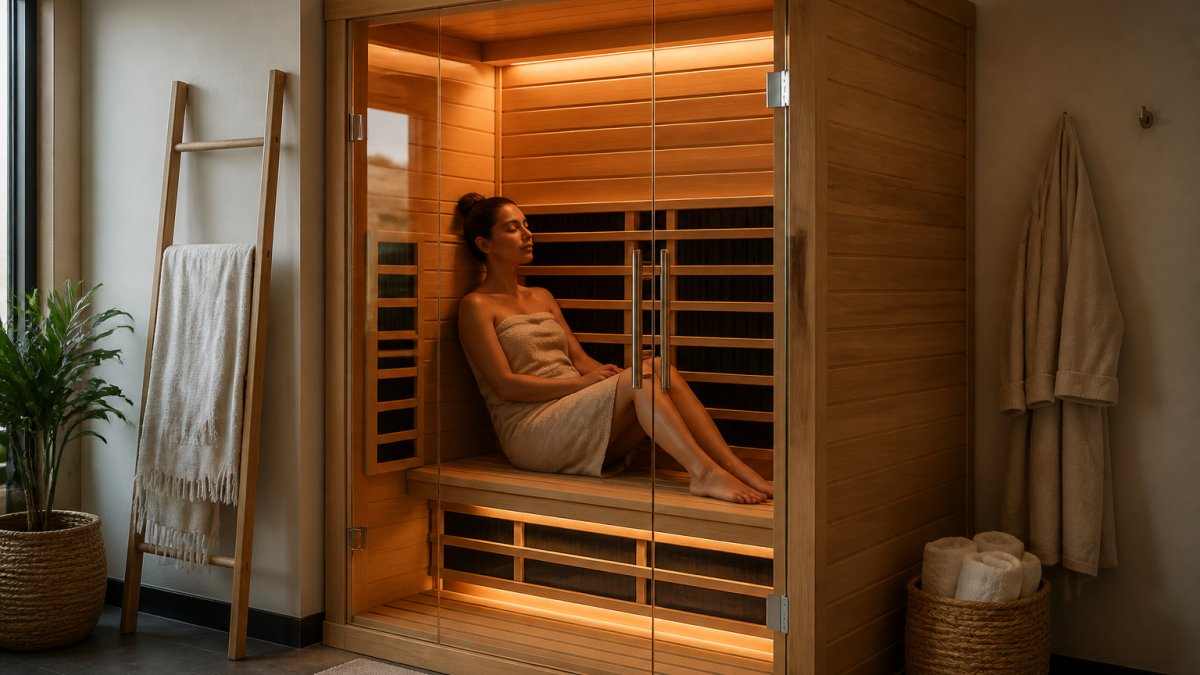
Clearance matters more than you might expect. You need at least 12 inches of clearance on all sides to ensure proper ventilation and prevent heat from concentrating against walls.
The flooring must support the unit's weight, the Barcelona weighs 250 pounds assembled. Concrete, tile, or solid wood handles this easily. Carpet is acceptable if the subfloor is solid, but avoid areas prone to moisture accumulation.
Electrical and Ventilation Considerations
Most residential infrared saunas operate on standard 120V household current. The Barcelona draws 1800W, requiring a dedicated 15-amp circuit. This is crucial: sharing a circuit with other appliances risks breaker trips or insufficient power delivery.
Have an electrician verify that your home's electrical panel can support a dedicated 15-amp circuit to your sauna location. If your home uses 100-amp service, this is typically straightforward. Older homes with 60-amp service may require panel upgrades before installation.
Ventilation prevents heat and humidity from concentrating in the room. A simple solution is cracking a window during and after use. For permanent installations, consider a small exhaust fan vented to the outside.
Infrared Sauna Installation Cost and Total Ownership
Equipment Costs
Home infrared sauna prices range widely. Entry-level 1-person units start around $1,200-$1,500. The Barcelona Far Infrared Sauna at Spirit of Willow is priced at $2,350.81 for a 2-person capacity, representing mid-range quality with premium features like Bluetooth audio and low EMF design.
Larger 3-4 person units can exceed $4,000-$5,000. The price difference typically reflects panel quality, wood type, additional features, and warranty coverage. The Barcelona's 5-year manufacturer warranty provides protection against defects.
Barcelona Far Infrared Sauna - Low EMF - 2 Person →
Installation and Operating Expenses
Most infrared saunas require no professional installation beyond electrical work. If you need a dedicated circuit installed, expect $200-$400 in electrician fees depending on your location and existing wiring.
Operating costs are minimal. The Barcelona draws 1800W per hour. Running a session at typical usage (3-4 times weekly for 30 minutes) costs roughly $15-$20 monthly in electricity, depending on your regional rates.
Accessories add modest costs. A quality sauna timer like the Red Cedar Sauna Timer ($41.07) helps track session duration. The Non-Toxic Cedar Sauna Backrest with hat and seat pad ($52.26) enhances comfort. The Sauna Bucket and Ladle Set ($70.81) provides traditional hydration support.

| Cost Category | Typical Range | Spirit of Willow Example |
|---|---|---|
| Sauna Unit | $1,200-$5,000 | Barcelona: $2,350.81 |
| Electrical Work | $0-$400 | Depends on existing circuit |
| Essential Accessories | $50-$150 | Timer + backrest: ~$93 |
| Monthly Operating Cost | $10-$25 | ~$15-$20 |
How Often to Use an Infrared Sauna at Home
Most practitioners recommend starting with 2-3 sessions weekly for 20-30 minutes per session. This frequency allows your body to adapt to the heat stress while providing consistent benefits for stress relief, recovery, and sleep.
Experienced users often increase to 4-5 sessions weekly without issue. Some daily users report sustained benefits, though daily use isn't necessary to achieve results. The key is consistency rather than intensity, three reliable weekly sessions outperform sporadic longer sessions.
Listen to your body. If you feel dizzy, excessively fatigued, or experience skin irritation, reduce frequency. Hydration and rest days matter. Your cardiovascular system needs recovery time between intense heat exposures.
Infrared Sauna vs. Traditional Sauna: Key Differences
Traditional saunas heat the air to 160-200°F, creating extreme ambient heat that warms your body indirectly. Infrared saunas operate at 120-140°F but penetrate tissue directly. This means infrared saunas feel less intense while still triggering similar physiological responses.
Traditional saunas require more space, higher electrical loads, and more complex installation. Infrared saunas fit into standard rooms and plug into existing circuits. Traditional saunas take 30-45 minutes to preheat; infrared units reach operating temperature in 15-20 minutes.
The health outcomes are comparable for most users. Both improve circulation, reduce stress, and support recovery. Traditional saunas provide a more intense experience and are preferred by some.
| Feature | Infrared Sauna | Traditional Sauna |
|---|---|---|
| Operating Temperature | 120-140°F | 160-200°F |
| Heat Penetration | Deep tissue | Ambient air |
| Installation Complexity | Simple | Moderate to complex |
| Electrical Requirements | 120V standard | Often 240V required |
| Preheat Time | 15-20 minutes | 30-45 minutes |
| Space Requirements | Compact (3x3 ft) | Larger (6x6 ft+) |
| Perceived Intensity | Gentle | Intense |
Choosing and Installing Your Home Infrared Sauna
Selecting the Right Size and Model
For most homes, a 2-person sauna offers the best balance of comfort and space efficiency. Single-person units feel cramped for extended sessions.
Consider your primary use. Solo wellness sessions? A compact 1-person model works. Couples or occasional shared use? A 2-person unit like the Barcelona provides flexibility.
Wood type matters for durability and aesthetics. Canadian hemlock, used in the Barcelona, resists warping and naturally resists rot.
Check the heater specifications. Carbon PureTech panels, as featured in the Barcelona, deliver consistent far-infrared heat with low EMF output.
Essential Accessories for Comfort and Safety
A quality timer ensures you don't exceed recommended session lengths. The Red Cedar Sauna Timer's 15-minute sand timer with 360-degree rotation provides reliable tracking without electronic failure risk.
A backrest and seat pad reduce direct contact with hot surfaces and improve posture during extended sessions.

A bucket and ladle set supports hydration during sessions.
Keep a towel nearby and wear minimal clothing, swimwear or light shorts are standard. Some users prefer nothing at all. Ensure you can exit quickly if needed.
Creating a home infrared sauna installation transforms your wellness routine from something you schedule around travel and gym hours into a daily accessible practice.
Frequently Asked Questions
What are the potential benefits of using an infrared sauna at home?
Home infrared sauna use may support stress relief, muscle recovery, improved sleep quality, and enhanced circulation. The far-infrared heat penetrates skin to promote relaxation and reduce muscle soreness. Regular sessions can contribute to a consistent wellness routine, though individual results vary. Benefits develop over time with consistent use, typically within 2-4 weeks of regular sessions.
How much does it cost to install an infrared sauna at home?
Equipment costs range significantly based on size and features. A 2-person far-infrared sauna like the Barcelona model costs $2,350.81. Installation expenses depend on your existing electrical setup; most 120V models plug into a standard 15-amp outlet, eliminating expensive wiring costs. Annual operating costs typically run $100-$200 depending on usage frequency and local electricity rates.
Where is the best place to install an infrared sauna in your house?
Indoor locations like a spare bedroom, basement, or bathroom work well for infrared saunas. Ensure at least 12 inches of clearance on all sides for proper ventilation and heat distribution. The space should have access to a dedicated 15-amp electrical outlet and adequate flooring to support the unit's weight. Avoid areas with high humidity or direct sunlight, which can affect performance and durability.
How many days a week should you sit in an infrared sauna?
Most wellness practitioners recommend 3-4 sessions per week for optimal benefits, with each session lasting 20-30 minutes. Beginners should start with 15-minute sessions 2-3 times weekly and gradually increase as heat tolerance builds. Listen to your body and allow rest days between sessions for recovery. Consistency matters more than intensity for achieving relaxation, muscle recovery, and circulation improvements.
Is a home infrared sauna good for you?
Infrared saunas can be beneficial for relaxation and wellness routines when used safely and consistently. They support stress relief, muscle recovery, and circulation. However, they are not medical devices and should not replace professional treatment for health conditions. People with heart conditions, high blood pressure, or those taking certain medications should consult a healthcare provider before use. Proper hydration and reasonable session duration are essential for safe enjoyment.
Does a home infrared sauna need special electrical wiring?
Most residential infrared saunas operate on standard 120V household current and plug into a dedicated 15-amp outlet, requiring no special wiring. Verify your sauna's electrical requirements before installation. Ensure the outlet is properly grounded and consider having an electrician confirm your home's capacity. Avoid extension cords; plug directly into the wall outlet for safety and consistent performance.