

9 Fade-Resistant Fabric Mistakes That Ruin Outdoor Pillows
Last Updated: October 25, 2026
Quick Summary
The best fade resistant fabric for outdoor pillows is solution-dyed acrylic with a published UV test rating and a fluoropolymer finish, matched to your climate and exposure. Solution-dyed construction locks color through the whole thread, so it holds up far longer than surface-dyed fabric.
- Solution-dyed acrylic locks pigment into the fiber before weaving, so there is no thin color layer to lose.
- AATCC Class 4 after 800+ hours of UV exposure is a strong colorfastness result to look for.
- Water resistance and fade resistance are separate properties, so check UV ratings independently.
- Olefin dries quickly and resists mildew, making it a strong value choice in humid climates.
- Wash covers gently with mild soap, never bleach, and store pillows dry to prevent mildew.
Table of Contents
- Why Fade Resistance Decides Whether Your Outdoor Pillows Last
- Mistake 1: Ignoring the Best Outdoor Cushion Fabric Before You Buy
- Mistake 2: Confusing Solution-Dyed Acrylic Outdoor Fabric With Surface-Dyed Fabric
- Mistake 3: Assuming All Water-Resistant Fabric for Outdoor Cushions Is Fade-Proof
- Mistake 4: Skipping the Fade-Resistance Test and UV Rating
- Mistake 5: Buying the Wrong Fabric for Your Climate and Exposure
- Mistake 6: Getting How to Clean Outdoor Pillow Covers Wrong
- Choosing Fade-Resistant Pillows for Your Patio
- Frequently Asked Questions
Why Fade Resistance Decides Whether Your Outdoor Pillows Last
A pillow that fades in one season is not a bargain at any price. The single most common regret we hear from homeowners is buying throw pillows that looked rich in May and washed-out by August. Fading is not cosmetic. It signals that ultraviolet rays have broken down the dye and, often, the fiber itself.
This guide covers the mistakes that ruin outdoor pillows, so you can choose fade resistant fabric with confidence.
What Actually Causes Fading
Sun exposure drives most color loss. Ultraviolet rays attack the dye molecules and the polymer chains in the fiber, and the damage compounds with every hour of direct sunlight. Moisture accelerates it, because damp fabric holds heat and gives mildew a foothold. Poor dye penetration is the third culprit: if color sits only on the surface of a thread, it scuffs and fades quickly. Fade resistance, then, is a function of fiber type, dye method, and how the fabric is finished.
Mistake 1: Ignoring the Best Outdoor Cushion Fabric Before You Buy
Buying on color alone is the fastest route to disappointment. The best outdoor cushion fabric is chosen for construction first and appearance second. Look for tight weaves, heavier fabric weight, and fibers engineered for outdoor exposure rather than indoor upholstery. A loose, lightweight weave lets UV reach more fiber surface and lets water wick deeper, so two fabrics with the same fiber content can age very differently.
How the Main Fibers Compare on the Same Criteria
Most buying guides list fiber types without comparing them on the same measures. The table below evaluates the four fabrics you will actually encounter against consistent criteria: UV resistance, water repellency, breathability, and care needs. Ratings are relative, not laboratory scores, and assume a quality mill and an outdoor-specific finish.
| Fabric | UV resistance | Water repellency | Breathability | Care needs | Best use |
|---|---|---|---|---|---|
| Solution-dyed acrylic | High, color is locked into the fiber before weaving | Moderate to high with a fluoropolymer finish; re-treat periodically | Moderate | Mild soap, spot clean, air dry | Full sun, poolside, exposed patios |
| Polyester (including polyester canvas) | Moderate to high when UV-stabilized; lighter weights fade faster | Moderate; often relies on a back coating | Low to moderate when coated | Machine washable on gentle; avoid bleach | Covered patios, seasonal use, budget projects |
| Olefin | Moderate; inherently resistant to moisture and mildew | High, low moisture absorption | Low | Wipe or hose off; dries quickly | Humid climates, shaded seating, value cushions |
| Cotton canvas | Low in direct sun; dye breaks down quickly | Low unless waxed or coated | High | Frequent cleaning; mildews if stored damp | Shaded porches, indoor-outdoor rooms |
What the Criteria Actually Mean
- UV resistance is not the same as colorfastness. A fiber can resist ultraviolet degradation while its dye still fades, which is why dye method matters as much as fiber type (see the next section).
- Water repellency comes from a finish or a tight weave, not from the fiber alone. Finishes wear off with washing and abrasion, so plan to re-apply a fabric protector seasonally on exposed pillows.
- Breathability determines how fast a pillow dries after rain. Heavily coated fabrics shed water well but trap heat and moisture, which shortens color life and encourages mildew.
- Care needs drive real-world lifespan. A fabric that requires gentle washing and air drying will outlast one that demands harsh cleaning after every storm.
Construction Details That Matter as Much as Fiber
Weave, backing, seams, closures, and removable covers affect durability and maintenance as much as the face fabric. A tight, balanced weave resists pilling and abrasion; a loose basket weave looks rich but snags. A breathable backing lets moisture escape, while a solid waterproof backing can trap condensation.
For a deeper look at care, our guide on how to clean mold off outdoor cushions walks through the full process.
Mistake 2: Confusing Solution-Dyed Acrylic Outdoor Fabric With Surface-Dyed Fabric
The distinction between solution-dyed and surface-dyed construction is the one most buyers miss. With solution-dyed acrylic outdoor fabric, pigment is added to the fiber while it is still liquid, so dye penetration runs through the entire thread.
That difference decides how the fabric ages. A surface-dyed pillow scuffs, abrades, and fades from the outside in, and the color can wear thin at seams and edges.
Mistake 3: Assuming All Water-Resistant Fabric for Outdoor Cushions Is Fade-Proof
Water resistance and fade resistance are different properties, and a pillow can have one without the other. Water-resistant fabric for outdoor cushions usually relies on a coating or tight weave that keeps light rain out. That coating does nothing to block ultraviolet rays.
Check both ratings separately. Ask whether the fabric is UV-stabilized and whether the cover is breathable enough to dry quickly after a rain shower.
Mistake 4: Skipping the Fade-Resistance Test and UV Rating
Fade resistance is measurable, and reputable makers publish the results. The standard benchmark is AATCC colorfastness testing, which grades color change on a scale where higher numbers mean less fading. Our own outdoor bench cushion is tested to AATCC Class 4 after 800+ hours of UV exposure, which supports its fade-resistant claim for one to two full seasons in direct sun.
If a product page offers no test data and no UV rating, treat the claim as marketing rather than performance.
Outdoor Bench Cushion 42" X 16", Beige - Water & Fade Resistant Patio Furniture →
Mistake 5: Buying the Wrong Fabric for Your Climate and Exposure
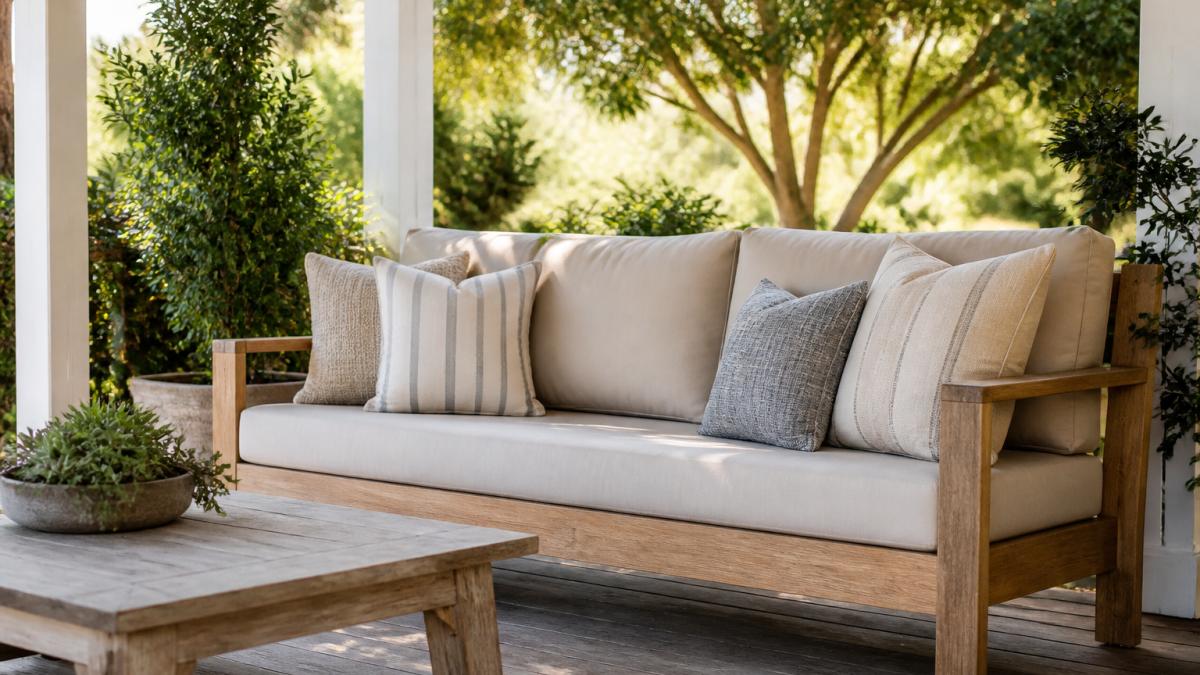
Match the fabric to where the pillow will live. A covered patio with filtered light is forgiving; a poolside lounger in full sun is not. Most buying guides stop there, but the practical question is which fabric to choose for the specific conditions on your property. The recommendations below translate fiber and construction into choices by climate and exposure.
Intense Sun and High UV
Direct, all-day sun is the hardest test. Choose solution-dyed acrylic with a published UV test rating and a fluoropolymer finish. Dark saturated colors and bright whites both show fading, but mid-tone and heathered weaves hide gradual color shift better than flat pastels. Rotate pillows every few weeks so one face does not take all the exposure, and bring them in during the highest-UV hours if you want maximum lifespan.
Humid and Rainy Conditions
Humidity and frequent rain favor fabrics that dry fast and resist mildew. Olefin is inherently moisture-resistant and dries quickly, which makes it a strong value choice for shaded or semi-covered seating in humid areas. Solution-dyed acrylic with a breathable weave also performs well, provided the pillow can drain and air out. Avoid solid waterproof backings that trap condensation, and never store pillows damp.
Coastal Salt Air
Salt air adds corrosion and abrasion to the usual sun and moisture load. Solution-dyed acrylic with a tight weave and quality seams holds up best; rinse covers periodically with fresh water to remove salt film, which can dull color and attract dirt. Stainless hardware and hidden zippers resist corrosion better than exposed metal trims.
Shaded and Covered Patios
Filtered light and overhead cover reduce UV load enough that a quality polyester canvas can perform well for seasonal use at a lower price. Breathability matters more than extreme UV resistance here, because trapped moisture is the bigger threat. Removable, machine-washable covers are worth prioritizing in covered spaces where pollen and dust accumulate.
Seasonal and Mixed Exposure
If pillows move between sun and shade, or you store them for part of the year, choose one fabric that handles the harshest condition they will see rather than buying different fabrics for every spot. Buying one fabric type for every location usually means overpaying in shaded areas and underbuying in the sunniest ones. A single solution-dyed acrylic set with removable covers covers the widest range of conditions and simplifies care.
Mistake 6: Getting How to Clean Outdoor Pillow Covers Wrong
Harsh cleaning shortens a pillow's life as surely as sun does. Bleach and strong detergents strip dye and break down UV finishes. The right approach for how to clean outdoor pillow covers is gentle: brush off loose dirt, spot clean with mild soap and water, and rinse thoroughly. Removable, machine-washable covers make this far easier; our bench cushion has a removable cover with a hidden zipper that is machine washable.
Storage and Off-Season Care
Bring pillows inside during long stretches of bad weather and at season's end. Store them dry, never damp, to prevent mildew. For the bigger picture on protecting your whole setup, see our guide on how to make outdoor furniture last longer.
Choosing Fade-Resistant Pillows for Your Patio
The reliable path to fade resistant fabric comes down to four checks: solution-dyed construction, a published UV test rating, a fabric matched to your exposure, and a cover you can wash gently. Get those right and your throw pillows will hold their color through season after season of entertaining.
If you want a proven starting point, our fade-resistant outdoor bench cushion pairs water- and fade-resistant fabric with high-density foam and a non-slip base, ready for a sunny porch or covered patio.
Frequently Asked Questions
What is the best water-resistant fabric for outdoor cushions?
Solution-dyed acrylic is the strongest all-around choice because the color runs through the whole fiber and the tight weave slows moisture penetration. Polyester canvas costs less and handles light rain well, while olefin sheds water readily but can feel rougher. Look for water-repellent finishes and removable, washable covers, then check the UV test rating before you buy. Water resistance and fade resistance are separate qualities, so confirm both on the label.
Is solution-dyed acrylic better than polyester for outdoor pillows?
For direct sun, solution-dyed acrylic usually wins. The pigment is added to the liquid fiber before it is formed, so color sits throughout the yarn rather than on the surface. Polyester with a surface dye or print can fade faster under strong ultraviolet rays. That said, solution-dyed polyester exists and performs well at a lower price. Ask how the fabric is dyed, not just what fiber it uses, and match the choice to your exposure.
How can I tell whether outdoor pillow fabric will resist fading?
Check the label for solution-dyed construction and a stated UV test result, such as an AATCC colorfastness class after a set number of exposure hours. A Class 4 rating after 800+ hours, like the one on the Spirit of Willow Outdoor Bench Cushion, signals solid fade resistance for one to two seasons in direct sun. Feel the weave too: tighter, heavier fabric blocks ultraviolet rays better than loose, thin weaves.
How do you clean outdoor pillow covers to keep their color?
Remove the covers, shake off loose dirt, then wash in cold water on a gentle cycle with mild detergent. Skip bleach and harsh cleaners, which break down dye and water-repellent finishes. Air-dry rather than tumble dry, since heat stresses the fiber. For quick refreshes, wipe the surface with a damp cloth or hose off light dust. Store covers dry and out of direct sunlight during the off-season to slow color loss.
Fading is the fastest way to make a beautiful patio feel tired, and the fix starts before you buy, not after. At Spirit of Willow, we curate outdoor living pieces built to keep their beauty over time, from fade-resistant cushions to fire pits and fountains that anchor a relaxing retreat. Explore our collection to find durable, timeless pieces that turn your garden into a destination. Continue shopping with Spirit of Willow and build an outdoor space you will enjoy for years.
