

Designing a Small Outdoor Patio Retreat: 2026 Guide
Table of Contents
- Start With a Plan: Measure, Zone, and Set Your Budget
- Small Patio Layout Ideas That Maximize Every Inch
- How to Add Privacy to a Small Patio Without Closing It In
- Modern Backyard Design Ideas for 2026: Warm Minimalism and Sensory Design
- Permits, Structural Safety, and Eco-Friendly Material Sourcing
- Maintenance and Seasonal Care for a Small Patio Retreat
- Conclusion
- Frequently Asked Questions
Last Updated: September 12, 2026
Start With a Plan: Measure, Zone, and Set Your Budget
Designing a small outdoor patio retreat starts with a tape measure, not a mood board. Most people buy furniture first and then discover it doesn't fit, which is why layout planning comes before any purchase.

Measure your patio's exact dimensions, then sketch it on graph paper. Mark fixed elements: doors, hose bibs, downspouts, and any structural posts.
Next, zone the space. A patio under 100 square feet typically supports two zones at most, and cramming in three makes every one of them feel tight.
- Dining zone: bistro set or compact table
- Conversation zone: two chairs angled toward each other
- Accent zone: fountain, planter cluster, or fire feature
Set your budget in three buckets: furniture (roughly half), lighting and decor (a quarter), and hardscaping or repairs (the rest). This guide from Spirit of Willow walks through each stage so you can plan once and buy once.
Small Patio Layout Ideas That Maximize Every Inch
The best small patio layout ideas follow one rule: keep a clear walking path at least 24 inches wide, then fill the edges. Traffic should never cut through a seating group. The Americans with Disabilities Act uses 36 inches as its accessible-route standard, so if anyone in your household uses a walker or wheelchair, plan for that width instead and treat 24 inches as the absolute floor for a single-file path (ada.gov).
Pull furniture away from walls where you can. Floating a bistro set slightly off the railing makes a patio feel larger, not smaller, because the eye reads the gap as extra depth. A common pattern is to leave 18 to 24 inches between the back of a chair and the nearest wall, enough to push the chair back without scraping, but tight enough that the gap still reads as intentional space rather than wasted floor.
Bistro Sets and Compact Dining
A bistro set is the most space-efficient dining option for a small patio. Round tables beat rectangular ones here because they have no corners to bump into and they seat two comfortably in a footprint under a meter across. A typical two-person round bistro table runs 24 to 30 inches in diameter; pair it with chairs that tuck fully under the tabletop so the whole arrangement collapses to roughly a 3-foot circle when not in use.
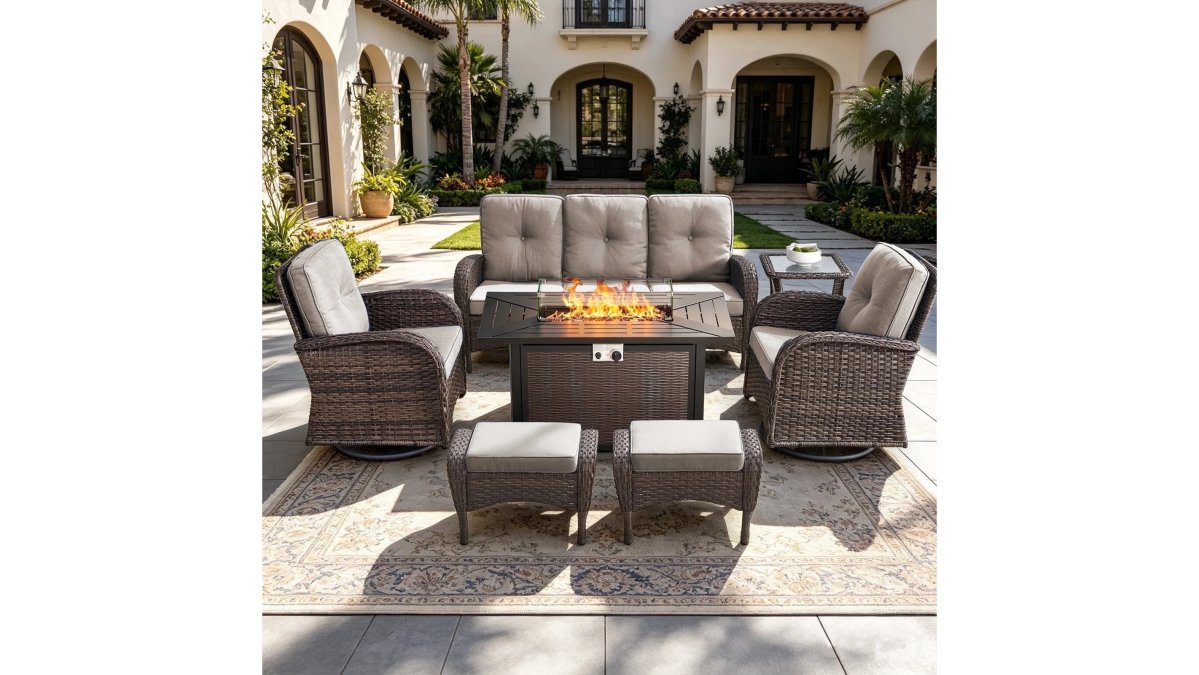
Look for folding or stacking chairs if your patio doubles as a walkway. For a compact footprint, a seven-piece rattan set with a built-in fire pit table (7 Piece Outdoor Patio Furniture Set) consolidates dining, seating, and warmth into one arrangement instead of three separate purchases competing for the same square footage.

Vertical Gardens and Wall-Mounted Planters
Vertical gardening turns fencing and blank walls into growing space. Wall-mounted planters and trellises for climbing plants add layered greenery without consuming a single square foot of floor area. A wall-mounted planter typically projects 6 to 10 inches from the surface, so it clears a 24-inch walkway without crowding it.
Choose perennials and small shrubs for lower maintenance than annuals, and group containers by similar water needs so you're not fussing over each pot separately. Terracotta reads warm and traditional; matte ceramic or fiberglass suits a more modern palette. For a low-maintenance vertical wall, consider drought-tolerant options like sedum, creeping thyme, or ornamental grasses, all of which tolerate the faster drying that comes with shallow wall-mounted soil volumes. Integrating these vertical elements effectively maximizes limited square footage, a strategy that remains essential when planning the layout of small townhouse backyards.
How to Add Privacy to a Small Patio Without Closing It In
The trick to how to add privacy to a small patio is screening sightlines at eye level while leaving the space above open. Full-height walls make small patios feel like boxes; partial screens don't. The working target is to block the seated eye line, roughly 42 to 48 inches above the floor, while leaving everything above that open to sky and air.
- Privacy screens: freestanding panels or lattice, placed at the property line. A 4-foot panel blocks a seated neighbor's view without cutting light. Lattice lets air pass through, which matters on a small patio where a solid panel can turn the space into a wind tunnel.
- Plant-based screening: tall grasses, bamboo in containers, or columnar shrubs. Bamboo in containers is the fastest screen, but choose a clumping variety rather than a running one, running bamboo will escape a container and spread. Columnar options like 'Sky Pencil' holly or Italian cypress hold a narrow footprint and screen at eye level within a couple of seasons.
- Fabric solutions: outdoor curtains or shade sails that retract when not needed. Curtains on a cable run are the most flexible option because they collapse to almost nothing when open, but they need a sturdy anchor point at each end, a fence post or a wall, or they will sag.
Keep screens to roughly chest or shoulder height where possible. Light still enters, air still moves, and the patio reads as open rather than enclosed. If you need overhead cover for shade, a pergola with a retractable canopy gives you the option to close it for privacy or open it for sun.
One thing most privacy guides skip: a freestanding screen is a sail. A 4-foot by 6-foot panel presents 24 square feet of surface area to the wind, and a gust will tip an unanchored panel (weather.gov). Either anchor the posts into footings or use a weighted base rated for your local wind exposure. Check your local building department's rules before installing anything that attaches to a fence line or property boundary, many municipalities cap fence and screen height at 6 feet and require a setback from the property line.
Modern Backyard Design Ideas for 2026: Warm Minimalism and Sensory Design
Modern backyard design ideas for 2026 lean toward warm minimalism: fewer pieces, better materials, and a deliberate mix of textures. The palette has moved away from cool grays toward rustic wood tones, plaster walls, and natural stone.
Sensory design is the other shift. A patio should engage more than the eyes, which is why water features, fire, and layered lighting now anchor more layouts than a single statement sofa.
Fire Pits, Fountains, and Ambient Lighting
Fire, water, and light do the emotional work on a small patio. A propane fire pit table doubles as a coffee table during the day and a gathering point after dark; a model like this 60,000 BTU fire pit table delivers both heat and a blue-glass flame focal point.
A cascading fountain, such as this stacked-stone fountain with LED lighting, adds the sound of moving water, which masks traffic noise and makes a small space feel calmer. For ambient lighting, layer three sources: string lights overhead, a low lantern or two at seating height, and path lighting along the edge. Never rely on a single overhead fixture, which flattens the space.
Permits, Structural Safety, and Eco-Friendly Material Sourcing
Most guides skip this section. You shouldn't. A pergola or gazebo is a structure, and many municipalities require a permit depending on height, footprint, and how it's anchored.
Before you build anything overhead, check your local building department's rules on setbacks, height limits, and wind load. A hardtop gazebo, like this 10' x 12' wooden gazebo with a galvanized steel roof, needs proper anchoring to footings, not just weight on the surface. Confirm the manufacturer's wind and snow ratings match your region before installation.

For eco-friendly material sourcing, prioritize FSC-certified wood, recycled or recyclable metals, and water-based finishes over solvent-heavy stains (fsc.org). Durable materials that last a decade beat cheap ones you replace every two years, both for your budget and for waste.
Maintenance and Seasonal Care for a Small Patio Retreat
Small patios need less maintenance than large ones, but they need it more often because every surface gets used. A simple seasonal routine keeps the space guest-ready.
| Task | Frequency | Why It Matters |
|---|---|---|
| Wipe furniture frames | Weekly | Prevents grime buildup in wicker weave |
| Clean cushions | Monthly | Stops mildew before it stains fabric |
| Sweep and rinse hardscape | Weekly | Keeps pollen and leaf tannins off stone |
| Check fasteners and anchors | Seasonally | Catches loosened bolts before wind damage |
| Cover or store textiles | Before winter | Extends cushion life by years |
| Drain and store fountain | Before first freeze | Prevents cracked pump housing |
Outdoor textiles and throw pillows should come inside during storms and off-season. Store cushions in a ventilated bin, not a sealed one, so trapped moisture can escape.
Conclusion
Designing a small outdoor patio retreat is less about square footage and more about decisions: zoning carefully, choosing pieces that earn their footprint, and maintaining what you buy so it lasts.
Frequently Asked Questions
What are common patio design mistakes to avoid?
The biggest mistakes are overcrowding the space and skipping a layout plan. Measure your patio first, then pick furniture sized for it. Avoid all-weather wicker sets that are too large, and don't block walkways. Another common error is ignoring lighting until the end; plan ambient lighting early so you can run cords or place solar fixtures. Finally, don't choose materials that can't handle rain, sun, and wind, or you'll replace them within a year.
How do you make a small patio feel like a luxury retreat?
Focus on sensory details and quality over quantity. Add a small water fountain for calming sound, use string lights or lanterns for warm ambient lighting, and layer textures with outdoor rugs and throw pillows. A compact fire pit table extends your patio's use into cooler evenings. Choose durable, timeless pieces like powder-coated steel or PE wicker furniture so the space stays beautiful with minimal upkeep. Zoning with a bistro set and a lounge chair creates distinct retreat areas without adding clutter.
What are the best lighting options for a small outdoor retreat?
String lights are the easiest way to add ambiance; hang them across the patio or along a privacy screen. Solar path lights and lanterns work well for borders and steps. For a focal point, use a fire pit table or a fountain with LED lights. Battery-operated candles and rechargeable table lamps let you avoid running electrical lines. Layer two or three types of lighting to create depth and a cozy atmosphere.
How do I add privacy to a small patio without making it feel cramped?
Use vertical elements that don't eat floor space. A tall privacy screen or a trellis with climbing plants blocks sightlines while adding greenery. Wall-mounted shelves or planters draw the eye upward. Choose furniture with open frames, like a bistro set, so the patio still feels airy. If you need more coverage, a cantilever umbrella or a shade sail provides overhead privacy without walls. Keep colors light and consistent to maintain a sense of openness.
A small patio can still feel cramped if the pieces don't work together, which is why curation matters as much as layout. Spirit of Willow helps with that part: a carefully curated collection of outdoor pieces, products built to withstand outdoor conditions, and a focus on quality and timeless design, with shipping available across much of the United States. Get started with Spirit of Willow and turn your patio into a retreat you actually use.