

Best Portable Cold Plunge Tubs for Small Spaces
Table of Contents
- Quick Comparison Table
- How We Evaluated Portable Cold Plunge Tubs for Tight Spaces
- Cold Plunge Benefits for Recovery and Why Small-Space Options Matter
- The All-In-One: Built-In Cooling and Minimal Footprint
- The PEWSHTUB Pine: No Electricity Required, Maximum Flexibility
- Cold Plunge Duration for Beginners and Recovery Timing
- How to Maintain a Portable Ice Bath: Temperature, Filtration, and Durability
- Installation, Drainage, and Electrical Considerations for Indoor and Outdoor Setups
- Frequently Asked Questions
Last Updated: September 18, 2026
Quick Comparison Table
| Product | Price | Best For | Key Feature |
|---|---|---|---|
| All-In-One | $4,571.44 | Small spaces with electricity | Built-in cooling, no external chiller |
| PEWSHTUB Pine | $4,081.55 | No electricity access | Wood-fired, electricity-free operation |
| WiFi Pool Thermometer | $34.94 | Temperature monitoring | App-based remote tracking |
| IPX8 Pool Thermometer | $35.55 | Budget monitoring | Wireless indoor display |
| Towel Rack | $180.92 | Space organization | Durable marble base, 59" height |
How We Evaluated Portable Cold Plunge Tubs for Tight Spaces
Choosing a portable cold plunge tub for a small space requires balancing footprint, cooling capability, installation complexity, and maintenance demands. Choosing a portable cold plunge tub for a small space requires balancing footprint, cooling capability, installation complexity, and maintenance demands.

Our evaluation focused on three critical factors. First, we measured actual dimensions and weight capacity to ensure each tub fits apartment patios, small decks, and compact backyards. Second, we examined cooling technology, whether built-in compressors, external chillers, or ice-based approaches work best for different scenarios. Third, we assessed setup time, electrical requirements, and long-term maintenance burden.
The portable cold plunge tubs we've selected represent practical solutions for small-space recovery. Some require no electricity at all. Others deliver professional-grade temperature control in a footprint smaller than a standard hot tub. All can be installed without major structural changes to your home.
Cold Plunge Benefits for Recovery and Why Small-Space Options Matter
Cold water immersion activates your body's natural recovery mechanisms. When you submerge yourself in cold water, vasoconstriction occurs, your blood vessels narrow to preserve core temperature. Once you exit the tub, vasodilation follows as your body rewarms, flooding muscles with fresh, oxygen-rich blood.
This cycle reduces inflammation, accelerates muscle repair, and improves circulation. Athletes and fitness enthusiasts use cold plunge therapy after intense workouts to minimize soreness and speed recovery time. The practice also activates your parasympathetic nervous system, which can improve sleep quality and reduce stress markers.
For homeowners with small spaces, portable cold plunge tubs solve a real problem. Traditional ice baths require constant ice replenishment and offer no temperature regulation. Large residential plunge systems demand dedicated space and substantial installation work. A compact, properly-engineered portable tub delivers clinical-grade cold water immersion without requiring a luxury backyard or major renovations.
The All-In-One: Built-In Cooling and Minimal Footprint
The Fire Cold Plunge All-In-One stands as the best choice for homeowners who want a complete system without external equipment or plumbing. This unit measures 28 inches wide by 60 inches long by 32 inches high, small enough for a modest deck or patio yet spacious enough for full-body immersion.
What sets it apart is the integrated cooling system. The built-in compressor chills water to 33°F without requiring an external chiller unit or separate plumbing lines. This eliminates the most common installation headache: running refrigerant lines or dealing with complex drainage setups. The system uses chlorine-free ozone disinfection, which means no harsh chemicals and minimal water maintenance.
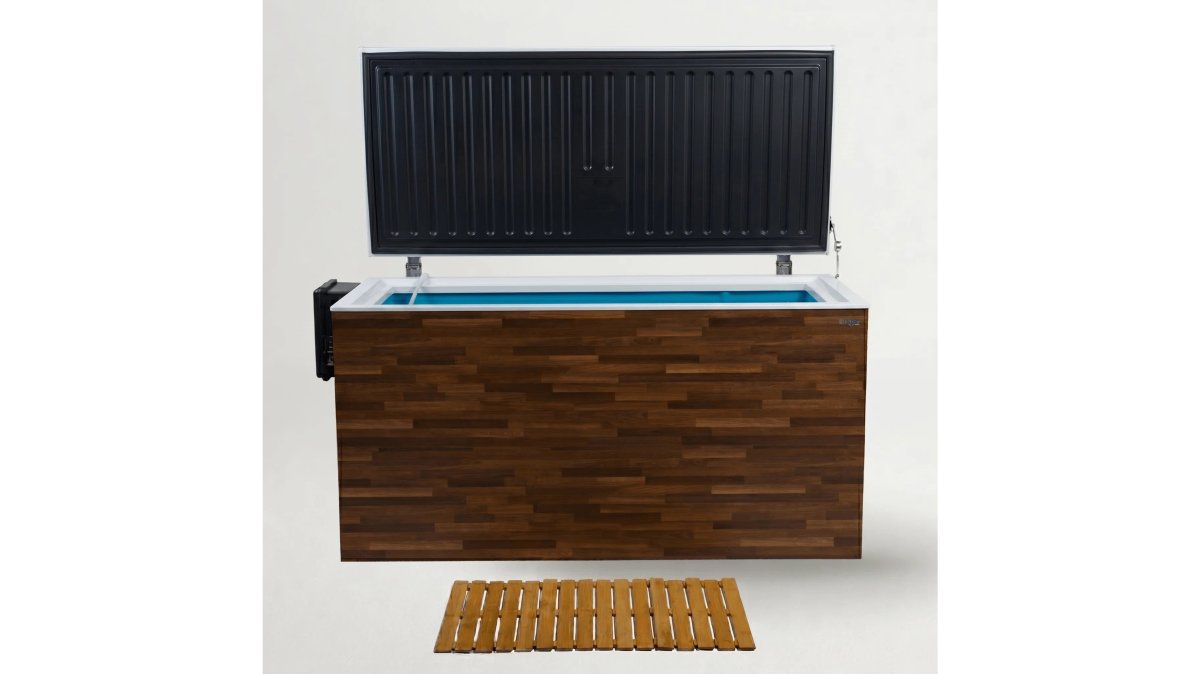
The All-In-One includes whisper-quiet circulation and filtration built into the unit itself. The weatherproof, UV-resistant coating means it survives harsh climates, the system is winterized for outdoor temperatures down to -20°F.

At $4,571.44, this represents a significant investment. However, the price includes three complimentary gifts: extra filters, a hose filter, and a syphon vacuum. The comprehensive residential warranty protects your investment against mechanical failures.
For small spaces with available electrical service, this is the most hassle-free option. You fill it once, set your temperature, and the system maintains it automatically. No ice deliveries. No external equipment cluttering your yard. Integrating this level of climate control into a compact footprint mirrors the efficiency found in saunas for small spaces, where thermal regulation remains the primary objective for home wellness setups.
The PEWSHTUB Pine: No Electricity Required, Maximum Flexibility
The PEWSHTUB Pine Hot Tub and Ice Bath offers something the All-In-One cannot: complete independence from electrical infrastructure. This wood-fired design works equally well as a hot tub or cold plunge, making it the most versatile option for small spaces.
The tub measures 70.9 inches in diameter with 35.4-inch sidewalls. For 4-5 people, it provides comfort without oversized dimensions. The external stainless steel stove sits beside the tub rather than underneath, making it easy to add wood, clean the firebox, and maintain the system.
To use as a cold plunge, you simply fill the tub with cold water and add ice. No pumps, wiring, or filtration systems required. This approach appeals to homeowners without electrical access, those in rural settings, or anyone who values simplicity over automation. The wooden paddle included allows you to stir water and distribute temperature evenly.
Pine wood naturally resists rot and decay, while the 304 stainless steel heater and chimney resist corrosion and rust. Assembly takes approximately one hour with basic tools. The included hot tub cover keeps water clean between uses, and the built-in steps make entry and exit safe and comfortable.
At $4,081.55, the PEWSHTUB Pine costs less than the All-In-One while offering more flexibility. The tradeoff is manual temperature management, you're responsible for adding ice to reach desired cold, and there's no automated circulation system. For those who enjoy the ritual of maintaining their equipment and don't mind hands-on temperature adjustment, this appeals strongly.
The wood-fired approach also creates an aesthetic advantage. Many homeowners find the visual presence of a traditional wood stove more elegant than a modern compressor unit. If your small space doubles as an entertaining area, the PEWSHTUB Pine becomes both a wellness tool and a design centerpiece.
Cold Plunge Duration for Beginners and Recovery Timing
How long should you stay in a cold plunge? The answer depends on your experience level, fitness background, and adaptation to cold exposure.
For beginners, start with 2-3 minute immersions at water temperatures between 50-60°F. This allows your nervous system to acclimate without overwhelming your body's stress response. Many people feel a strong "cold shock" in the first 30 seconds, this is normal. Focus on controlled breathing rather than fighting the sensation.
After 2-3 weeks of regular sessions, your body adapts. You can extend duration to 5 minutes and lower temperature to 45-50°F. Advanced practitioners often use 10-15 minute sessions at 35-40°F, but this requires months of progressive adaptation.
The timing after workouts matters. Research suggests cold immersion within 30 minutes of intense exercise maximizes anti-inflammatory benefits. However, wait at least 4-6 hours after a strength training session if your goal is muscle growth, immediate cold exposure can blunt the hypertrophic response.
Recovery timing between sessions is equally important. Most people benefit from 2-3 cold plunge sessions per week rather than daily immersion. This frequency allows your body to recover from the cold stress while building cold tolerance gradually.
How to Maintain a Portable Ice Bath: Temperature, Filtration, and Durability
Maintenance separates portable cold plunge tubs that last for years from those that develop problems within months. The key is understanding your specific system's requirements.
For the All-In-One with built-in filtration, check and replace filters every 2-4 weeks depending on usage frequency. The system includes extra filters, so this becomes a simple swap.
For the PEWSHTUB Pine, maintenance is more manual. After each use, cover the tub to prevent debris accumulation. Weekly, skim the surface and check the water level.
The wood stove requires basic maintenance. After each use, remove ash from the firebox and store it safely. The stainless steel components resist rust, but rinse them occasionally with fresh water, especially in humid coastal climates.
Temperature monitoring tools help catch problems early. Spirit of Willow offers WiFi-enabled pool thermometers that track water temperature continuously. The 2.4G WiFi model connects to an app and sends alerts if temperature drifts beyond your target range.

Installation, Drainage, and Electrical Considerations for Indoor and Outdoor Setups
Where you place your portable cold plunge tub determines what installation challenges you'll face. Small-space homeowners often work with constraints that large-backyard owners never encounter.
Frequently Asked Questions
What are the main benefits of cold water immersion for post-workout recovery?
Cold water immersion reduces inflammation, decreases muscle soreness, and improves circulation after intense exercise. Exposure to cold temperatures causes vasoconstriction, which limits swelling and helps your body recover faster. Many athletes use cold plunge therapy as part of their post-workout routine to support faster recovery times and reduce delayed-onset muscle soreness.
How long should beginners stay in a portable cold plunge tub?
Beginners should start with 1-3 minutes of cold water immersion and gradually work up to 5-10 minutes as their body adapts. Cold plunge duration for beginners depends on water temperature and individual tolerance. Start at warmer temperatures (around 50-60°F) before progressing to colder water (33-45°F). Always listen to your body and exit if you experience excessive discomfort or shivering.
How do I maintain water quality and temperature in a portable cold plunge tub?
How to maintain a portable ice bath involves three key steps: monitor temperature with a reliable thermometer, use your tub's filtration system regularly, and perform weekly water tests. The All-In-One features ozone disinfection and powerful circulation to keep water clean without chlorine. Keep the insulation cover in place when not in use to minimize temperature fluctuations.
Can I fit a portable cold plunge tub in a small apartment or patio?
Yes. The All-In-One measures 28 inches wide by 60 inches long by 32 inches high, making it compact enough for most small patios, decks, or even covered balconies. Before installing, verify your space can support the weight (water plus tub). Always ensure proper drainage and adequate clearance around the tub for safe entry and exit.
Do portable cold plunge tubs require a dedicated electrical outlet?
The All-In-One requires electricity for its built-in compressor and cooling system. It needs a standard outlet and should be installed on a level surface with proper grounding for electrical safety. The PEWSHTUB Pine, however, requires no electricity, it uses ice or cold water only, making it ideal if you lack a nearby outlet or prefer a low-maintenance setup. Check your home's electrical capacity and consult a licensed electrician if you're unsure about outlet placement or installation requirements.