

Benefits of Home Cold Plunge Therapy: A 2026 Guide
Table of Contents
- What Is Home Cold Plunge Therapy?
- The Physical Benefits of Cold Plunge for Muscle Recovery
- Mental Health and Mood Enhancement Through Cold Water Immersion
- Cold Plunge Duration for Beginners: How Long Is Enough?
- Cold Water Immersion Safety Tips for Your Home Setup
- Home Maintenance and Hygiene for Your Cold Plunge
- DIY vs. Commercial Cold Plunge: Cost and Practicality
- Frequently Asked Questions
Last Updated: September 10, 2026
What Is Home Cold Plunge Therapy?
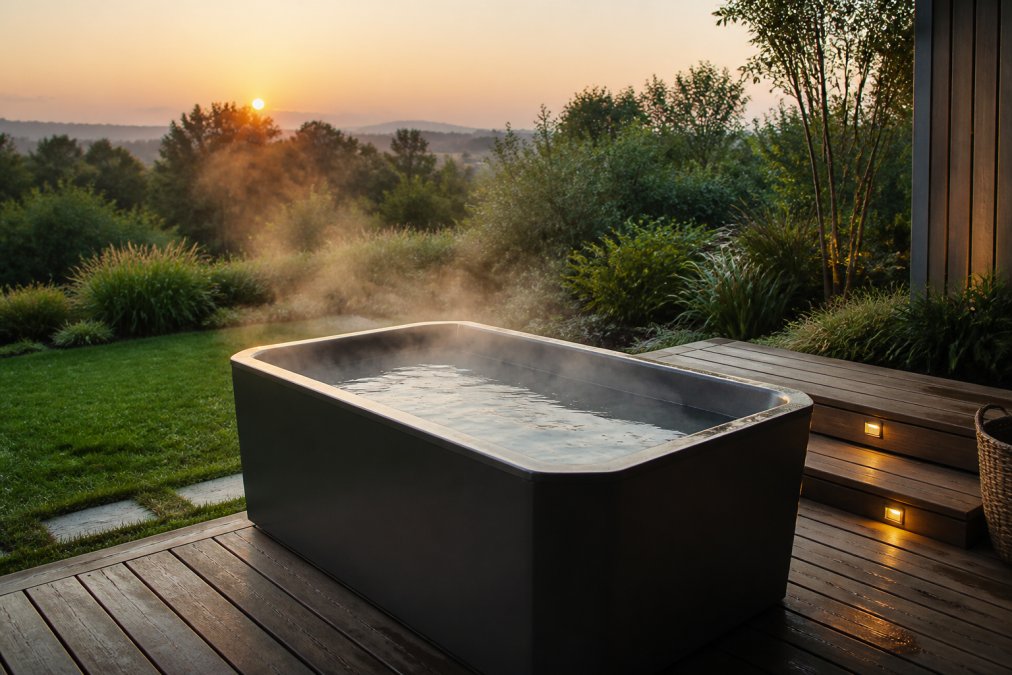
Home cold plunge therapy is the practice of briefly immersing your body in cold water, typically between 45°F and 55°F, using a tub or plunge tank installed at your home. It's a form of hydrotherapy that has moved from elite sports facilities into backyard wellness spaces.

This guide from Spirit of Willow covers what that practice actually does for your body, how to start safely, and what owning a plunge involves over time. Below, we'll show you how to set up a routine you'll stick with, not just one you'll try twice.
A common mistake is treating the plunge as a test of willpower. The physiological response matters more than the temperature on its own.
The Physical Benefits of Cold Plunge for Muscle Recovery
The benefits of cold plunge for muscle recovery come down to how cold water affects blood flow, inflammation, and nerve signaling. During immersion, vasoconstriction narrows the blood vessels near your skin and shunts blood toward your core. When you step out and rewarm, vasodilation brings fresh circulation back through the tissue. That constrict-then-flush cycle is the mechanical core of the recovery effect.
Three mechanisms do most of the work:
- Reduced blood flow to sore tissue. Less perfusion means less fluid movement into the muscle, which is one reason swelling and that heavy, hot feeling in the days after training tend to ease.
- Norepinephrine release. The cold shock response triggers a sharp rise in norepinephrine, which has an analgesic effect. Many athletes describe the soreness as quieter for hours after a plunge, not just during it.
- Slowed metabolic activity in the tissue. Cold lowers the local metabolic rate, which is thought to reduce the secondary tissue damage that follows intense exercise.
Many athletes use it after training to manage delayed onset muscle soreness, or DOMS. A common approach is a short session within an hour of finishing a workout, at 50°F to 55°F for 5 to 10 minutes.
What most guides miss is timing. Plunging immediately after strength training may blunt some muscle-building adaptations, because the same inflammatory signaling that causes soreness also helps drive hypertrophy. If your goal is maximum strength or muscle gain, a common pattern is to save the plunge for recovery days, for later in the day, or for the end of a training block. If your goal is faster soreness relief so you can train again sooner, post-session plunging is the more practical choice.
A few other trade-offs worth knowing:
- Endurance vs. strength. For endurance athletes, post-session cold immersion is generally considered compatible with training goals. For strength and power athletes, the interference concern is larger.
- Duration matters more than temperature. A 10-minute session at 50°F and a 3-minute session at 45°F are not interchangeable. Longer, moderate sessions tend to be better tolerated by beginners.
- It is not a substitute for sleep and protein. Cold immersion may take the edge off soreness, but it does not replace the recovery inputs that actually rebuild tissue.
Cleveland Clinic overview of cold water immersion
Mental Health and Mood Enhancement Through Cold Water Immersion
Cold water immersion produces a measurable lift in mood for many people, largely through norepinephrine and dopamine release triggered by the cold shock response. That surge is why regular plungers describe feeling alert and calm afterward.
The vagus nerve plays a role here too. Cold exposure stimulates the parasympathetic nervous system, which helps pull you out of a stressed state and back toward homeostasis. For anyone managing daily stress, that reset is often the most noticeable early benefit.
Mental resilience builds the same way. Getting into cold water on a day you don't want to is a small, repeatable act of follow-through. Over weeks, that habit tends to carry into other areas.
Cold Plunge Duration for Beginners: How Long Is Enough?
Cold plunge duration for beginners should start at 30 to 60 seconds and build gradually. Longer is not better at the start. Your goal in week one is tolerance, not endurance.
Use this progression as a guide:
| Week | Water Temperature | Duration | Sessions per Week |
|---|---|---|---|
| 1-2 | 55-60°F | 30-60 seconds | 2-3 |
| 3-4 | 50-55°F | 1-2 minutes | 3 |
| 5-6 | 45-50°F | 2-3 minutes | 3-4 |
| 7+ | 40-45°F | 3-5 minutes | 3-4 |
This is a progressive overload protocol for cold tolerance. Add time or drop temperature, never both at once. A floating thermometer takes the guesswork out of it; the 2.4G WiFi Pool Thermometer lets you check the reading from inside.

Cold Water Immersion Safety Tips for Your Home Setup
Cold water immersion safety tips start with one rule: never plunge alone. Cardiovascular strain and the cold shock response can escalate quickly, and hypothermia risk rises with lower temperatures and longer sessions. At home, there is no lifeguard and no one to call for help, which makes that rule non-negotiable.
Who should avoid cold plunges or get medical clearance first
Most general guides wave at 'heart conditions' without naming them. The specific contraindications worth knowing:
- Cardiovascular disease and prior cardiac events. Cold water immersion causes an immediate spike in heart rate, blood pressure, and cardiac output. For someone with coronary artery disease, arrhythmia, or a history of heart attack, that surge is the primary danger.
- Hypertension. The cold shock response can drive blood pressure up sharply in the first 30 seconds. If your blood pressure is not well controlled, that spike is a real risk, not a theoretical one.
- Raynaud's disease and other vasospastic conditions. Cold triggers exaggerated vasoconstriction in the fingers and toes, which can cause painful blanching, numbness, and in severe cases tissue damage. For people with Raynaud's, even brief cold exposure can be problematic.
- Pregnancy. Cold immersion is generally discouraged during pregnancy because of the cardiovascular demands and the difficulty of monitoring fetal response.
- Seizure disorders, uncontrolled diabetes, and open wounds or skin infections. Each carries its own elevated risk in cold water.
If any of these apply, talk to a physician before you start. This is not a case where 'start slow' is enough.
Universal precautions for a home setup
- Keep sessions under 5 to 10 minutes at moderate temperatures, and shorter at colder temperatures
- Never use alcohol or drugs before a session
- Enter feet first and keep your head above water
- Have a warm robe, towel, and dry area within reach
- Never plunge alone, and tell someone when you are getting in
- Skip the plunge when you are sick, exhausted, or dehydrated
Mayo Clinic guidance on cold water therapy risks
Warning signs to get out immediately
Listen to your body over any protocol. Shivering you cannot control, numbness in the extremities, dizziness, confusion, or a sudden drop in heart rate are signals to get out and warm up. If symptoms do not resolve quickly, seek medical attention.
CDC guidance on water safety and hygiene
Home Maintenance and Hygiene for Your Cold Plunge
Home maintenance is where most plunge owners get surprised. Water left untreated grows biofilm fast, and that film is the source of most complaints about cloudy water and odor.
A simple routine keeps it clean:
- Test and balance water weekly
- Replace or treat water on a set schedule, not just when it looks off
- Rinse the shell and cover after each use
- Use ozone or chlorine-free disinfection where your unit supports it
The All-In-One Fire Cold Plunge uses chlorine-free ozone disinfection and needs no external chiller or plumbing, which removes two of the biggest maintenance headaches. Its weatherproof, UV-resistant coating and winterizing down to -20°F mean it holds up through cold months without extra work.
"Everything arrived beautifully packaged and was exactly as pictured. Spirit of Willow made creating our outdoor space so easy." James & Olivia R.
DIY vs. Commercial Cold Plunge: Cost and Practicality
DIY vs. commercial cold plunge comes down to how much ongoing labor you want. A DIY build using a chest freezer or stock tank costs less upfront, but you manage ice, water changes, and temperature drift yourself.
Commercial units solve that. The All-In-One Fire Cold Plunge cools to 33°F with a built-in compressor, needs no plumbing, and measures 28" W x 60" L x 32" H. For households that want the plunge ready when they are, that convenience is the whole point.
If you want a dual-purpose option, the PEWSHTUB Pine Hot Tub and Ice Bath runs as a hot tub or an ice bath, needs no electricity or pumps, and fits four to five people.

CDC guidance on water safety and hygiene
Frequently Asked Questions
What happens to your body after 30 days of consistent cold plunge therapy?
After 30 days of consistent cold plunge therapy, many people report improved mood, better sleep quality, and reduced muscle soreness. Physiologically, your body may adapt to the cold shock response, leading to lower baseline stress levels and improved cold tolerance. Some research suggests changes in dopamine and norepinephrine regulation, which can support mental resilience. Always consult a healthcare provider before starting, especially if you have cardiovascular conditions.
How many minutes a day should you cold plunge?
For beginners, start with 30 seconds to 1 minute at a water temperature of 50-59°F. Gradually increase to 2-3 minutes as your cold tolerance improves. The key is consistency over duration. Aim for 3-4 sessions per week. Never exceed 10 minutes in one session, as prolonged exposure increases hypothermia risk and cardiovascular strain. Listen to your body and exit if you experience numbness or uncontrollable shivering.
What not to do after an ice bath?
After an ice bath, avoid jumping straight into a hot shower or sauna, as rapid temperature changes can stress your cardiovascular system. Do not drink alcohol or caffeine immediately, as they can affect circulation and hydration. Skip intense exercise right after, and instead focus on gentle movement and warming up gradually with dry clothes and a warm drink. Also, never use a cold plunge alone without someone nearby in case of emergency.
Is cold plunge therapy effective for muscle recovery and inflammation?
Yes, cold plunge therapy can help reduce delayed onset muscle soreness (DOMS) and systemic inflammation by causing vasoconstriction, which limits swelling and tissue breakdown. It also triggers vasodilation after you exit, improving circulation and cellular repair. Many athletes use cold water immersion as a post-workout recovery protocol. For best results, combine it with proper hydration, nutrition, and rest. Always consult a medical professional if you have underlying health conditions.
Cold plunge therapy rewards consistency more than intensity, and the hardest part is often the setup itself. Spirit of Willow curates cold plunges, home saunas, and outdoor living pieces designed to make a backyard retreat feel effortless, from weatherproof finishes to thoughtful, timeless design. Explore the collection and build a space you'll actually use. Continue shopping with Spirit of Willow and turn your garden into a place to unwind, recharge, and recover.