

Weatherproof Outdoor Rugs for All Seasons
Table of Contents
- Why Weatherproof Outdoor Rugs Matter for Year-Round Living
- Understanding Outdoor Rug Materials and Their Performance
- What to Look for in the Best Outdoor Rugs
- How to Clean an Outdoor Rug Properly
- Can Outdoor Rugs Stay Outside All Year
- Sizing, Placement, and Design Considerations
- Common Mistakes to Avoid When Buying Weatherproof Rugs
- Frequently Asked Questions
Last Updated: October 12, 2026
Why Weatherproof Outdoor Rugs Matter for Year-Round Living
A weatherproof outdoor rug transforms your patio from a seasonal space into a year-round living area.

The real value isn't just durability, it's the freedom to design outdoors the same way you design indoors. A well-chosen outdoor rug anchors your patio furniture, defines seating areas, and brings color and personality to concrete or wood surfaces that would otherwise feel cold and empty.
Most homeowners underestimate how much a rug matters to comfort and aesthetics. When you step outside, you want to feel like you're entering a finished room, not just a yard. A weatherproof outdoor rug does exactly that.
Understanding Outdoor Rug Materials and Their Performance
The material your outdoor rug is made from determines everything: how long it lasts, how it handles moisture, whether it fades, and how easy it is to clean. Two materials dominate the weatherproof outdoor rug market, and understanding the differences helps you choose correctly.
Polypropylene and Plastic Straw: Durability and Water Resistance
Polypropylene is synthetic plastic fiber engineered for outdoor use. It resists water absorption, meaning moisture runs through rather than soaking in. Plastic straw rugs, made from recycled plastic materials, offer similar water-resistant properties with an added sustainability angle.
The practical difference: polypropylene tends to be slightly more durable under intense UV exposure, while plastic straw rugs often cost less and feel softer underfoot. Neither material rots, and both can be hosed clean without damage. Heat-treated edges reduce fraying, which extends the rug's lifespan considerably.
One honest limitation: both materials can feel less luxurious than natural fiber rugs. If tactile softness is your priority, synthetic materials won't feel as plush as wool. But outdoors, durability and water resistance matter more than luxury feel.
What Makes a Rug Waterproof Versus Water-Resistant
This distinction matters more than most guides acknowledge. Water-resistant means water beads on the surface and drains away quickly, but the rug still absorbs some moisture into the backing or seams. Waterproof means no water penetrates at all, the rug is sealed completely.
Most outdoor rugs marketed as "waterproof" are actually water-resistant. True waterproof rugs exist, but they're heavier, costlier, and less breathable, which means moisture can trap underneath and cause issues. For practical outdoor use, water-resistant is often the better choice.
The backing matters as much as the fibers. Rugs with permeable backing allow air circulation, preventing moisture from pooling underneath. This is why drainage and backing design are critical considerations when evaluating any outdoor rug.
What to Look for in the Best Outdoor Rugs
Choosing the right weatherproof outdoor rug involves evaluating several performance factors beyond just "it's waterproof." Each feature addresses a real problem you'll face across different seasons.
UV and Fade Resistance for Sun Exposure
Sun exposure is relentless. Over months of direct sunlight, colors fade, and synthetic fibers can become brittle. UV-resistant outdoor rugs use colorfast dyes that hold their hue far longer than standard options. This is particularly important if your patio gets six or more hours of direct sun daily.
Look for rugs explicitly labeled UV-protected or fade-resistant. The difference between a rug that fades noticeably after one summer and one that holds its color for three years is substantial. If your patio is in full sun, this feature isn't optional, it's the difference between replacing your rug annually and keeping it for years.
Mold and Mildew Resistance in Humid Climates
If you live in a humid climate or your patio doesn't dry quickly after rain, mold and mildew resistance becomes critical. These fungi thrive in damp, shaded conditions. A rug with mold-resistant treatment resists fungal growth even when moisture lingers. Some rugs achieve this through the material itself (polypropylene naturally resists mold), while others use antimicrobial treatments.
Ventilation matters as much as the rug's material. A rug left on damp ground in shade will eventually develop mold, regardless of how resistant it claims to be. Proper drainage and air circulation underneath prevent this problem more effectively than any treatment.
Drainage, Backing, and Installation for Moisture Control
This is where most guides fall short. The rug itself might be water-resistant, but if water pools underneath, you've created a mold factory. Quality outdoor rugs have breathable backing that allows water to drain and air to circulate.
Installation matters too. Laying a rug directly on wet grass or soil traps moisture. Better practice: lay it on a patio surface, deck, or use a rug pad underneath that allows drainage. Rug stakes or weights keep it from shifting in wind, which also prevents moisture from accumulating in folds.
How to Clean an Outdoor Rug Properly
Weatherproof outdoor rugs are low-maintenance, but they still need care to stay looking good. Proper cleaning extends their lifespan and prevents stains from setting permanently.
Routine Cleaning and Stain Removal
Weekly or biweekly cleaning is simple: shake the rug to remove loose dirt, or use a vacuum with a brush attachment. For spills and stains, spray with a garden hose immediately. Most outdoor rugs dry quickly, so water damage isn't a concern. For stubborn stains, a mixture of mild soap and water works well, scrub gently with a soft brush and rinse thoroughly.
Avoid harsh chemicals or bleach, which can damage the fibers and fade colors. A gentle dish soap solution handles most outdoor stains without risk. The beauty of synthetic materials is their forgiving nature, they're nearly impossible to ruin with normal cleaning.
Deep Cleaning for Seasonal Maintenance
Once or twice per year, give your outdoor rug a deeper clean. Lay it flat on a clean surface and scrub both sides with a soft brush and soapy water. Pay attention to the backing and edges, where dirt accumulates. Rinse thoroughly with a hose and allow it to air dry completely before placing it back on your patio.
Outdoor Rug Waterproof Washable Extra Large Reversible Sandproof Outdoor Patio →
For seasonal storage (if you remove the rug during harsh winters), ensure it's completely dry before rolling and storing it. Even water-resistant rugs can develop mold if stored while damp. A dry garage or storage shed works well.
Can Outdoor Rugs Stay Outside All Year
This question has a practical answer that depends on your climate and the rug's material. Most weatherproof outdoor rugs can stay outside year-round in moderate climates, but extreme conditions require different approaches.
Winter Performance and Cold Weather Durability
Cold itself doesn't damage synthetic outdoor rugs. Polypropylene and plastic straw remain flexible in freezing temperatures, unlike some natural fibers that become brittle. Snow and ice won't harm the rug, though heavy snow buildup can be heavy, clearing it occasionally prevents strain on the backing.
The real winter risk is salt and de-icing chemicals. If you live where roads are salted, salt spray and residue can accumulate on your patio rug. Rinse it occasionally during winter to prevent salt buildup, which can eventually degrade backing materials. In extreme cold climates where snow stays for months, many homeowners remove their rugs for the season simply to avoid this exposure.
Summer Heat and UV Exposure Management
Summer is where UV resistance proves its worth. Intense, prolonged sun exposure fades colors and can make synthetic fibers brittle over time. If your patio is in full sun all day, consider moving the rug slightly each month to ensure even fading. Alternatively, use a patio umbrella or shade cloth to reduce direct exposure during peak summer months.
Heat itself won't damage the rug, but direct sun on dark colors can become uncomfortably hot underfoot. Light colors and reversible designs help manage this. The rug will cool quickly once the sun moves or clouds cover it.
Sizing, Placement, and Design Considerations
Getting the size and placement right determines whether your outdoor rug looks intentional or like an afterthought. This is also where many people make costly mistakes.
Choosing the Right Size for Patios, Decks, and Small Spaces
The most common error is buying a rug that's too small. A rug should anchor your seating area, not float in the middle of it.
For small patios (8x10 feet or smaller), a round or smaller rectangular rug often works better than oversizing. A 5-foot round or 5x8-foot rectangular rug fits naturally in tight spaces without overwhelming the area. An 8-foot round outdoor rug works beautifully for small patios, offering versatility without bulk.
Deck placement is different. Rugs on decks should be smaller and placed away from edges, where foot traffic is heaviest. A 5x8-foot rug centered on a deck creates a defined lounge area without creating a tripping hazard.
Colors, Patterns, and Reversible Designs
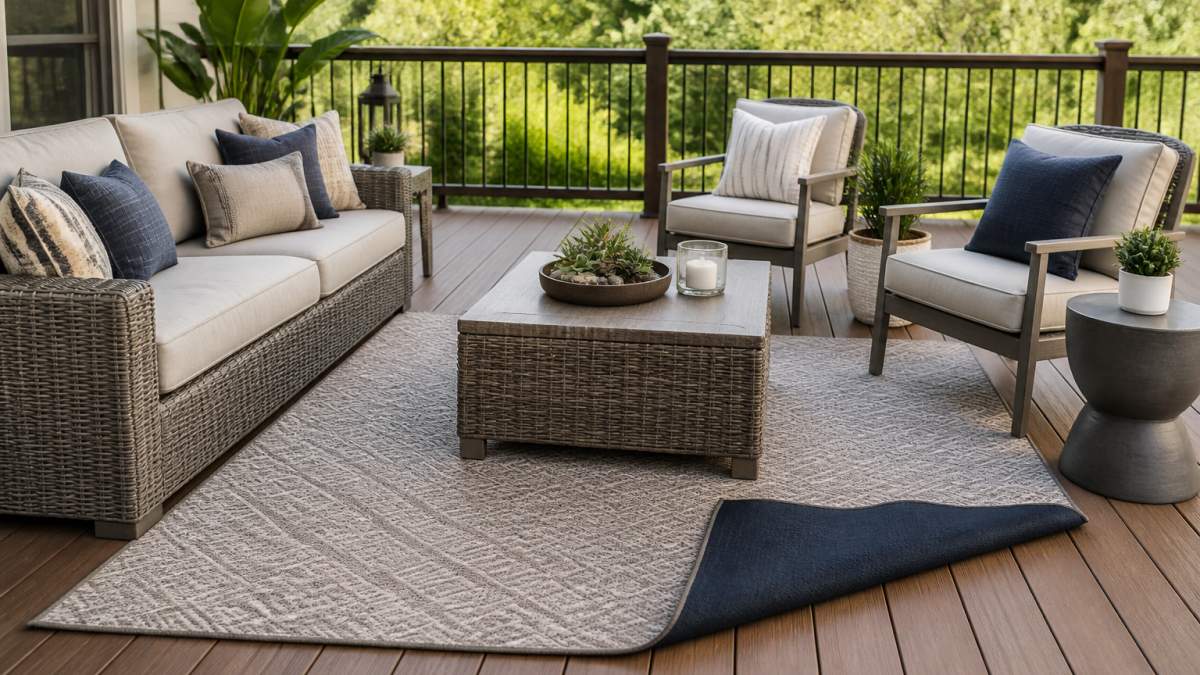
Reversible rugs offer practical flexibility, two color options mean you can refresh your space without buying a new rug. Flip it seasonally or whenever you want a change. This feature is particularly valuable for people who like to update their outdoor décor without major investment.
Color choices depend on your home's exterior and how much sun your patio gets. Light colors stay cooler and hide dirt less noticeably, but they fade more visibly in intense sun. Darker colors show every speck of dust but stay cooler underfoot in summer. Patterns hide stains and wear better than solid colors, making them practical for high-traffic areas.
| Feature | Benefit | Best For |
|---|---|---|
| Reversible design | Two colors in one rug; seasonal refresh | Homeowners who like variety |
| Light colors | Cooler underfoot; brighter aesthetic | Full-sun patios |
| Dark colors | Hide dirt; sophisticated look | Shaded areas or formal entertaining |
| Patterns | Hide wear and stains; visual interest | High-traffic patios; casual spaces |
| Plastic straw material | Soft feel; sustainable; affordable | Budget-conscious buyers |
| Polypropylene | Maximum durability; excellent UV resistance | Intense sun exposure |
Common Mistakes to Avoid When Buying Weatherproof Rugs
Most people make one of three predictable errors when choosing an outdoor rug, and each one leads to disappointment.
Buying too small. A rug that doesn't anchor your furniture looks undersized and unfinished. Measure your seating area and choose a rug that brings at least the front legs of your furniture onto it.
Ignoring drainage and backing. A rug that sits directly on damp soil will develop mold regardless of how water-resistant the fibers are.
Choosing based on price alone. Cheap outdoor rugs fade quickly, fray at the edges, and deteriorate after one season.
Creating an outdoor space that's beautiful and functional year-round starts with the right foundation.
Frequently Asked Questions
Can outdoor rugs stay outside all year?
Yes, quality weatherproof outdoor rugs made from polypropylene or plastic straw can remain outside year-round. These materials resist moisture, UV damage, and temperature swings. However, in extreme winter climates with heavy snow or ice, storing the rug indoors may extend its lifespan. Regular cleaning and ensuring proper drainage underneath prevents mold buildup during humid seasons. Check your rug's specific care instructions for your local climate.
What is the best material for an all-weather outdoor rug?
Polypropylene and recycled plastic straw are the top choices for all-season outdoor rugs. Both materials are water-resistant, fade-resistant, and resist mold and mildew. Polypropylene offers durability and stain resistance, while plastic straw provides a softer feel underfoot and is lightweight for easy transport. Look for rugs with heat-treated edges to reduce fraying. The best choice depends on your climate, foot traffic, and whether you prioritize comfort or portability.
How do you clean a weatherproof outdoor rug?
For routine cleaning, shake off dirt or spray with a garden hose. For stains, use mild soap and water, then rinse thoroughly and air dry. Seasonal deep cleaning involves scrubbing with a soft brush to remove mold or mildew buildup, especially in humid areas. Avoid harsh chemicals that can damage the fibers. Most outdoor rugs dry quickly due to their breathable weave, so you can return them to your patio within hours of cleaning.
Are outdoor rugs waterproof or just water-resistant?
Most outdoor rugs are water-resistant rather than fully waterproof. Water-resistant means water sits on the surface and drains away quickly rather than soaking through, which is ideal for patios and decks. True waterproof backing exists on some premium rugs, but standard weatherproof outdoor rugs rely on their material composition and weave to shed water. The breathable design prevents standing water underneath, reducing mold risk and allowing the rug to dry quickly after rain.