

Outdoor Furniture Shipping and Return Policies Guide
Table of Contents
- Why Shipping and Return Policies Matter for Outdoor Furniture
- What to Know About Outdoor Furniture Shipping and Return Policies Before You Buy
- White Glove Delivery vs Curbside Delivery: Which Should You Choose?
- How to Inspect Furniture for Shipping Damage on Arrival
- Understanding Outdoor Furniture Restocking Fees and Return Shipping Costs
- Return Window, Conditions, and Refund Process Explained
- Final Checklist: Protecting Your Purchase from Order to Delivery
- Conclusion
- Frequently Asked Questions
Last Updated: September 8, 2026
Why Shipping and Return Policies Matter for Outdoor Furniture
Outdoor furniture shipping and return policies are often the last thing buyers consider, yet they determine whether your purchase arrives safely and whether you’re protected if it doesn’t. Unlike a small parcel, a patio sofa or dining set involves freight delivery, careful scheduling, and a more complex return process. Understanding these policies before ordering can transform a stressful experience into a smooth one.
The stakes are higher with large, high-value items. A common mistake is assuming a damaged piece will be easy to return, only to discover the buyer is responsible for return shipping costs or that the item must be in its original packaging. Knowing the return window, restocking fees, and inspection protocol upfront helps you shop with confidence.
Below, we’ll walk through exactly what to check before you buy, how delivery options differ, and how to protect your purchase from the moment it ships.
What to Know About Outdoor Furniture Shipping and Return Policies Before You Buy
Before you click “checkout,” review the store’s shipping and return policies for three specific details: the return window, the restocking fee, and who pays for return shipping. These three factors determine your total risk if the piece doesn’t work out.
Most retailers list these terms on their policy page, but here’s what to look for:
- Return window: Typically 14 to 30 days from delivery, not from order date.
- Restocking fee: Some retailers charge 10% to 25% of the item price to process a return.
- Return shipping: Large items often require freight pickup, which can cost hundreds of dollars if you’re responsible.
A clear return policy is a sign of a confident retailer. If the policy is vague or hidden, that’s a red flag. Many premium outdoor brands, including those selling high-end garden furniture, offer a money-back guarantee to reduce buyer hesitation on expensive pieces.
White Glove Delivery vs Curbside Delivery: Which Should You Choose?
White glove delivery includes inside placement and packaging removal, while curbside delivery leaves the item at your driveway or curb. The choice affects both your convenience and your inspection process.
Curbside delivery is the budget option. A freight carrier delivers to your address, and you’re responsible for moving the item inside. This works well if you have help and a clear path from the driveway.
White glove service costs more but includes delivery to the room of your choice, assembly, and packaging removal. For heavy outdoor furniture like sectionals or dining tables, white glove delivery is often worth the extra cost. It also means the delivery team handles the item, reducing your risk of injury.
One important note: with curbside delivery, the driver may not wait while you inspect the item. You’ll need to accept the delivery first, then note any visible damage on the delivery receipt before signing.
How to Inspect Furniture for Shipping Damage on Arrival
The inspection process isn't just about looking for scratches; it's about documenting damage in the legally correct format for the carrier. The steps you take in the first 15 minutes after the truck arrives determine whether you get a replacement or a denied claim. The process differs significantly based on delivery type.
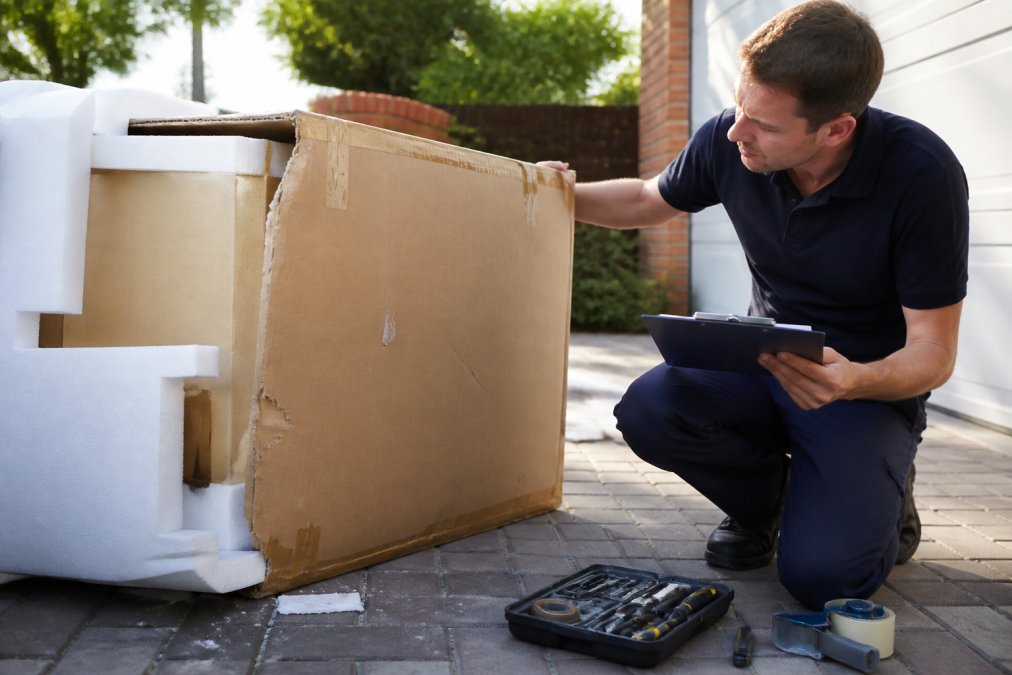
Freight Delivery: The Bill of Lading is Your Shield
When a freight carrier arrives with your patio set, the driver will hand you a Bill of Lading (BOL) or a delivery receipt. This document is the contract of carriage. Do not sign it until you have visually inspected the exterior of the packaging.
- Walk Around the Pallet: Look for crushed corners, punctures, or signs that the box was wet. Take a photo of the pallet from all four sides before the driver unloads it.
- Check for 'Tip-Over' Damage: Look at the bottom of the pallet. If the cardboard is scuffed or torn on the bottom edges, the pallet may have been dragged or dropped.
- Write 'Subject to Inspection' on the BOL: If you see any damage to the exterior packaging, write "Subject to Inspection" or "Possible Concealed Damage" next to your signature. This protects your right to file a claim later.
- Do Not Let the Driver Leave: If the exterior is clearly damaged, ask the driver to open the box on the spot. If the furniture inside is damaged, refuse the delivery entirely. A refused shipment goes back to the retailer, and they are responsible for filing the claim with the carrier.
Parcel Delivery: The 48-Hour Claim Window
For smaller items delivered by UPS or FedEx, the driver often leaves the box at your door without a signature. In this case, you have a much shorter window to file a claim, typically 48 hours from delivery. The carrier assumes the package is intact unless you report otherwise immediately.
- Photograph the Box Before Opening: Take a picture of the box sitting on your doorstep. This establishes the condition at the time of delivery.
- Inspect Inside the Box: Look for internal damage to the packaging. If the foam is cracked or the item is loose in the box, photograph that immediately.
- File a Claim with the Retailer, Not the Carrier: The retailer is your point of contact. They will initiate the claim with the carrier on your behalf. If you call UPS directly, they will redirect you to the shipper.
The 'Concealed Damage' Scenario
Sometimes, the box looks perfect, but the furniture inside is broken. This is called concealed damage. Carriers are notoriously skeptical of these claims because they cannot verify the damage didn't happen after delivery. To strengthen your claim:
- Keep ALL Packaging: Do not throw away the box, foam, or plastic wrap. The carrier may send an inspector to your home to verify the damage and the packaging condition.
- Document the Unpacking: Take a video of yourself unboxing the item. This is the single strongest piece of evidence you can provide.
- Report Within 24 Hours: Do not wait the full 48 hours. The sooner you report, the less likely the carrier is to dispute the claim.
The 'Accept and Replace' Strategy
If you find damage but the item is structurally sound, ask the retailer if they will ship a replacement part (like a new cushion or a tabletop) without requiring a full return. This is often faster and cheaper for them than arranging a freight pickup. Many retailers will agree to this if you send clear photos of the damaged component. This avoids the entire return logistics process and gets you a functional piece sooner.
Understanding Outdoor Furniture Restocking Fees and Return Shipping Costs
The financial sting of a return isn't just the restocking fee; it's the logistics of getting a 150-pound sectional back to the warehouse. The process, and the cost, depends entirely on how the item was originally shipped. Understanding the difference between a parcel return and a freight return is the single most important factor in predicting your out-of-pocket expense.
Parcel Returns: The Simple Path
If your purchase is a single Adirondack chair or a small bistro set that arrived via UPS or FedEx, you're dealing with a parcel return. The process is straightforward: you repackage the item, print a label, and drop it off or schedule a pickup. Retailers often provide a prepaid label, but if they don't, you'll pay for shipping based on the box's dimensional weight. Expect to pay between $30 and $80 for a heavy, oversized box. The key advantage here is speed, the item is scanned into the carrier network immediately, and the return clock starts ticking.
Freight Returns: The LTL Reality
For full patio sets, deep seating sofas, and large dining tables, the item shipped via LTL (Less-Than-Truckload) freight. This is where returns get complicated and expensive. You cannot simply drop a palletized sofa at a UPS store. Instead, the retailer must schedule a freight carrier to pick up the item from your home. This process involves:
- Scheduling a Window: The carrier will give you a 4-to-6-hour window on a specific day. You must be present.
- Palletization: The item must be securely fastened to a pallet and shrink-wrapped. If you threw away the pallet, you may need to source one or pay the carrier a fee to build one.
- Accessibility: The driver needs a clear path to the item. If it's in a backyard behind a gate, you may incur an additional 'liftgate' or 'inside pickup' fee.
If you are responsible for return shipping, this freight pickup will cost between $150 and $400, depending on the size and your location (fmcsa.dot.gov). This is often more than the restocking fee itself. Always ask the retailer: "If I need to return this, do you schedule a freight pickup, and do you cover that cost?" If they say you are responsible, ask for a flat-rate quote before you buy so you know your maximum liability.
The Math on a Returned Sectional
Let's put this into perspective. Assume you bought a $1,200 outdoor sectional.
- Restocking Fee (15%): $180
- Freight Pickup (Your Cost): $250
- Total Loss: $430
That is a 36% loss on a purchase that didn't work out. This is why the phrase "final sale" on heavy items is a massive red flag. It means you are absorbing 100% of the risk.
Why Return Insurance is Non-Negotiable
Standard carrier liability for freight is often capped at a fraction of the item's value unless you declare additional value (fmcsa.dot.gov). When you initiate a return, the item is in transit and out of your control. If the freight carrier damages the item on its way back to the warehouse, the retailer may reject the return because the item is no longer in 'like-new' condition. This is a common dispute. Purchasing third-party return insurance, often offered at checkout for $10 to $20, protects you against this specific scenario. It covers the cost of the item if it is damaged during the return transit, ensuring you are not left with a broken sofa and no refund. This is a low-cost hedge against a high-value loss.
Return Window, Conditions, and Refund Process Explained
The standard return window for outdoor furniture is 14 to 30 days from delivery, and the item must be in like-new condition with original packaging. Refunds are typically issued to your original payment method, though some retailers offer site credit instead.
Before you initiate a return, confirm these details:
- Proof of purchase: Have your order number and delivery receipt ready.
- Condition requirements: The item must be unused and in original packaging.
- Return authorization: Most retailers require you to contact customer service for a return authorization before shipping anything back.
- Refund method: Original payment is standard, but some stores offer store credit by default.
The refund process for freight items takes longer than parcel returns. After the carrier picks up the item, the retailer must receive and inspect it before processing your refund. This can take one to two weeks. Ask about the timeline upfront so you’re not left wondering.
Custom or special order pieces are often final sale, so confirm whether your item qualifies before ordering. If you have questions, contact customer service before you buy rather than after.
Final Checklist: Protecting Your Purchase from Order to Delivery
Use this checklist to protect your outdoor furniture purchase from the moment you order until it’s safely in place:
- Review the return window, restocking fee, and return shipping responsibility before ordering
- Choose white glove delivery for heavy or fragile items
- Note any visible damage on the delivery receipt before signing
- Photograph packaging and item condition immediately upon delivery
- Inspect all pieces within 48 hours and report damage promptly
- Keep original packaging until you’re satisfied with the item
- Confirm custom or special order items are returnable before purchase
For large, high-value pieces, adding shipping protection at checkout provides peace of mind. At Spirit of Willow, we offer shipping protection for $4.95 to cover damage during transit, ensuring your investment arrives safely. This small fee protects against the hassle of filing claims with freight carriers yourself.

Conclusion
Navigating outdoor furniture shipping and return policies doesn’t have to be complicated. The key is knowing what to check before you buy: the return window, restocking fees, and who covers return shipping. Inspect every delivery immediately, document any damage, and keep your packaging until you’re certain the piece is right.
At Spirit of Willow, we curate outdoor pieces designed to withstand the elements and ship across much of the United States. Our focus on quality and timeless design means your furniture arrives ready to transform your patio into a retreat. Review our shipping and returns page before your next purchase, and continue shopping with confidence knowing your investment is protected from order to delivery.
Frequently Asked Questions
Do I have to pay for return shipping on heavy outdoor furniture?
Often, yes. For large items delivered by freight, return shipping can cost $100 or more, and some retailers deduct it from your refund. A few premium brands offer free returns or cover return shipping for defective items. Always check the policy before ordering. Consider adding shipping protection for coverage on damage or loss during transit.
What is the standard return window for luxury patio furniture?
Standard return windows range from 14 to 60 days, with 30 days being common. Luxury brands often offer longer windows, sometimes up to 60 days, to account for shipping time. The clock usually starts on the delivery date, not the order date. Confirm the window and whether it applies to custom or special-order pieces, which are often final sale.
Are there restocking fees for returning large outdoor items?
Some retailers charge restocking fees of 10% to 25% for large or special-order items. This fee covers inspection, repackaging, and restocking costs. Many premium brands do not charge restocking fees on standard items, but custom or clearance pieces may be non-refundable. Always confirm the fee policy before purchasing.
How should I inspect my outdoor furniture upon delivery?
Inspect the box for visible damage before signing. Unpack immediately and check for dents, scratches, or broken parts. Take photos and note any issues on the delivery receipt. If damage is found, contact customer service within 24-48 hours. For white glove delivery, the team should assemble and inspect the item with you before leaving.