

Modern Fire Pit Design Ideas for Small Patios
Table of Contents
- Start With a Plan: Spatial Planning for a Small Patio Fire Pit
- Small Patio Fire Pit Safety Clearance: What the Codes Actually Require
- Modern Propane Fire Pit Tables That Fit Tight Spaces
- Fire Pit Landscaping for Small Backyards: Gravel, Pavers, and Plantings
- Seating and Layout Ideas That Keep a Small Patio Feeling Open
- Managing Smoke, Ventilation, and Weather on a Compact Patio
- Frequently Asked Questions
Last Updated: September 16, 2026
Start With a Plan: Spatial Planning for a Small Patio Fire Pit
A small patio rewards planning more than budget. Before shopping, measure the usable footprint and sketch a fire zone that keeps heat, traffic, and seating from competing for the same square footage. This guide from Spirit of Willow covers the layout math, safety clearances, and product choices that make modern fire pit design ideas for small patios work in practice.

Measure Your Patio and Map the Fire Zone
Start with three numbers: patio depth, patio width, and the distance from the fire feature to the nearest wall, railing, or overhang. Mark the fire zone at true scale, then place furniture cutouts around it. If the layout only works when chairs touch the edge, the fire feature is too large.
A practical sequence for a compact patio:
- Measure the patio and note fixed obstructions
- Subtract clearance requirements from the usable area
- Choose a fire feature that fits the remaining footprint
- Place seating, then confirm a walkway remains
- Test the plan with tape on the ground before buying
Small Patio Fire Pit Safety Clearance: What the Codes Actually Require
Most small-patio fire pit guides skip the legal layer, which is why homeowners end up returning a fire table after it's assembled. Clearance rules stack from three sources: the manufacturer's listing, the adopted building or fire code, and your HOA covenant. Satisfy all three, the strictest wins.
The Three Layers of Clearance
1. Manufacturer's listing. Every UL-listed or CSA-certified fire feature ships with a clearance diagram. Portable propane tables commonly call for 24 to 36 inches of clearance from walls, railings, overhangs, and combustibles. This is the floor, not the ceiling, code can require more, never less. Pull the manual PDF before you buy; a listing demanding 36 inches on all sides will not fit a 6-foot-deep patio once you add seating.
Permits, Renters, and the Portable Loophole
A portable propane fire table typically needs no permit because it is not a fixed appliance. A built-in wood-burning pit usually does, because it involves a permanent structure, a gas line, or both. A natural gas line requires a separate plumbing or gas permit and an inspection.
A Practical Compliance Checklist
- Pull the manufacturer's clearance diagram and note the largest required distance.
- Measure that distance from every wall, railing, overhang, and combustible surface.
- Call the fire marshal or building department to confirm setback and permit rules for your fuel type.
- Read the HOA covenant's architectural section and submit any required approval request.
- If renting, get written landlord approval and confirm the lease does not ban open flame.
- Keep the manual and approval emails with your home records.
If the clearances do not fit, the fix is a smaller footprint or a cleaner-burning fuel, not a creative placement. A fire table tucked under an overhang is the most common violation inspectors and insurance adjusters flag.
Modern Propane Fire Pit Tables That Fit Tight Spaces
Propane fire pit tables are the most practical choice for a compact patio: no embers, push-button or match start, and sizes that still leave room to walk. The trade-off is losing the crackle of real wood, plus a concealed tank or gas line.

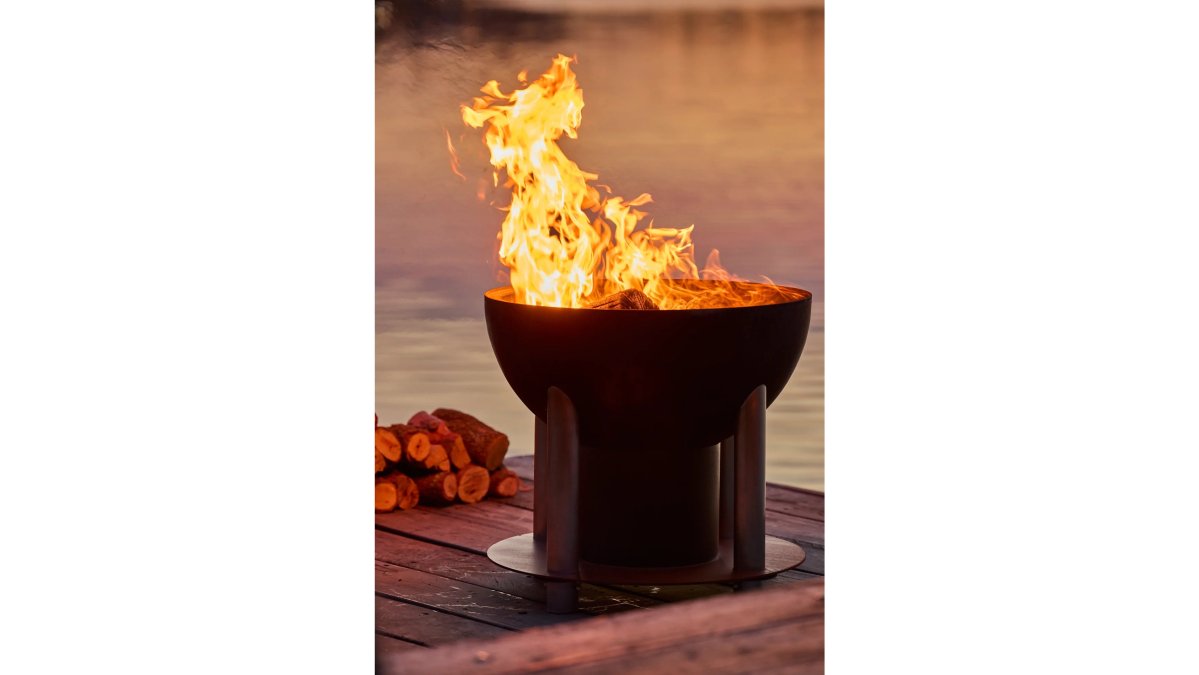
A few options suit small patios well:
- The 42 In. 60,000 BTU Fire Pit Propane Gas Fire Pit Table pairs a rectangular tabletop with a zinc-plated fire bowl and steel base, and the included blue fire glass lifts the flame display. At $333.09, it's the most accessible way to anchor a small seating zone.
- The Manchester round chat table uses weather-resistant aluminum and a concealed propane tank, and the center disc converts it to a full table when the fire is off. Round shapes take up less visual weight on a narrow patio.
- The Cheyenne square chat table offers the same aluminum build and conversion feature in a square profile that lines up neatly against a wall.
| Fire Feature | Footprint | Heat Output | Best For |
|---|---|---|---|
| 42 In. Rectangular Table | 42 in. wide | 60,000 BTU | Narrow patios needing a tabletop |
| Manchester Round Chat Table | 36 in. diameter | 41,000 BTU | Compact round seating zones |
| Cheyenne Square Chat Table | 40 in. wide | 41,000 BTU | Wall-aligned layouts |
| Wood-Burning Pit with Grill | 32 in. diameter | Open flame | Cooking and open-fire ambiance |
Fire Pit Landscaping for Small Backyards: Gravel, Pavers, and Plantings
Fire pit landscaping for small backyards works best when it stays low and horizontal. Gravel borders, concrete pavers, and low plantings frame the fire zone without stealing sightlines or floor space; tall plantings shrink a patio, low ones extend it.

Seating and Layout Ideas That Keep a Small Patio Feeling Open
Built-in seating and multi-functional furniture keep a compact patio from feeling cramped. A bench along a retaining wall or railing edge uses space chairs can't, and ottomans that double as seats or footrests add capacity without adding footprint.
Seating layout rules for tight spaces:
- Keep a clear walkway at least as wide as a chair
- Angle chairs toward the fire, not parallel to walls
- Use one anchor piece instead of several small ones
- Choose pieces that serve two functions where possible
Managing Smoke, Ventilation, and Weather on a Compact Patio
Smoke is the number one reason a small-patio fire feature gets used twice and abandoned. On a large patio, smoke drifts and dissipates; on a compact patio, especially one walled on two or three sides, it settles into the seating zone. Solving it is an engineering problem, not a preference.
Why Wood Smokes and How to Reduce It
Wood smoke is unburned fuel. Three variables control how much you get:
- Moisture content. Seasoned firewood at 15 to 20 percent moisture burns hot and clean; green or damp wood smolders and smokes. A $20 moisture meter takes the guesswork out.
- Airflow. A fire starved of air smolders; too much air burns fast and throws sparks. The sweet spot is a bed of coals with steady secondary air.
- Burn temperature. Cool fires smoke. Once the fire reaches full combustion, smoke drops sharply, which is why the 'top-down' burn method (large logs on the bottom, kindling on top) produces less smoke than the traditional pile.
Smoke-Free and Low-Smoke Technology
Three categories matter for tight patios:
- Propane and natural gas. Clean-burning with no embers and no visible smoke. The trade-off is the flame profile, it looks more like a gas range than a campfire unless you add reflective media (fire glass, lava rock, ceramic logs).
- Wood-burning units with secondary combustion. Some modern wood pits use a double-wall design that re-burns smoke before it escapes. They cost more and still smoke somewhat, but the reduction is meaningful.
- Smokeless pellet or bio-ethanol inserts. Hot and clean, but a smaller flame and a specific fuel supply. A niche option worth knowing if your patio is fully enclosed.
For a patio with walls on two or more sides, propane is the practical answer. It eliminates the smoke variable entirely and lets you place the unit closer to seating without gassing your guests.
Ventilation and Placement Math
Ventilation is about giving smoke a path away from people. Two rules cover most small patios:
- Never place the unit under an overhang or beneath a combustible structure. The NFPA outdoor fire safety resources is clear on this, and it applies to propane and wood alike.
- Place the unit so prevailing breezes carry smoke away from the seating zone, not across it. On a patio with one open side, that means putting the fire feature near the open side and seating on the far side of it. On a patio with two open sides, place the unit on the upwind side of the seating cluster.
Weather, Covers, and Material Longevity
Weather protection extends the burner's life, not just its looks. Rain and debris in a burner pan cause rust, clogged ports, and uneven flames. A fitted cover is the cheapest insurance you can buy.
On a small patio, fuel choice is a design decision, not just a preference. Propane keeps the space usable in tight quarters; wood delivers ambiance but demands more clearance, more ventilation, and more attention to wind direction. If your patio is enclosed on two or more sides, choose propane and stop fighting the smoke.
Frequently Asked Questions
What is the best type of fire pit for a small patio?
Propane fire pit tables usually work best on a small patio because they produce no wood smoke, light quickly with a piezo ignition, and double as a coffee or dining surface when not lit. The 42 In. 60,000 BTU Fire Pit Propane Gas Fire Pit Table is a good example, with a steel base and a zinc-plated fire bowl that holds up outdoors. Wood-burning options like the 32 Inch Fire Pit with Poker cost less up front but need more clearance and produce smoke that can overwhelm a tight space.
How much clearance does a small patio fire pit need from walls and furniture?
Clearance requirements vary significantly by manufacturer and local fire codes, depending on the fuel type and specific unit. Always consult the manufacturer's manual for your specific fire pit and check with your local fire marshal's office for municipal regulations before installation. On a compact patio, measure from the edge of the fire bowl, not the table base, and ensure seating is positioned far enough back that guests cannot lean into the flame.
Can you put a fire pit on a small concrete patio?
Yes, concrete is non-combustible and handles the heat of a fire pit well. The bigger concerns are weight and heat transfer. A heavy stone or steel unit can be difficult to move once placed, so pick a spot you are happy with before setting it down. Place a heat-resistant mat or a layer of fire-resistant material under wood-burning pits to protect the surface from embers, and keep propane tanks upright on a level section of the slab.
How do you keep smoke away from seating on a small patio?
Smoke follows airflow, so place the fire pit on the side of the patio where wind typically enters, and seat guests upwind. A smokeless fire pit design or a propane fire table eliminates most of the problem because there is no wood combustion. For wood-burning units, choose seasoned hardwood, avoid green or damp logs, and keep the fire bowl clear of ash so air moves freely through the fuel.
Designing a small patio around a fire feature comes down to honest measurements, verified clearances, and furniture that earns its footprint. Spirit of Willow curates fire pits, chat tables, and outdoor furniture built to hold up through weather and use, so a compact patio can still feel like a destination. Browse the collection to find a fire feature sized for your space, and let the right piece turn a tight patio into the warmest corner of the house.