

How to Plan a Backyard Renovation Budget
Table of Contents
- Understanding the Average Backyard Renovation Cost
- Setting a Realistic Budget for Your Project
- How to Prioritize Outdoor Landscaping Projects
- Breaking Down Costs: Hardscaping, Softscaping, and Labor
- Creating a Backyard Renovation Budget Template
- Hidden Costs and Contingency Planning
- Phasing Your Project and Avoiding Overbuilding
- Frequently Asked Questions
Last Updated: September 29, 2026
Understanding the Average Backyard Renovation Cost
A backyard renovation budget ranges widely depending on scope, materials, and labor. Modest updates cost less; comprehensive outdoor living spaces with multiple features require substantially more investment.
The real challenge is understanding what drives your specific project's expenses. A fire pit installation differs dramatically from a full landscape redesign. Identify which elements matter most to your vision, then build your backyard renovation budget accordingly.

This guide breaks down how to plan a backyard renovation budget that matches your vision and wallet, covering hidden costs, DIY vs. professional labor, and phasing projects over time.
Setting a Realistic Budget for Your Project
Define your total available investment first, then work backward. Picking features first and hoping they fit your budget almost always leads to compromise or overspending.
Your realistic budget depends on available capital, timeline, and project scope. Spreading work across two years changes what's feasible compared to completing everything in one season.
A backyard renovation budget should enhance your quality of life, not create stress. Phasing projects over multiple years makes financial and practical sense.
According to the National Association of Landscape Professionals, homeowners should expect to allocate funds across multiple categories: site preparation, materials, labor, permits, and contingency reserves. Each category requires separate consideration within your backyard renovation budget.
How to Prioritize Outdoor Landscaping Projects
Prioritization starts with identifying what will be used most. Families that entertain frequently should prioritize hardscaping and seating; those seeking retreat might prioritize softscaping and shade structures.
When prioritizing, ask: Which features will we use regularly? What creates the biggest visual impact? What solves existing problems? What adds resale value?
Hardscaping (patios, walkways, retaining walls, permanent structures) typically comes before softscaping because it forms the foundation. Once hardscaping is in place, softscaping can be added or adjusted more easily.
Consider curb appeal alongside personal enjoyment. Street-visible features influence perception; backyard-only features serve wellness and entertaining. Both matter for different reasons.
Breaking Down Costs: Hardscaping, Softscaping, and Labor
Hardscaping (pavers, concrete, stone, retaining walls, gazebos, pergolas) forms the structural backbone. A typical paver patio costs $8-$15 per square foot installed; stamped concrete runs $10-$18; natural stone exceeds $25. Labor typically represents 40-60% of hardscape costs.
Softscaping (plants, soil, mulch, irrigation, turf) creates atmosphere and character but requires ongoing maintenance. Budget $3-$8 per square foot for basic planting and mulch; irrigation adds $1.50-$4 per square foot.
Site Preparation and Grading: The Foundation You Can't Skip
Site preparation is where many homeowners encounter surprise costs. Proper grading ensures water flows away from structures, preventing foundation damage. Skipping this foundational work creates expensive problems later.
Grading and drainage work typically costs $1-$3 per square foot, varying by slope, soil type, and complexity. A professional grading assessment ($300-$800) identifies drainage problems before construction and prevents costly rework.
Fill material, topsoil amendment, and compaction add to site prep costs. Budget $40-$100 per cubic yard for quality topsoil. A typical backyard renovation might require 10-30 cubic yards.
Utility Relocation and Site Surveys: Hidden Infrastructure Costs
Before excavation or construction, identify buried utilities. Hitting a utility line can cause injury, outages, or expensive damage claims. Most utility companies charge property owners for unmarked excavation damage.
Call 811 (the national "Call Before You Dig" service) at least two to three business days before digging (811 Before You Dig). A professional site survey ($400-$1,200) identifies private utilities like irrigation lines and septic systems.
Utility relocation can be expensive: moving electrical lines costs $500-$2,000; rerouting gas lines exceeds $1,500. Get utility quotes before finalizing your hardscape design.
Labor: DIY vs. Professional Installation
Labor costs vary by complexity, location, and DIY involvement. Professional installation ensures proper drainage and structural integrity. A hybrid approach often works best: professionals handle structural elements and drainage; homeowners manage plantings.
Hardscape labor runs $50-$150 per hour or $40-$80 per square foot for patio installation. Softscape labor costs $30-$75 per hour. Equipment rental adds $100-$500 per day.
10' X 12' Wooden Gazebo,Patio Hardtop →
Mistakes in grading or drainage are expensive to fix. Professional work carries warranties and insurance; DIY work does not. Professional site prep and hardscaping often save money long-term.
Creating a Backyard Renovation Budget Template
A structured backyard renovation budget template prevents overspending and ensures nothing gets forgotten. Start with these main categories:
| Category | Estimated Cost | Actual Cost | Notes |
|---|---|---|---|
| Site preparation & grading | Permits, surveys, utility location | ||
| Hardscaping materials | Pavers, stone, concrete, structures | ||
| Hardscaping labor | Professional installation | ||
| Softscaping materials | Plants, soil, mulch, irrigation | ||
| Softscaping labor | Planting, landscaping | ||
| Landscape lighting | Electrical work, fixtures | ||
| Outdoor furniture & features | Gazebos, fire pits, seating | ||
| Contingency (10-20%) | Unexpected costs | ||
| Total |
Fill in estimated costs based on research and quotes from contractors. As work progresses, update actual costs. This template shows where you stand against budget and helps identify areas where you're over or under.
Reserve 10-20% of your total backyard renovation budget for unexpected costs like buried rocks, poor soil, or drainage issues. Without contingency reserves, surprises force difficult choices.
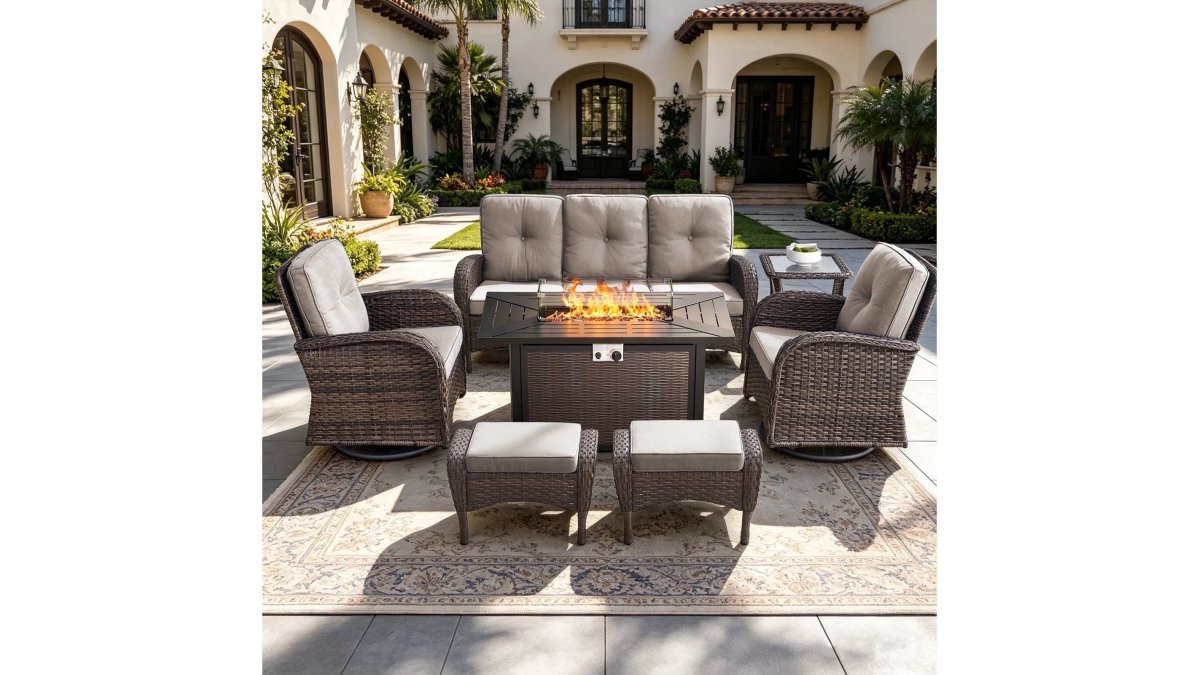
Spirit of Willow customers often find that investing in quality outdoor furniture and fixtures, like the 7 Piece Outdoor Patio Furniture Set with Fire Pit Table or the 12-Ft X 20-Ft Gazebo with Hardtop Roof, creates the biggest visual transformation. These pieces define your outdoor living space and anchor the overall design.

Hidden Costs and Contingency Planning
Most homeowners underestimate the costs that don't fit neatly into "hardscaping" or "softscaping" categories. These hidden costs often emerge mid-project and force budget decisions if not anticipated.
Permitting and Regulatory Fees
Most jurisdictions require permits for structures over 100-200 square feet, electrical work, water features, grading that alters drainage, retaining walls over 4 feet, and elevated structures. Skipping permits is a costly mistake.
Permit costs range from $50 for minor work to $500-$2,000+ for major structures. Some municipalities charge 1-3% of project cost. A $20,000 hardscape project might incur $200-$600 in permit fees.
Permit applications require inspections at various stages, adding 1-3 weeks to your timeline. Unpermitted work creates liability issues and complicates home sales. Check with your local building department before finalizing design.
Design and Consultation Fees
Design consultation fees add value if uncertain about layout or vision. Services include consultation only ($200-$500), concept design ($800-$2,500), or full design with specifications ($2,000-$5,000+).
For a small patio refresh, consultation may be unnecessary. For a comprehensive backyard overhaul involving multiple features, drainage solutions, and long-term plantings, professional design often prevents mistakes that cost far more than the design fee itself.
Long-Term Maintenance and Lifecycle Costs
Maintenance and long-term care deserve serious budget consideration, a gap most guides ignore. A newly installed landscape requires more frequent watering and attention during establishment (typically the first 1-2 growing seasons). Irrigation system installation costs $1.50-$4 per square foot, but annual maintenance, winterization, and repairs add $200-$600 per year depending on system complexity. Hardscaping elements like perimeter boundaries also demand ongoing upkeep, though opting for materials that minimize long-term labor can contribute to significant fence installation cost savings.
Hardscape maintenance varies by material:
- Pavers and natural stone: Sealing every 2-3 years ($0.50-$1.50 per square foot); weed removal and joint sand replacement ($200-$500 annually for typical patios).
- Concrete: Sealing every 3-5 years ($0.25-$0.75 per square foot); crack repair and resurfacing ($500-$2,000 as needed).
- Wood structures (decks, pergolas): Staining or sealing every 2-3 years ($1-$3 per square foot); board replacement and structural repairs ($500-$3,000+ depending on damage).
Softscape maintenance includes seasonal cleanup, pruning, plant replacement, and pest/disease management.
Soil Testing and Amendment Costs
Soil quality and amendment costs often surprise homeowners. Poor existing soil requires improvement, adding compost, adjusting pH, or bringing in fresh topsoil. This foundational work affects plant success and long-term landscape health.
The Contingency Fund: Your Financial Safety Net
Most professionals recommend reserving 10-20% of your total backyard renovation budget for unexpected costs. Buried rocks, poor soil conditions, unforeseen drainage issues, or scope creep often emerge once work begins. Without contingency reserves, these surprises force difficult choices: abandon planned features, reduce quality, or overspend.
Phasing Your Project and Avoiding Overbuilding
Phasing projects over multiple years makes financial sense and allows you to see how you actually use each space before committing to permanent features. Year one might focus on hardscaping and site preparation. Year two could add the primary outdoor living structure, a gazebo or covered patio. Year three introduces softscaping and finishing touches.
Frequently Asked Questions
How much should I budget for a backyard renovation?
A typical backyard renovation budget ranges from $5,000 to $50,000 depending on scope and materials. Small projects like adding a fire pit or refreshing outdoor furniture start around $2,000-$8,000. Medium renovations including hardscaping, new patio furniture, and landscape lighting run $15,000-$30,000. Large-scale projects with hardscaping, irrigation systems, and permanent structures like gazebos can exceed $50,000. Always add a 10-20% contingency fund for unexpected costs.
What hidden costs should I include in my backyard renovation budget?
Beyond visible materials and labor, budget for site surveys ($300-$800), permits and zoning fees ($200-$2,000), utility relocation if needed ($500-$5,000), grading and site preparation ($1,000-$3,000), and drainage solutions ($500-$2,000). Professional landscape design fees range from $500-$3,000. Don't forget ongoing maintenance costs: irrigation system upkeep, plant replacement, and hardscape sealing. These hidden expenses often account for 15-25% of total project costs.
How do I avoid overbuilding and wasting money on my backyard renovation?
Avoid overbuilding by matching your outdoor living space to your neighborhood's typical home value, aim for improvements that add 5-10% to your property value rather than 20%+. Start with essential hardscaping and outdoor living furniture, then add amenities gradually. Choose durable, timeless materials over trendy options that may feel dated in a few years. Focus on ROI: patios and outdoor kitchens typically return 50-75% of investment, while elaborate landscape features may return less.
What is the 10-20% contingency fund rule for backyard renovations?
The contingency fund rule means setting aside 10-20% of your total budget for unexpected costs. For a $20,000 project, that's $2,000-$4,000 in reserve. Common surprises include soil conditions requiring additional grading, utility lines discovered during excavation, material price increases, and weather delays. This buffer prevents mid-project budget overruns and allows flexibility to upgrade materials or add features without derailing your finances.