

Creating a Backyard Meditation Garden Sanctuary
Table of Contents
- Why Your Backyard Deserves to Be a Meditation Sanctuary
- Choosing the Right Location and Layout
- Best Plants for Meditation Gardens
- Outdoor Water Features for Relaxation
- Meditation Garden Design Ideas That Actually Work
- Budget-Friendly DIY Hacks and Low-Maintenance Solutions
- Seasonal Care and Year-Round Tranquility
- Frequently Asked Questions
Last Updated: September 21, 2026
Why Your Backyard Deserves to Be a Meditation Sanctuary
A backyard meditation garden is a personal retreat designed to cultivate serenity, mindfulness, and mental clarity right outside your door, transforming stress into stillness.
Intentional design engages your senses, reduces ambient noise, and creates psychological distance from daily pressures. When you step into a well-designed meditation garden, your nervous system responds: breathing slows, thoughts settle.
A meditation garden delivers luxury wellness retreat experience on a household budget. The key is understanding what actually works versus decorative filler that doesn't serve your mental state.
Choosing the Right Location and Layout
Choose areas with 3-4 hours of dappled shade (filtered through trees or pergola). Too much direct sun creates uncomfortable heat and glare; too little leaves the space damp and unwelcoming.
Position your garden where sight lines are blocked and ambient noise is minimized, a corner behind your home screened by tall shrubs or fence works better than front-facing spaces.
Place your garden within 20-30 feet of a main entrance for quick access during stressful moments. Easier access means more frequent use.
Create a clear entry point, a stepping stone path or gravel entry, that signals transition from everyday life to meditative space. This psychological boundary helps your brain recognize a different mode.
Best Plants for Meditation Gardens
Understanding Your Hardiness Zone
Identify your USDA hardiness zone at planthardiness.ars.usda.gov. Plants thriving in your zone require less fertilizer, water, and pest management, reducing maintenance and supporting the meditative aesthetic.
Regional Plant Recommendations by Hardiness Zone
Zones 3-5 (Cold climates: Northern states, upper Midwest, New England)
- Evergreens: Dwarf Alberta spruce, boxwood, yew (all hardy to zone 3)
- Ground covers: Creeping thyme, sedum, moss phlox (zone 3-4 hardy)
- Accent plants: Japanese maple 'Bloodgood' (zone 5), serviceberry (zone 3)
- Fragrant options: Lilac (zone 2-3), lavender 'Munstead' (zone 5)
These plants tolerate freeze-thaw cycles and snow load. Avoid tender perennials like jasmine or gardenia in these zones unless grown in containers and brought indoors seasonally.
Zones 6-7 (Temperate: Mid-Atlantic, Ohio Valley, upper South)
- Evergreens: Japanese maple, bamboo (clumping varieties like Fargesia), boxwood, holly
- Ground covers: Mondo grass, creeping thyme, ajuga, liriope
- Accent plants: Acer palmatum varieties, pieris, rhododendron
- Fragrant options: Jasmine (zone 6-7), gardenia (zone 6-8), honeysuckle
This zone offers the widest plant palette. You can successfully grow both cold-hardy and warm-climate species, giving you flexibility in design.
Zones 8-9 (Warm climates: Lower South, coastal California, Southwest)
- Evergreens: Bamboo (many varieties), Japanese maple, Texas privet, Southern magnolia
- Ground covers: Mondo grass, Asian jasmine, creeping fig (zone 8-9)
- Accent plants: Crape myrtle, Japanese pieris, camellia
- Fragrant options: Gardenia, jasmine, magnolia, Confederate jasmine
Heat and humidity are primary concerns. Choose plants with good air circulation to prevent fungal issues. Afternoon shade becomes essential in zones 8-9 to prevent leaf scorch.
Zones 10-11 (Tropical/subtropical: South Florida, southern California coast, Hawaii)
- Evergreens: Bamboo, bird of paradise, ti plant, croton
- Ground covers: Asiatic jasmine, creeping fig, beach morning glory
- Accent plants: Plumeria, orchid tree, ixora
- Fragrant options: Plumeria, jasmine, gardenia, orchids
Freeze risk is minimal. Focus instead on drought tolerance and salt tolerance if near coastal areas. Many tropical plants prefer afternoon shade even in warm zones.
Plant Categories for Meditation Gardens
Evergreen Structure Plants provide year-round visual interest and privacy. Bamboo (clumping varieties only) offers vertical interest and gentle rustling. Japanese maple provides soft, calming foliage. In colder zones, dwarf Alberta spruce and boxwood deliver similar structure.
Ground Covers like moss, mondo grass, creeping thyme, and ajuga eliminate lawn maintenance, require minimal watering after establishment, and suppress weeds naturally.
Flowering Elements should use soft pastels (pale pink, lavender, cream) rather than vibrant colors. Scented flora like jasmine, gardenia, and lilac add sensory depth without overwhelming attention.
Container Gardening for Flexibility
Container gardening works well for smaller spaces and allows seasonal adjustments. Use containers with drainage holes and quality potting soil; this lets you grow tender plants by moving them indoors during winter.
Maintenance Expectations by Plant Type
Once established, native plants suited to your zone require minimal intervention. Evergreens need light yearly pruning. Flowering plants benefit from monthly deadheading during bloom season. Most thrive on rainfall alone after establishment.
7 Tier Cascading Rock Outdoor Water →
Quick Reference: Plant Selection Checklist
Before purchasing any plant, verify:
- Is it rated for your USDA hardiness zone?
- Does it tolerate your garden's light conditions (full sun, partial shade, full shade)?
- What is its mature size, and does it fit your space?
- Does it require regular pruning or is it naturally compact?
- Is it native to your region (native plants typically require less water and pest management)?
- What is its water requirement once established?
Taking 10 minutes to answer these questions prevents costly mistakes and ensures your garden feels effortless rather than burdensome.
Outdoor Water Features for Relaxation
Water features create the auditory foundation of a meditation garden, masking traffic noise and neighborhood activity through acoustic masking.
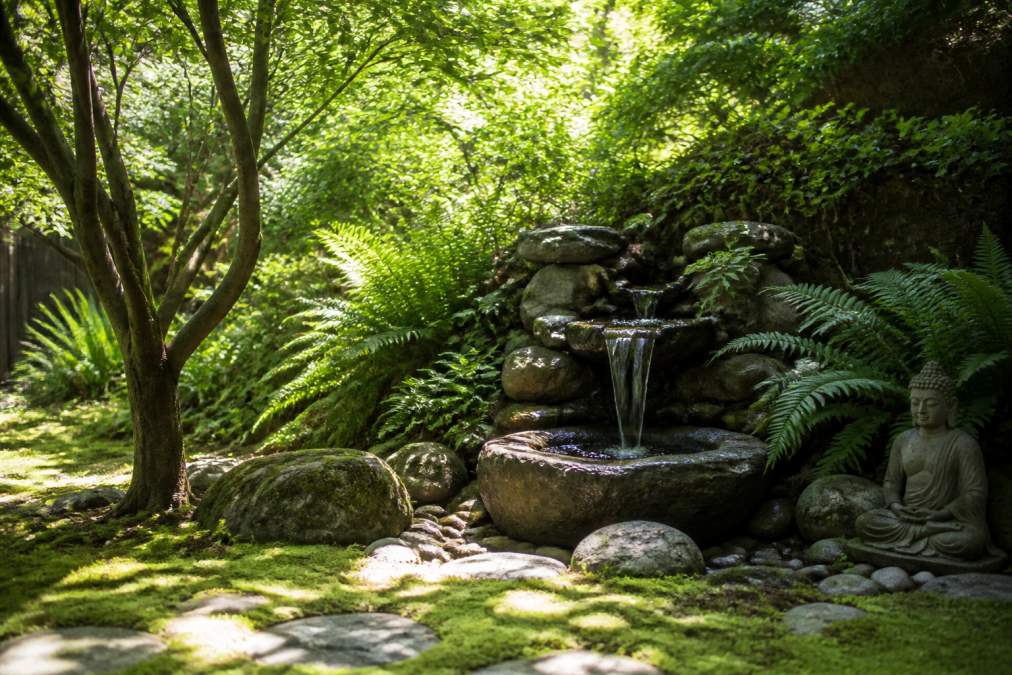
Choose fountains with consistent, gentle sound and adjustable flow rates. Cascading multi-tier designs create layered water sounds that feel more natural than single streams.
[Spirit of Willow's 7 Tier Cascading Rock Outdoor Water Fountain](https://spiritofwillow.com/products/7-tier-cascading-rock-outdoor-water-fountain-garden-freestanding-rockery-natural-waterfall-fountains-outdoor-with-led-light-soothing-tranquility-fountains-for-home-garden-yard-24h) ($131.42) delivers authentic waterfall sound with realistic stone finish and LED lights for evening use.

For larger gardens, the [33 In.
Meditation Garden Design Ideas That Actually Work
A focal point, water fountain, stone, or specimen plant, anchors attention and supports meditation. Avoid multiple competing focal points, which fragment focus.
Budget-Friendly DIY Hacks and Low-Maintenance Solutions
Start with gravel paths and a simple sitting area (flat stone or platform). These foundational elements cost less than elaborate construction while letting plants and water features provide refinement.
Seasonal Care and Year-Round Tranquility
A well-designed meditation garden requires seasonal adjustments but minimal constant attention. Understanding seasonal tasks prevents small issues from escalating.
Spring Maintenance (March-May, depending on your zone)
Tasks:
- Remove winter debris and refresh mulch (2-3 inches around plant bases, 6 inches from trunks).
- Inspect water features; clean screens and refill if drained.
- Prune dead wood back to living tissue; avoid pruning spring-flowering plants until after bloom.
- Water newly planted specimens if spring rains are sparse.
- Plant new specimens in spring for best establishment.
Summer Maintenance (June-August)
Tasks:
- Check water feature levels weekly; top off as needed (every 3-5 days in zones 8-9).
- Clean pump screens every 2 weeks.
- Water newly planted specimens deeply but infrequently during dry spells.
- Deadhead flowering plants weekly to extend bloom.
- Monitor for pests; spray water to remove spider mites. Improve air circulation for powdery mildew.
Fall Maintenance (September-November)
Tasks:
- Light pruning; stop by late September in zones 3-6.
- Remove fallen leaves regularly.
- Drain fountains and store pumps indoors by late October (zones 3-7).
- Reduce watering; add 2-3 inches fall mulch.
- Plan spring planting; order plants in late summer.
Winter Maintenance (December-February)
Tasks (zones 3-7):
- Monitor for heavy snow/ice: If snow or ice accumulates on evergreens, gently brush it off to prevent branch breakage. Don't use salt on plants; it damages foliage and contaminates soil.
- Check water feature components: If you've drained your fountain, inspect it monthly for cracks or damage. Store all components in a dry location.
- Avoid walking on frozen ground: Frozen soil compacts easily and damages root systems. Use designated pathways and avoid trampling plants.
- Plan spring projects: Winter is ideal for planning garden improvements, ordering plants, and designing layout changes.
Tasks (zones 8-11):
- Continue light watering: Winter rains typically provide sufficient moisture, but if your region experiences dry winters, water established plants every 2-3 weeks if no rain falls.
- Monitor water features: Fountains run year-round in warm zones. Clean screens monthly and check for algae growth, which thrives in mild, wet conditions. If algae becomes heavy, drain, clean thoroughly, and refill.
- Prune selectively: Avoid heavy pruning in winter, but remove dead wood and crossing branches as needed.
Monthly Maintenance Checklist
Use this quick reference to stay on track:
| Month | Primary Tasks | Time Required |
|---|---|---|
| March-April | Spring cleanup, plant inspection, mulch refresh | 2-3 hours |
| May | Planting season, monitor new plants | 1-2 hours |
| June-August | Water feature monitoring, watering, deadheading, pest checks | 1-2 hours weekly |
| September | Fall pruning, leaf removal | 1-2 hours |
| October | Drain fountains (zones 3-7), fall mulch | 1-2 hours |
| November | Final cleanup, plan spring projects | 1 hour |
| December-February | Minimal maintenance, monitor for damage | 30 minutes monthly |
Troubleshooting Common Issues
Sustainable Practices for Long-Term Care
Frequently Asked Questions
What are the best low-maintenance plants for a backyard meditation garden?
Choose evergreens like boxwood, dwarf Alberta spruce, and Japanese maple for year-round structure. Add native ground covers such as creeping thyme or sedum that require minimal watering once established. Ornamental grasses like fountain grass add movement and sound without demanding constant attention. In warmer zones, bamboo creates natural privacy screens. Select plants suited to your hardiness zone to reduce maintenance and ensure they thrive in your climate.
How can I create a meditation garden on a budget?
Start with what you have: repurpose stones, gravel, and mulch for pathways and ground cover. Plant native species from local nurseries, which cost less and adapt better. Create a focal point using a simple DIY water feature or a solar lantern like Spirit of Willow's 13.2" LED Flickering Flameless Candle Lantern ($37.41), which adds ambiance without high costs. Use container gardening for flexibility and lower initial investment. Focus on one well-designed area rather than spreading resources thin across the entire yard.
What role do water features play in a meditation garden?
Water features provide ambient sound that masks neighborhood noise and promotes a meditative state. The visual movement of cascading water draws attention inward, supporting mindfulness practice. Options range from simple fountains to elaborate installations. Spirit of Willow offers cascading rock fountains with LED lighting, such as the 7-Tier Cascading Rock Fountain ($131.42) or the 37-inch Cascade Fountain ($315.76), which combine soothing water flow with ambient lighting for day and night tranquility.
How do I design a meditation garden for a small space?
In tight spaces, use vertical gardening with wall-mounted planters and trellises to maximize greenery without consuming floor area. Choose one focal point, a small water feature or lantern, rather than multiple competing elements. Create defined zones using pathways or subtle hardscaping to make the space feel intentional. Select compact plants and use container gardening for flexibility. Even an 8x10-foot area can become a serene retreat when organized thoughtfully around a central focal point.