

Alternatives to Plastic Outdoor Furniture: A 2026 Guide
Table of Contents
- Why Homeowners Are Moving Away From Plastic Outdoor Furniture
- The Main Alternatives to Plastic Outdoor Furniture Compared
- Eco-Friendly Patio Furniture: What Actually Earns the Label
- Wood Outdoor Furniture Pros and Cons
- Metal Patio Furniture Durability: Aluminum, Wrought Iron, and Steel
- How to Protect Outdoor Furniture From Weather
- Total Cost of Ownership and Choosing by Climate
- Frequently Asked Questions
Last Updated: October 16, 2026
Why Homeowners Are Moving Away From Plastic Outdoor Furniture
Plastic resin furniture has dominated patios for decades because it is cheap and light. That value equation is shifting. Homeowners replacing resin sets are increasingly searching for alternatives to plastic outdoor furniture, and the reason is not purely aesthetic. Resin fades, cracks in cold snaps, and often cannot be repaired when a single arm or leg fails.
That last point matters more than most buyers realize. A chair you cannot fix becomes landfill, and the EPA's guidance on reducing waste at home makes clear that durable, repairable goods are one of the simplest ways to cut household waste.
This guide from Spirit of Willow compares the real non-plastic options: wood, metal, bamboo, and composite. We will cover what each costs to own, how each handles weather, and which material suits your climate. Below, we break down the trade-offs most buying guides skip.
The Main Alternatives to Plastic Outdoor Furniture Compared
The four practical non-plastic families are wood, metal, bamboo, and composite. Each has a distinct failure mode, and knowing it before you buy is the whole game.
- Wood (teak, acacia, eucalyptus): warm look, repairable, needs periodic oiling
- Metal (aluminum, wrought iron, steel): strongest frames, rust risk varies by finish
- Bamboo: fast-growing and light, best for covered areas
- Composite: wood-plastic blends and poly lumber, low maintenance, heavier
Side-by-Side Comparison of Non-Plastic Materials
| Material | Weather Resistance | Maintenance | Repairable | Best For |
|---|---|---|---|---|
| Teak wood | High, with oiling | Moderate | Yes | Humid, sunny patios |
| Aluminum | High | Low | Partly | Coastal, salt air |
| Wrought iron | Moderate | Moderate | Yes | Sheltered patios |
| Bamboo | Low to moderate | Moderate | Limited | Covered porches |
| Composite | High | Low | Limited | Busy households |
The pattern is consistent: materials that resist weather best are usually the hardest to repair, and vice versa. That tension drives most of the decisions below.
What Most Buying Guides Leave Out
A table of weather ratings does not tell you what a material actually costs to own, how long it realistically lasts, or what happens to it at the end of its life. Those three questions separate a genuinely better choice from a greener-looking one. Here is what the standard comparisons skip.
Expected service life under normal outdoor exposure. Teak and other dense, naturally rot-resistant hardwoods commonly last 15 to 25 years with routine care, and longer if refinished. Powder-coated aluminum frames often run 10 to 20 years before the coating fails. Wrought iron can outlast both structurally but rusts wherever the finish breaks. Bamboo in covered use typically gives 5 to 10 years. Composite and poly lumber are commonly marketed with 10- to 20-year lifespans, though color fading and surface scuffing show up well before structural failure.
Repairability, in practice. Wood is the most repairable family: you can sand out scratches, re-oil, plug a crack, or replace a single slat. Wrought iron can be re-welded and repainted. Aluminum is partly repairable, touch-up paint hides chips, but a bent or cracked frame usually means replacement. Bamboo is limited because the material itself splits and delaminates. Composite and poly lumber are the hardest to repair; a cracked board often cannot be matched or reattached cleanly.
End-of-life and disposal. This is the gap almost no comparison covers. Bare or oiled wood can often be reused, repurposed, or in some cases composted if untreated. Untreated and unpainted metal is highly recyclable, and aluminum in particular holds strong scrap value. Bamboo is biodegradable when untreated. Composite and poly lumber are the problem children: they are blends of plastic and wood fiber that most municipal recycling programs will not accept, so they typically go to landfill at end of life. If avoiding plastic waste is your reason for switching, a wood-plastic composite quietly defeats the purpose.
Coatings, treatments, and exposure. The finish matters as much as the base material. Pressure-treated lumber uses chemical preservatives that can leach into soil and should not be used for food-contact surfaces like table tops. Powder coating on metal is durable but can chip, and cheap paint over rust traps moisture. Some imported bamboo and composite products use adhesives and binders that can off-gas for a period after unboxing; airing pieces out before bringing them onto a covered porch is a common precaution. Look for finishes described as low-VOC or water-based where the manufacturer offers that detail.
Replacement parts and refinishing. Before buying, check whether the maker sells individual slats, cushions, glides, and hardware. A frame with available replacement parts can be kept in service for decades; one without them becomes waste the first time a single component fails. This single question, can I buy the part?, predicts long-term value better than any weather rating.
With those trade-offs in view, the sections below dig into each material family and the climate conditions that should drive your choice.
Eco-Friendly Patio Furniture: What Actually Earns the Label
Eco-friendly patio furniture is furniture whose material sourcing, lifespan, and end-of-life disposal reduce environmental impact compared with disposable alternatives. The label is earned across the whole lifecycle, not by a single claim on a product page.
Three questions separate genuine eco-friendly pieces from marketing:
- Where did the material come from, and is it certified?
- How long will it last, and can parts be replaced?
- What happens to it when you are done with it?
A teak chair from a responsibly managed forest that lasts twenty years beats a "green" chair that fails in three. Longevity is the strongest sustainability claim any outdoor piece can make. For wood, look for Forest Stewardship Council certification, which verifies responsible sourcing.
Wood Outdoor Furniture Pros and Cons
Wood outdoor furniture offers the best combination of warmth, repairability, and long-term value, but only if you accept annual upkeep. Teak leads the category because its natural oils resist rot and insects.
The pros:
- Repairable: sand and re-oil instead of replacing
- Ages gracefully into a silver-gray patina if left untreated
- Warm, high-end look that suits garden settings
The cons:
- Requires oiling roughly once a year to hold color
- Heavy, and harder to move for solo rearranging
- Cheaper softwoods warp and split within a few seasons
Metal Patio Furniture Durability: Aluminum, Wrought Iron, and Steel
Metal patio furniture durability depends almost entirely on the finish and the alloy, not the metal type alone. Aluminum and wrought iron sit at opposite ends of the maintenance spectrum.
Aluminum is the practical winner for harsh exposure. It will not rust, it is light enough to move alone, and powder-coated frames hold color well. The trade-off is that powder coat can chip, and a chipped frame on cheaper aluminum is hard to touch up invisibly.
Wrought iron is heavier, more traditional, and genuinely repairable if you can weld or know someone who can. It rusts wherever the finish breaks, so it suits covered patios far better than open coastal ones.
Steel sits between the two. It is strong and affordable, but rust resistance varies widely by coating quality.
How to Protect Outdoor Furniture From Weather
Protection comes down to three habits: cover it, elevate it, and treat it on schedule. Most premature furniture failure traces back to moisture sitting where it should not.
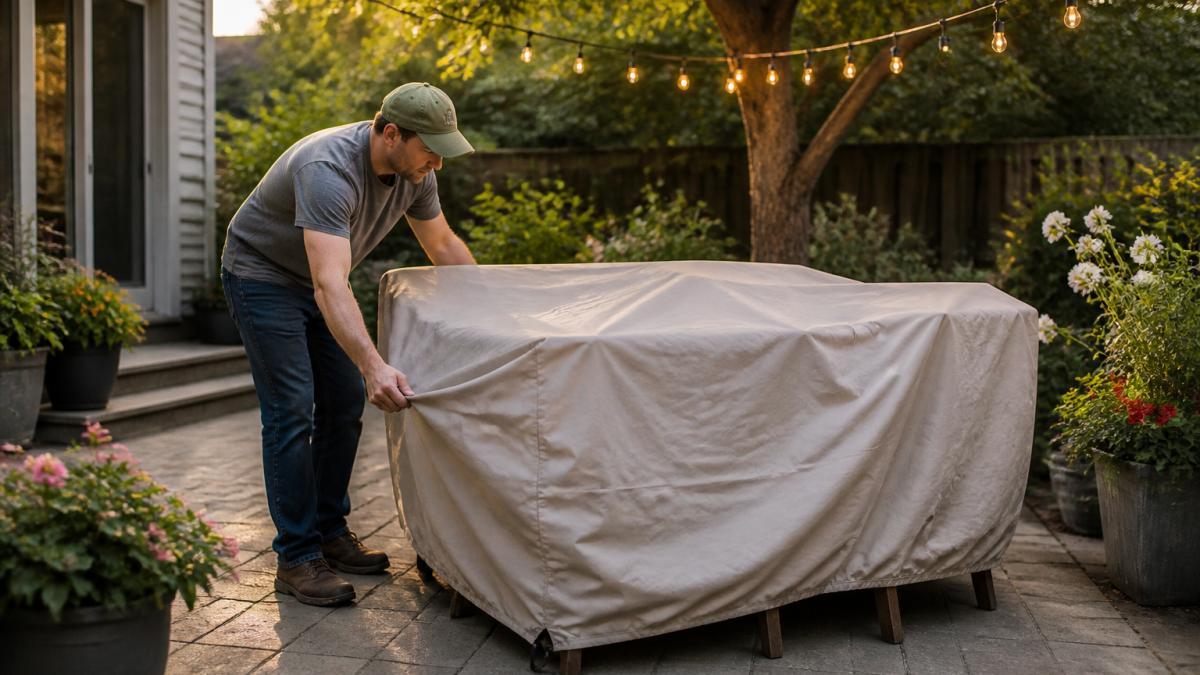
A simple seasonal routine keeps most materials in good shape:
- Cover fabric and wood pieces during off-season months
- Store cushions indoors when not in use
- Re-oil wood once a year, before the wet season
- Touch up chips on metal frames immediately
- Keep furniture off direct ground contact to prevent trapped moisture
UV resistance and moisture resistance are the two properties to check on any finish. For metal, confirm the coating is rated for outdoor exposure. For wood, confirm the species is naturally rot-resistant rather than pressure-treated softwood.
Total Cost of Ownership and Choosing by Climate
Total cost of ownership, not sticker price, is what separates a good buy from a cheap one. A material that lasts twice as long at twice the price costs the same per year, and usually less once you subtract replacement hassle. Most buying guides stop at the price tag; the real number is purchase price plus maintenance plus repairs plus replacement, divided by years of service.
How to Estimate Cost Per Year of Use
You do not need exact figures to compare materials, you need the shape of the math. Work through four inputs:
- Purchase price for the piece or set.
- Annual maintenance cost: oil, sealant, touch-up paint, replacement cushions, and the value of your time.
- Expected repairs: re-welding, re-oiling, replacing a slat or a glide.
- Years of service before the piece is unusable or unfixable.
A cheap set that needs replacing every three or four years can cost more per year than a durable set that lasts two decades, even when the durable set costs several times more up front. The same logic applies within a material family: an oiled teak table that lasts 20 years usually beats three softwood tables that each last six. The pattern most practitioners find is that repairable, long-lived materials win on cost per year even when they lose badly on sticker price.
Maintenance Cost by Material
- Wood: the recurring cost is oil, sealant, and time. Annual oiling is the main line item; skip it and you trade maintenance cost for a shorter lifespan and a grayer surface.
- Aluminum: near-zero routine cost. The risk is a chipped coating that cannot be matched, which is a cosmetic loss rather than a structural one.
- Wrought iron: periodic rust touch-up and repainting. Cheap to maintain if you stay ahead of rust; expensive once it spreads under the finish.
- Bamboo: low material cost, shorter replacement cycle. Treat it as a shorter-horizon purchase.
- Composite and poly lumber: low maintenance but limited repairability, so the first major failure often ends the piece's life.
Choosing by Climate
Climate should drive the decision more than style. Match the material to the conditions it will actually face:
- Humid and rainy: aluminum or teak. Skip untreated steel, which rusts quickly in constant moisture.
- Coastal with salt air: aluminum with a quality powder coat. Avoid wrought iron, where salt attacks any break in the finish and rust spreads out of sight.
- Hot and dry with strong sun: teak or powder-coated aluminum. Expect color fading on composites and cheap finishes; UV exposure is the main enemy here.
- Cold with hard freezes: composite or aluminum. Resin and cheap softwoods crack in freeze-thaw cycles; dense hardwoods handle cold better than thin-walled metal.
- High wind: heavier frames and lower-profile designs. Lightweight aluminum and bamboo are the easiest to move but the most likely to tip or travel.
Repairability Is the Hidden Cost Lever
Repairability and replacement parts matter here too. A frame you can re-oil, re-paint, or re-weld stays out of the landfill and out of your budget. Before you buy, confirm the maker sells individual slats, cushions, glides, and hardware, a piece with available parts can be kept in service for decades, while one without them becomes waste the first time a single component fails. That is the core argument for buying fewer, better pieces rather than replacing a cheap set every few years.
At Spirit of Willow, our outdoor living collection is chosen around exactly this principle: pieces built to hold their beauty over time, from weather-ready materials.
Frequently Asked Questions
What material holds up best outdoors?
It depends on your climate. Teak and other dense hardwoods resist rot and moisture naturally and can last decades with occasional oiling. Powder-coated aluminum resists rust and needs almost no upkeep. Wrought iron is heavy and sturdy but requires touch-ups if the finish chips. In coastal or high-humidity areas, aluminum and teak outperform steel, which rusts faster when salt and moisture sit on it. The best pick is the one that matches your weather, storage space, and how much maintenance you'll realistically do.
Is wood a good alternative to plastic patio furniture?
Yes, for many homeowners. Wood looks warmer and more elevated than resin, and hardwoods like teak, acacia, and eucalyptus hold up well outdoors. The trade-off is maintenance: untreated wood needs sealing or oiling, usually once or twice a year, and it's heavier to move around. Softwoods like pine weather faster and need more care. If you want a low-maintenance plastic outdoor furniture replacement but still want natural grain, teak with a protective finish is the closest match.
Is metal outdoor furniture more durable than plastic?
Usually, yes. Powder-coated aluminum and wrought iron resist UV fading, cracking, and warping far better than most resins. Aluminum won't rust, which makes it a strong choice for humid or coastal yards. Wrought iron is heavier and holds up in wind, but its finish can chip and expose the metal underneath. With basic care like wiping down and covering in winter, metal patio furniture durability typically outlasts plastic by several years, which often offsets the higher upfront cost.
How do you protect wood outdoor furniture from weather?
Clean it with mild soap and water, let it dry fully, then apply a sealant or oil once or twice a year depending on your climate. Teak can be left to weather to a silver-gray patina if you prefer that look. Move pieces under cover or use breathable furniture covers during heavy rain, snow, or long stretches of intense sun. Avoid plastic tarps that trap moisture, since that can encourage mold and rot. Cushions should be stored indoors when not in use.
Choosing outdoor furniture is really a bet on how long you want it to last. Plastic loses that bet quietly, one cracked arm at a time. Spirit of Willow curates outdoor living pieces designed to withstand the elements and keep their timeless look, from durable materials to cohesive design that elevates your patio, garden, and entertaining spaces. Browse the collection and build an outdoor retreat you will not need to replace next season.