

The 200 Rule for Saunas Explained
Table of Contents
- What Is the 200 Rule for Saunas?
- How Temperature and Humidity Combine in the 200 Rule
- Sauna Temperature Guide: Finding Your Ideal Range
- How Long to Stay in a Sauna: Duration and Safety
- 200 Degree Sauna Safety: What You Need to Know
- Sauna Session Length for Beginners
- Traditional Sauna vs. Infrared Sauna: Applying the 200 Rule
- Frequently Asked Questions
Last Updated: October 6, 2026
What Is the 200 Rule for Saunas?
The 200 rule saunas follow is a practical guideline combining temperature and humidity: the sum of your sauna's temperature in Fahrenheit and its relative humidity percentage should equal approximately 200. It shows how heat and moisture work together to produce the therapeutic effects you're seeking.
In practice: at 170°F, aim for roughly 30% relative humidity (170 + 30 = 200); at 180°F, keep humidity closer to 20%.
Three Different Things People Call the "200 Rule"
The phrase "200 rule" refers to at least three unrelated ideas:
- Temperature plus humidity = 200. The meaning this article addresses, and the most common usage in sauna forums. It is the only one that gives you an actionable number to adjust during a session.
- A 200°F ceiling for sauna air temperature. Some manufacturers describe a practical upper limit around 200°F for residential traditional saunas, above which wood, finishes, and heater components wear faster and bathers rarely stay comfortable. This is a hardware and comfort ceiling, not a formula.
- A heater's ability to reach 200°F. Product listings sometimes describe a heater as "a 200-degree heater," meaning it can bring a given cabin volume up to roughly 200°F under normal conditions. This is a performance claim, not a rule about your session.
These meanings get mixed together in buying guides and product pages. When someone says "follow the 200 rule," ask which one they mean. For the rest of this article, "the 200 rule" means the temperature-plus-humidity sum.
Why the Sum, and Not Just the Temperature
Temperature and humidity are not interchangeable, but they push perceived heat in the same direction. A 170°F sauna at 30% relative humidity feels meaningfully hotter than the same sauna at 10%, because moisture slows sweat evaporation, your body's main cooling mechanism.
That is the logic behind the sum: a rough way of trading one variable against the other so the felt intensity stays similar. It is not a precise physical model, two saunas at the same sum can feel quite different depending on airflow, bench height, and how recently water was thrown on the stones.
What the Rule Is Not
The 200 rule is not a safety threshold. A sum of 200 does not mean a session is safe for you, and 220 does not mean it is dangerous.
The rule is also not a substitute for a thermometer and hygrometer, without both readings, you cannot apply it. A basic wall-mounted thermometer and hygrometer, or a combined unit, are enough. Place them at roughly the height where you sit, because both temperature and humidity stratify inside a sauna.
How This Article Uses the Rule
Homeowners often struggle with sauna setup because they focus on temperature alone and ignore humidity. The 200 rule changes that by acknowledging both elements matter. A sauna that's too hot and too humid becomes unbearable; one that's hot but dry can feel harsh on your skin and respiratory system.
It's a time-tested heuristic that traditional Finnish saunas have followed for generations, and modern enthusiasts use it as a starting point for dialing in their ideal session. A basic thermometer and hygrometer let you monitor both values and adjust as needed.
How Temperature and Humidity Combine in the 200 Rule
Temperature and humidity don't work independently in a sauna.
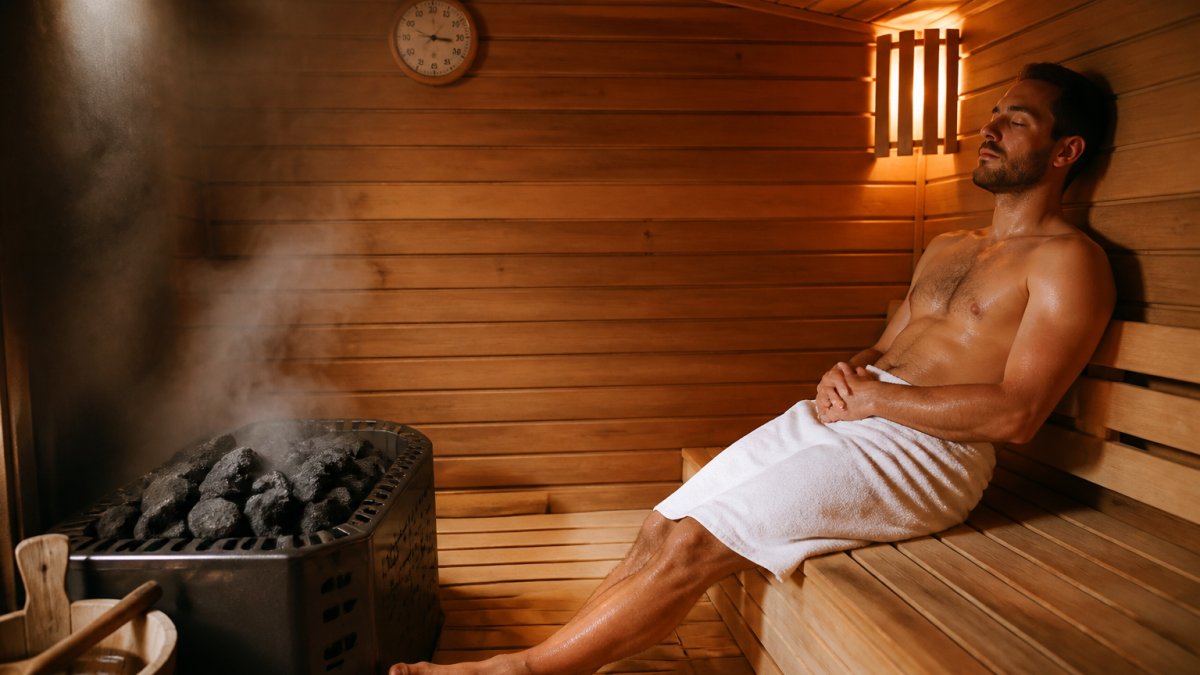
Think of humidity as a modifier on temperature. High heat with low humidity feels dry and intense, since sweat evaporates quickly and cools you.
In a traditional sauna, you control humidity by pouring water on the hot sauna stones. This creates löyly, the burst of steam that makes the sauna feel alive.
Relative humidity in a sauna typically ranges from 10% to 60%, with most people finding comfort between 20% and 40%.
Sauna Temperature Guide: Finding Your Ideal Range
Sauna temperatures vary by type and personal preference. Most traditional saunas operate between 160°F and 200°F.
For beginners, starting at 160-170°F is wise, hot enough to produce sweating and relaxation without overwhelming your system.
Here's what different temperature ranges feel like:
- 160-170°F: Gentle, accessible for first-timers, good for longer sessions
- 170-180°F: Moderate intensity, popular for regular sauna users, produces good sweating
- 180-195°F: High intensity, for experienced users, shorter sessions recommended
- 195°F and above: Very hot, typically reserved for brief sessions, requires good heat tolerance
The 200 rule helps you stay comfortable within any of these ranges: at a cooler 160°F, you can tolerate higher humidity around 40%; at an intense 190°F, keep humidity lower at 10%.
Your ideal temperature depends on heat tolerance, age, and health status. If you have cardiovascular concerns, consult your doctor before using a sauna and start conservatively.
How Long to Stay in a Sauna: Duration and Safety
Session length matters as much as temperature and humidity. Most sessions last 15 to 30 minutes, enough time to heat up, sweat, and relax without overheating.
Never stay in a sauna longer than 45 minutes in a single session. Extended sessions increase the risk of dehydration and heat exhaustion, and benefits don't increase proportionally. A focused 20-minute session beats a sluggish 45-minute one.
Between sessions, wait at least 48 hours before returning to the sauna to let your body recover and rehydrate. Regular use, two to three times per week, is ideal for most people.
200 Degree Sauna Safety: What You Need to Know
A sauna reaching 200°F is very hot.
First, always hydrate before entering. Drink water 30 minutes before your session and keep water available nearby.
Second, never sauna alone if you're new to high-temperature sessions. A companion can monitor you and call for help if something goes wrong.
Barcelona Far Infrared Sauna - Low EMF - 2 Person →
Third, avoid alcohol before and after sauna use.
Fourth, cool down gradually after each session.
People with heart conditions, high blood pressure, or pregnancy should consult a doctor before using a sauna. These groups face higher risks from sustained heat exposure.
Sauna Session Length for Beginners
If you're new to saunas, start small and build gradually. Your first session should last only 10 to 15 minutes.
During your first few visits, focus on comfort rather than duration. What matters is finishing relaxed and refreshed, not exhausted.
After three to five sessions, try extending to 20 minutes if you feel ready. Your body adapts quickly.
The progression looks like this:
- Week 1: 10-15 minutes per session, once or twice
- Week 2-3: 15-20 minutes per session, twice weekly
- Week 4+: 20-30 minutes per session, two to three times weekly
This gradual approach prevents overheating and helps your body adjust.
Pay attention to how you feel after each session. Good signs include relaxation, better sleep, and reduced muscle tension.
Traditional Sauna vs. Infrared Sauna: Applying the 200 Rule
Traditional and infrared saunas work differently, which affects whether the 200 rule applies at all, and how you would measure it.
Traditional saunas heat the air around you using a wood-burning or electric heater, with air temperature rising to 160-200°F.
Infrared saunas use infrared light panels to heat your body directly. Air temperature stays lower, typically 120-140°F, with minimal steam and humidity usually 10-20%.
If you use an infrared sauna, don't force the 200 rule.
Where to Place Your Thermometer and Hygrometer
This is the part most guides skip, and the reason two people in the same sauna can report different "200 rule" numbers.
- Height matters. Heat stratifies: in a typical traditional cabin, bench-height temperature can be 15-30°F higher than at floor level. Humidity stratifies too, though less predictably. A thermometer near the ceiling reads much hotter than the air your torso sits in.
- Placement matters. Mount the thermometer and hygrometer at roughly shoulder height when seated on the bench you actually use. Don't measure at the heater or directly above the stones, that reads the steam plume, not the room.
- Distance from the heater matters. Readings within a foot or two of the heater will be higher than on the opposite side of the cabin. Aim for a mid-cabin position at your seated height.
- Timing matters. Give the sauna 20-30 minutes after the heater reaches its setpoint for temperature and humidity to stabilize. Right after you throw water on the stones, humidity spikes for a minute or two, then settles. Read the settled value, not the spike.
Why the Rule Is a Rough Heuristic, Not a Standard
The 200 rule has no published methodology: no defined measurement height, averaging window, instrument accuracy, or cabin volume. Two saunas that both "hit 200" by their owners' readings may be running meaningfully different conditions.
That doesn't make the rule useless, it makes it a relative tool. Its value is giving you a consistent way to compare your own sessions over time: if you liked last Tuesday's session at 175°F and 25% humidity, aim for a similar sum next time.
Worked Examples Across Sauna Types
| Sauna type | Typical air temp | Typical RH | Sum | Does the rule apply? |
|---|---|---|---|---|
| Traditional, dry | 185°F | 10% | 195 | Yes, close to target |
| Traditional, with löyly | 175°F | 30% | 205 | Yes, slightly over |
| Traditional, gentle | 160°F | 40% | 200 | Yes, on target |
| Infrared cabin | 130°F | 15% | 145 | No, different mechanism |
| Infrared cabin, warm | 140°F | 20% | 160 | No, different mechanism |
Notice the infrared rows land well below 200, and that's fine. The rule was never designed for cabins that heat the body directly. Pushing an infrared cabin to a sum of 200 would mean raising air temperature beyond what the panels are designed for or adding humidity the cabin is not built to handle.
Barrel Saunas and Hybrid Cabins
Barrel saunas, whether traditional or infrared-hybrid, also benefit from the 200 rule if they use traditional heating methods.
Hybrid cabins combining infrared panels with a traditional heater are the trickiest case. If you run only the infrared panels, the rule does not apply; if you run the traditional heater and throw water, it does. Decide which mode you're in before trying to hit a target sum.
Product Notes
Our Barcelona Far Infrared Sauna features six low EMF carbon heating panels delivering consistent warmth up to 140°F. Designed for indoor use, it requires only standard 120V power, making infrared sauna ownership accessible for homeowners who want wellness benefits without extreme heat.
For traditional saunas like our Outdoor Traditional Sauna with a 6kW heater, the 200 rule saunas rely on is your guide. You control temperature precisely and adjust humidity by managing water on the stones, complete control over your sauna environment, and the setup where the rule earns its keep.

Frequently Asked Questions
What is the 200 rule for saunas?
The 200 rule for saunas is a practical guideline where the sum of the sauna temperature in Fahrenheit plus the relative humidity percentage should equal approximately 200. For example, a sauna at 170°F with 30% humidity totals 200. This heuristic helps bathers gauge comfortable heat exposure without overheating. It's not a universal standard but rather a practical reference point used by sauna enthusiasts to find balanced conditions.
How long should I stay in a sauna as a beginner?
Beginners should start with 5-10 minutes in a sauna and gradually increase to 15-20 minutes as they acclimate. Listen to your body and exit if you feel dizzy, lightheaded, or uncomfortable. Most sauna sessions last 15-30 minutes for experienced users. A sauna session length for beginners depends on individual tolerance, so shorter durations allow your body to adapt to the heat safely.
Is a 200-degree sauna safe?
A 200-degree sauna can be safe for most healthy adults when humidity is low (around 0-10%), which creates a dry heat that's easier to tolerate. However, 200°F with higher humidity becomes much more intense and risky. Always check with your doctor before sauna use, stay hydrated, and exit immediately if you experience chest pain, severe dizziness, or nausea. 200 degree sauna safety depends on individual health, acclimatization, and proper monitoring.
What temperature should a sauna be?
Most traditional saunas operate between 170-200°F (76-93°C), with many homeowners finding 180-190°F comfortable. Infrared saunas typically run cooler, around 120-140°F. Your sauna temperature guide should account for humidity levels, personal tolerance, and the 200 rule as a reference. Start lower and adjust upward as you become comfortable with the heat.